Guide to Liverworts of Oregon: Scapania bolanderi Aust.
HOME SPECIES INDEX GENUS INDEX GLOSSARY
Scapania 1 oil bodies several per cell > Scapania 2 oil bodies several per cell > Scapania 2 teeth widely spaced on dorsal lobe > Scapania bolanderi
Recognition: In our region, strictly on bark and wood. The contrast between the widely separated teeth of the dorsal lobe compared with the finely dentate ventral lobes is diagnostic. This can usually be seen with a hand lens in the field. Juvenile patches may be confused with S. umbrosa, a small plant which is found mainly on logs in old growth forests where Scapania bolanderi is abundant. Scapania umbrosa has dentition of comparable size on both dorsal and ventral lobes. Scapania umbrosa often has red coloration; Scapania bolanderi may be brownish but never develops red pigmentation. The perianth mouth of Scapania bolanderi is dentate-ciliate while the perianth mouth of S. umbrosa is entire.
Distribution: Grows on bark and dead wood. In forest regions throughout the state; most abundant in Coast Mountains and western slope of the Cascade Mountains. To the north, as near Juneau, Alaska, this species grows on rock walls in moist stream valley bottoms. It reaches Simeonof Island in the Aleutians in North America and from there is disjunct to Japan (Schofield et al. 2004).
Comments: This liverwort is found on almost every old growth Pseudotsuga west of the Cascade Crest. It is as characteristic of our rich, mesic forests as the sword fern (Polystichum munitum).
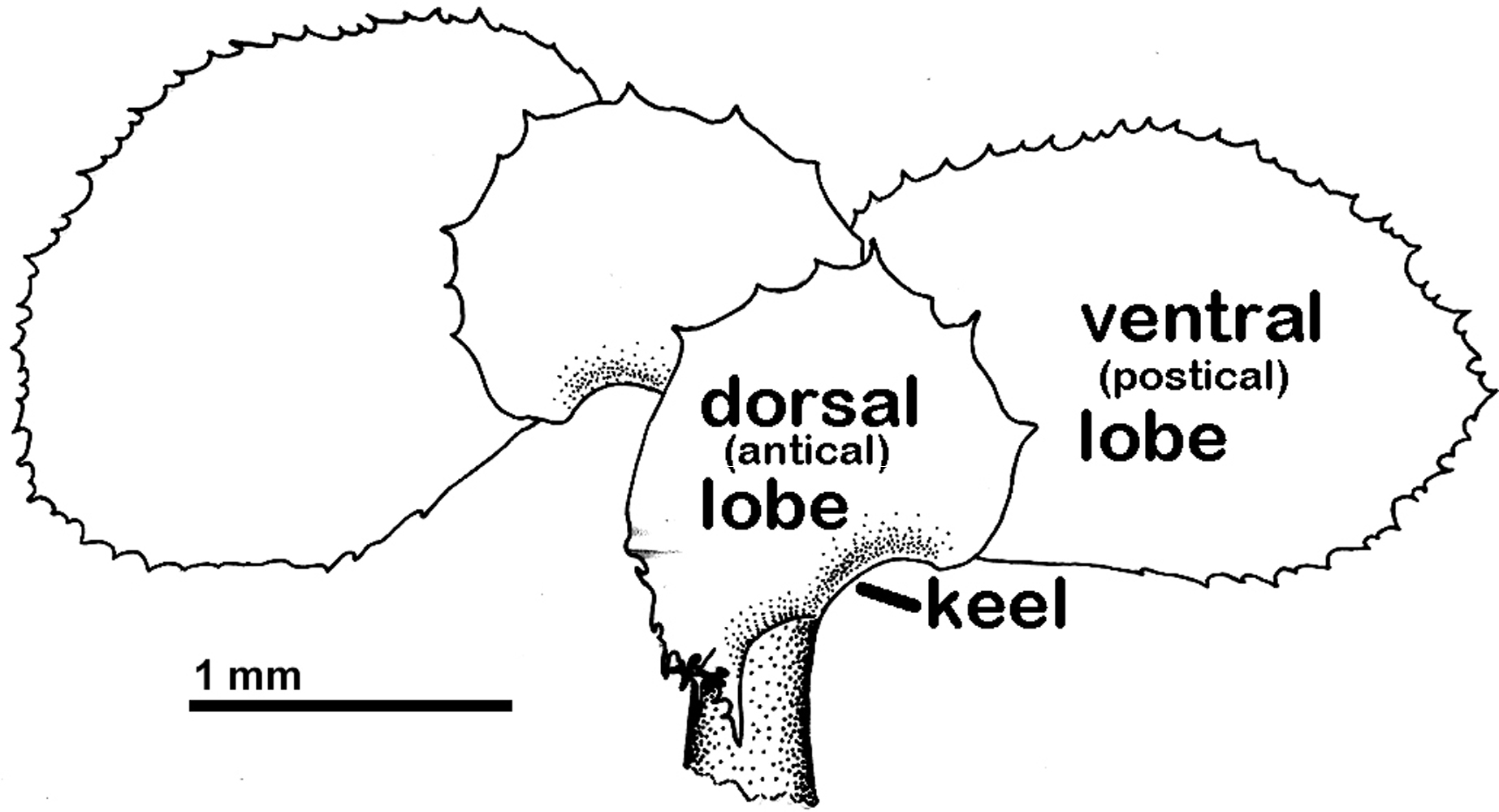 Scapania bolanderi Lane County, Oregon. DHW 3126.
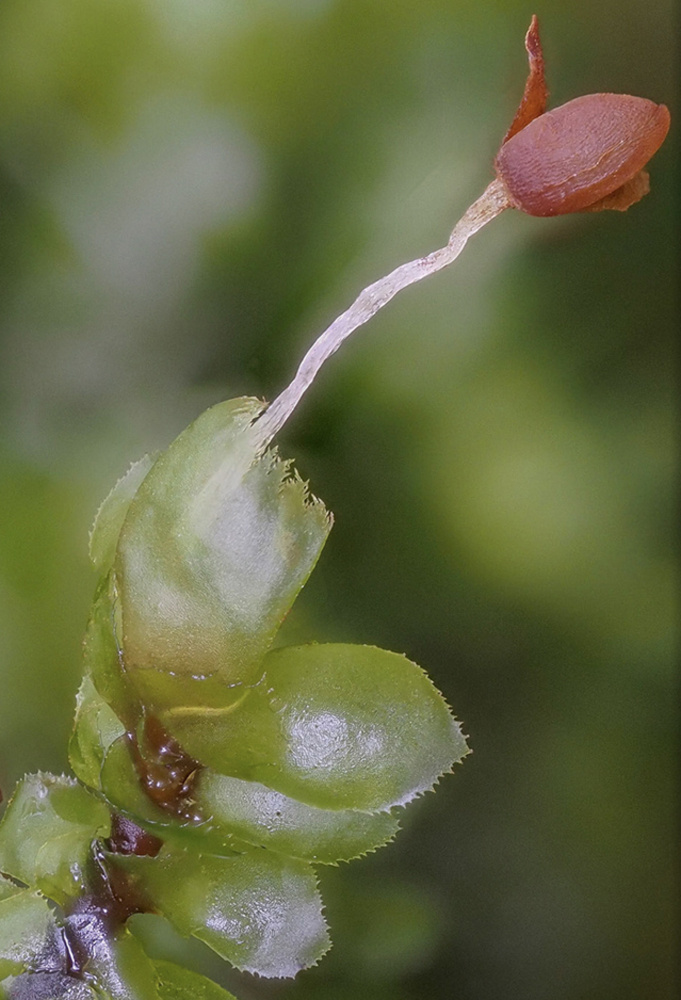 Scapania bolanderi Cypress Falls Park, British Columbia, Canada. D. Callaghan 23 May 2023.
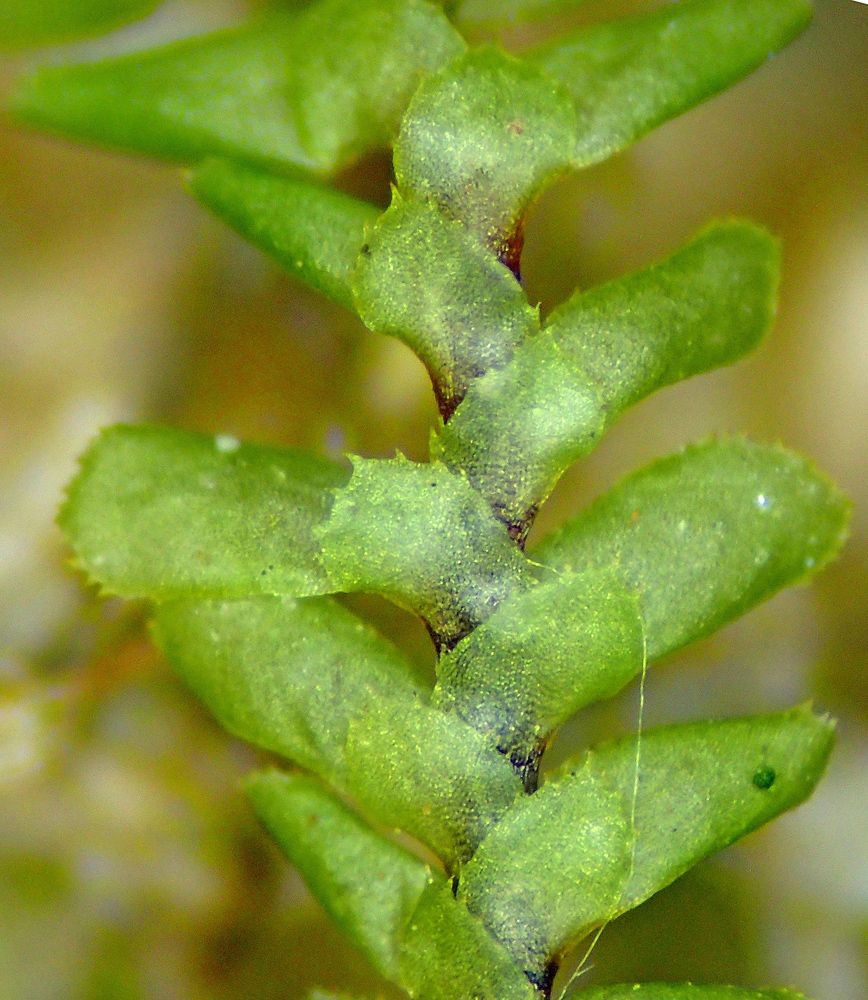 Scapania bolanderi Dry plant in air. Lane County, Oregon, DHW s.n.
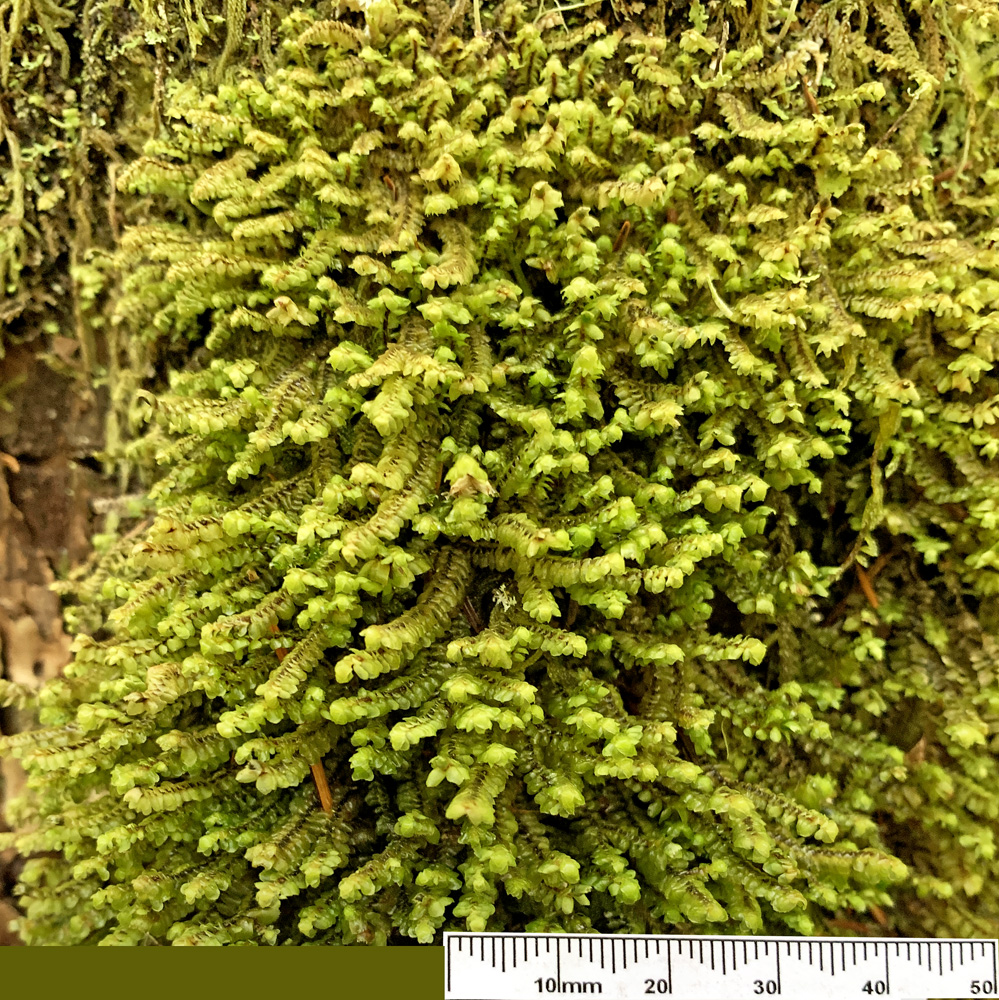 Scapania bolanderi Lane County, Oregon, DHW field photo.
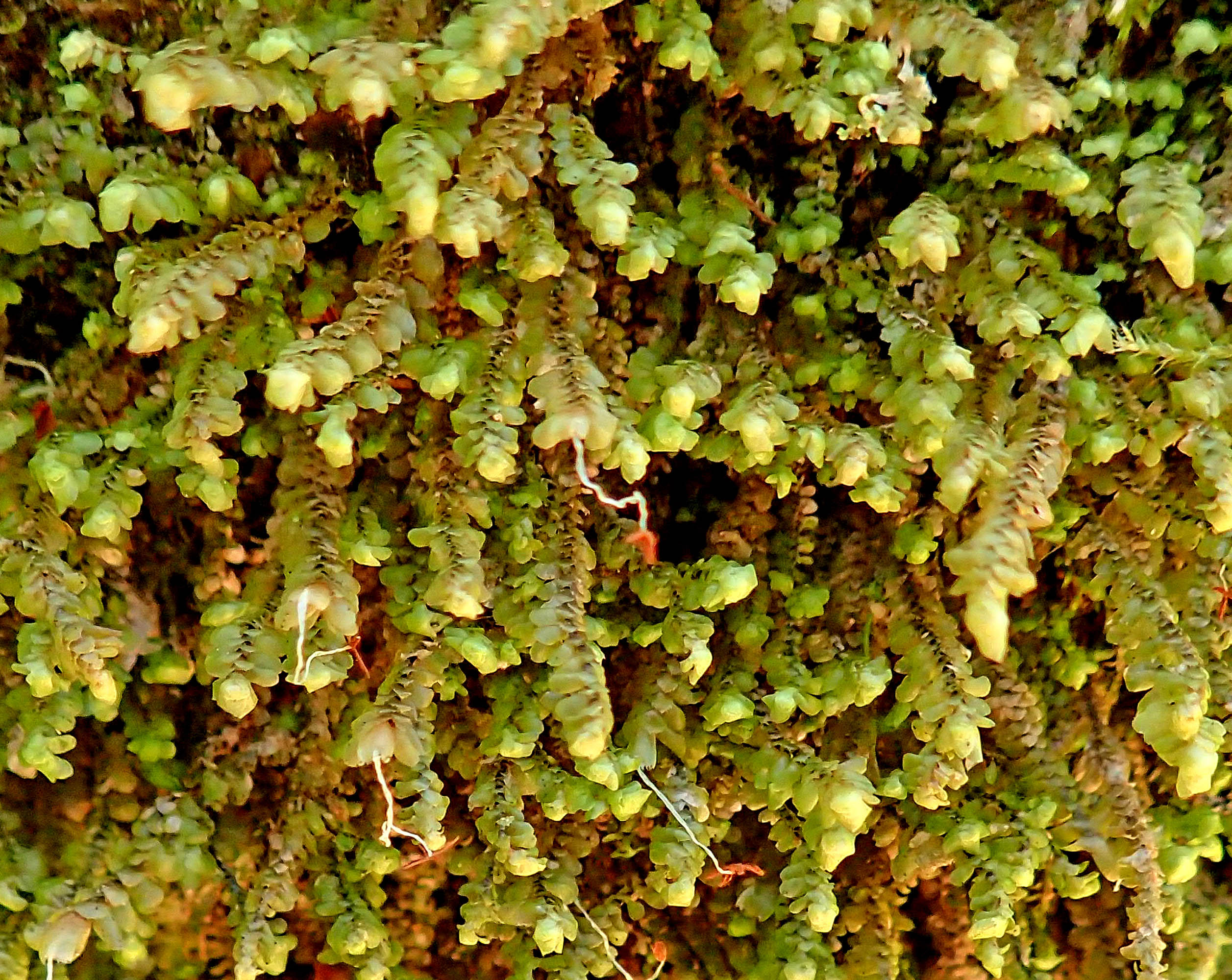 Scapania bolanderi Andrews Experimental Forest, Lane County, Oregon. DHW 10 May 2017.
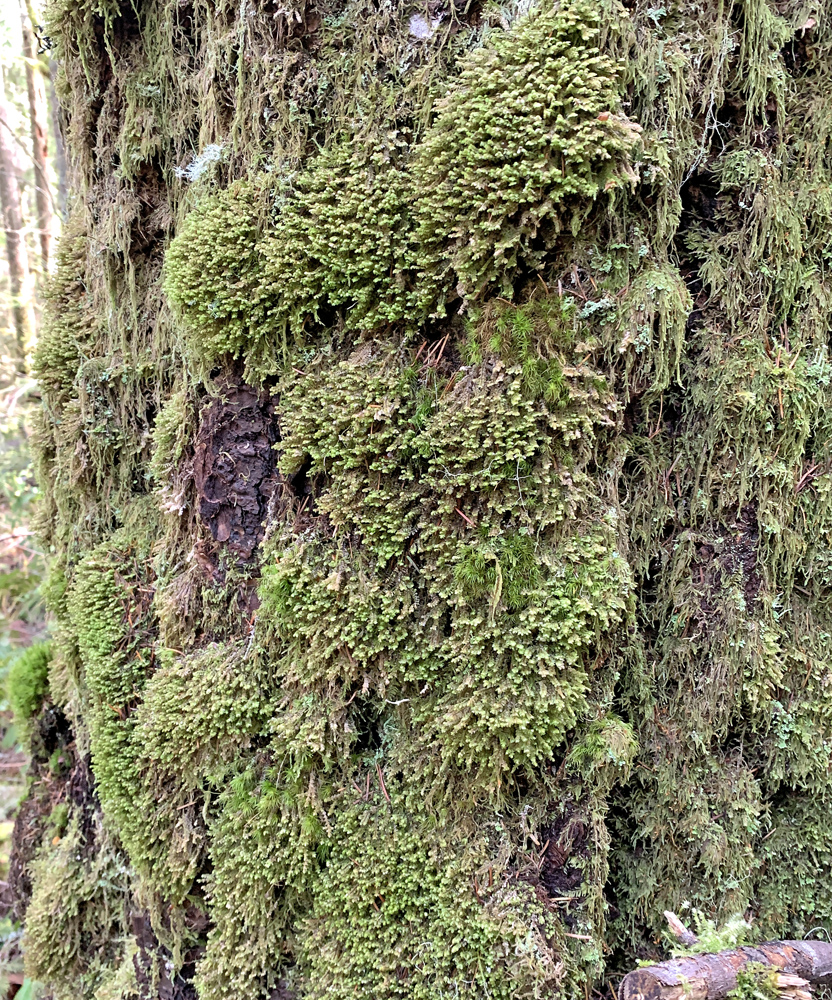 Scapania bolanderi Lane County, Oregon, DHW field photo.
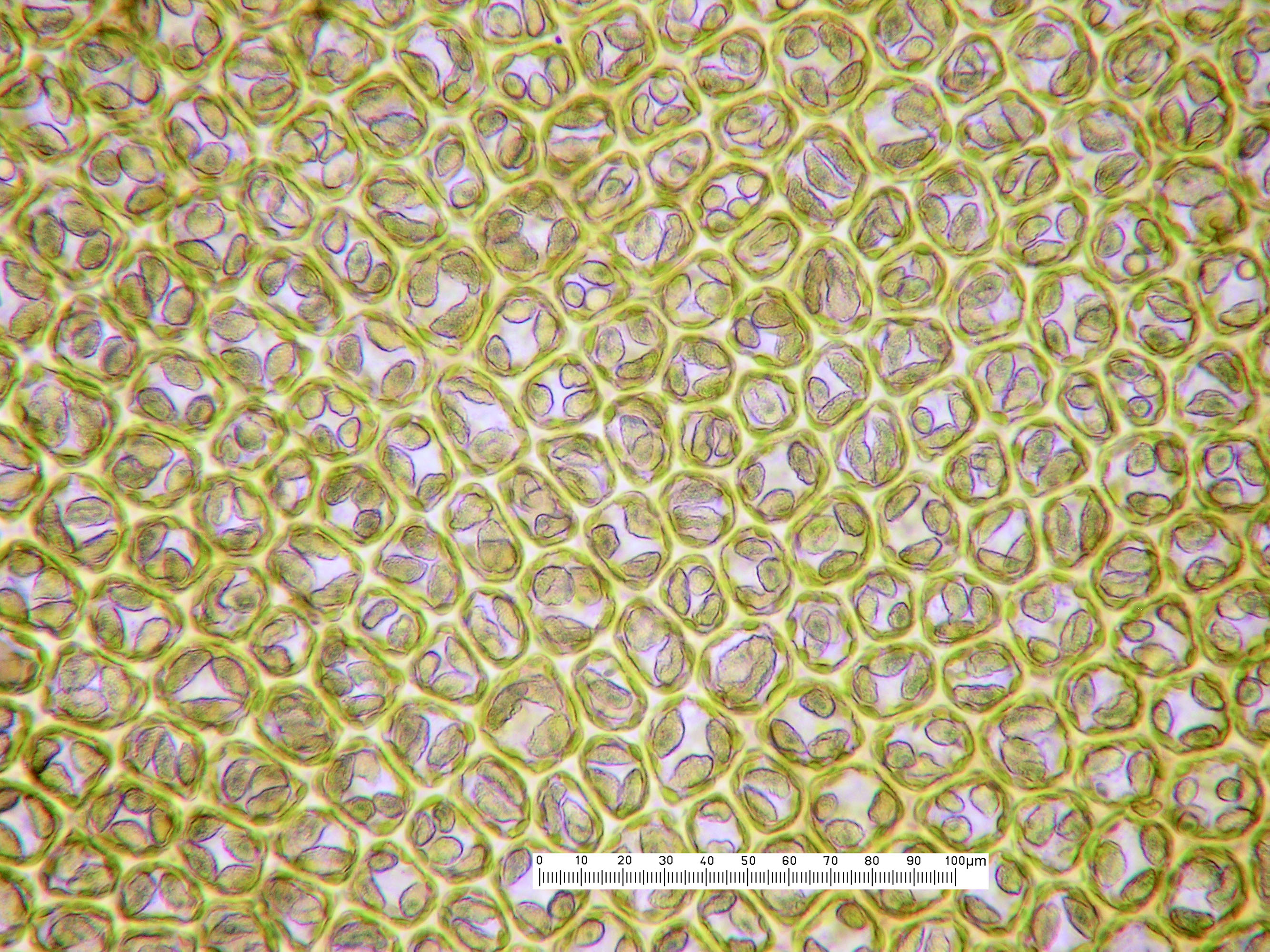 Scapania bolanderi Cells with oil bodies. Eugene, Lane County, Oregon. DHW m3063.
Copyright 2006 Northwest Botanical Institute