Guide to Liverworts of Oregon: Tritomaria exsectiformis (Breidl.) Loeske
HOME SPECIES INDEX GENUS INDEX GLOSSARY
Tritomaria 1b gemmae frequent, leaves not undulate > Tritomaria 2b gemmae angular >
Synonym: None.
Special Status: None. Previously listed on ORBIC List 2 but removed after too many sites recorded.
Recognition: Small yellow green to dull bluish green plants with two rows of asymmetrical leaves, in small tufts among other liverworts and mosses. Leaves are 2- to 3-lobed with the dorsal lobe slender, divergent, positioned 2/3 up the margin. Oil bodies distinctly granulose, 1.5 - 2.5 µm, 5-12 per cell. Reddish brown, angular gemmae are produced in globular masses at the tips of the leaf lobes. Perianths rare; underleaves lacking.
Distribution: Grows on organic substrates, typically compacted decomposing litter, rotting wood, sometimes humus over rocks, where perpetually shady, cool, and moist. Found above 3200' on or near the eastern slope of the Cascades.
Comments: This is one of a number of circumboreal species associated with permanent, cold water streams. Oil body size and number reported here was observed in plants from Head of Jack Creek, Jefferson County. They are smaller and fewer than described for the species by Schuster (1974: 654).
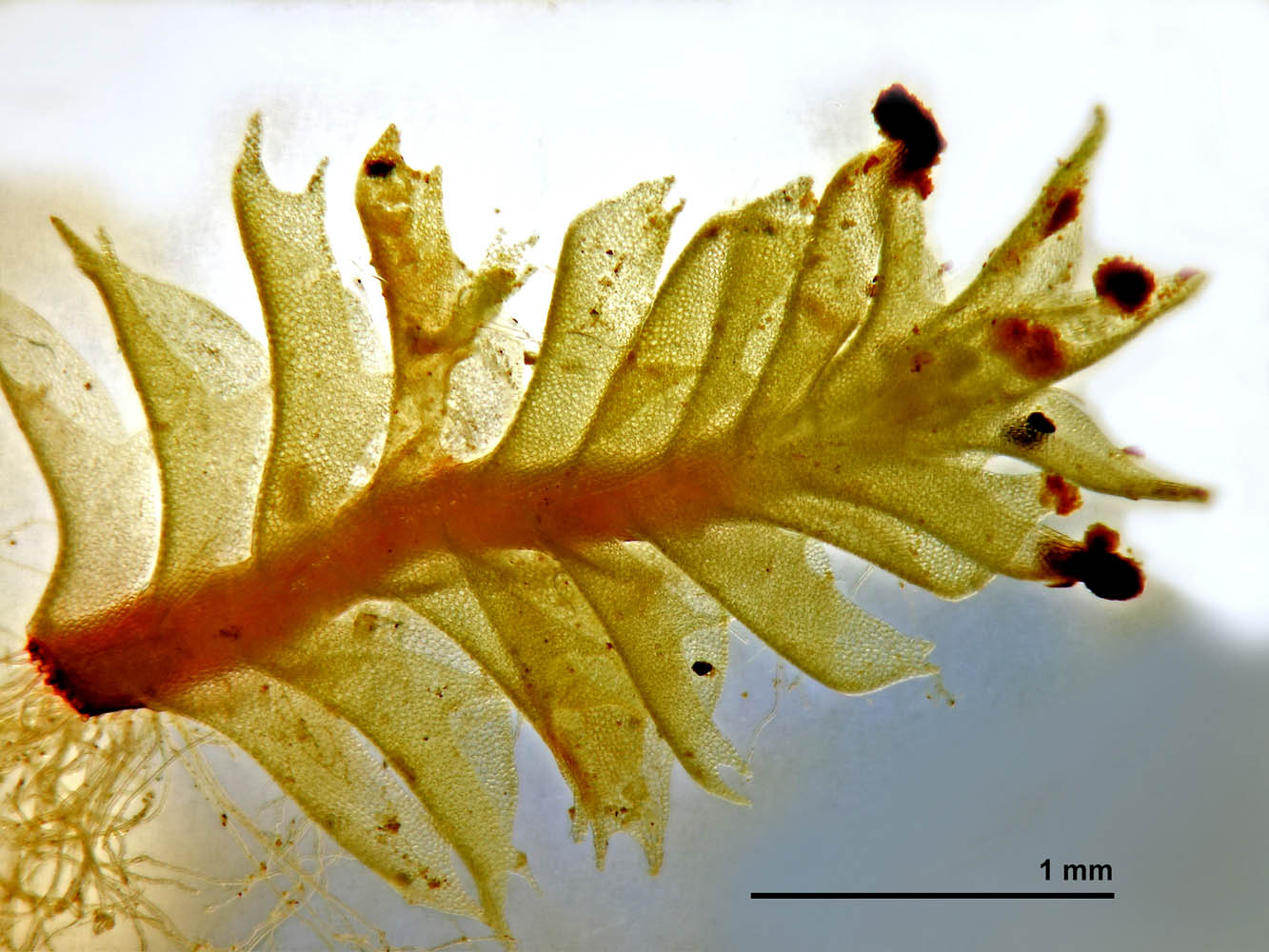 Tritomaria exsectiformis, shoot tip with gemmae. NW of Sisters, Jefferson County, Oregon. D.H. Wagner 7431.
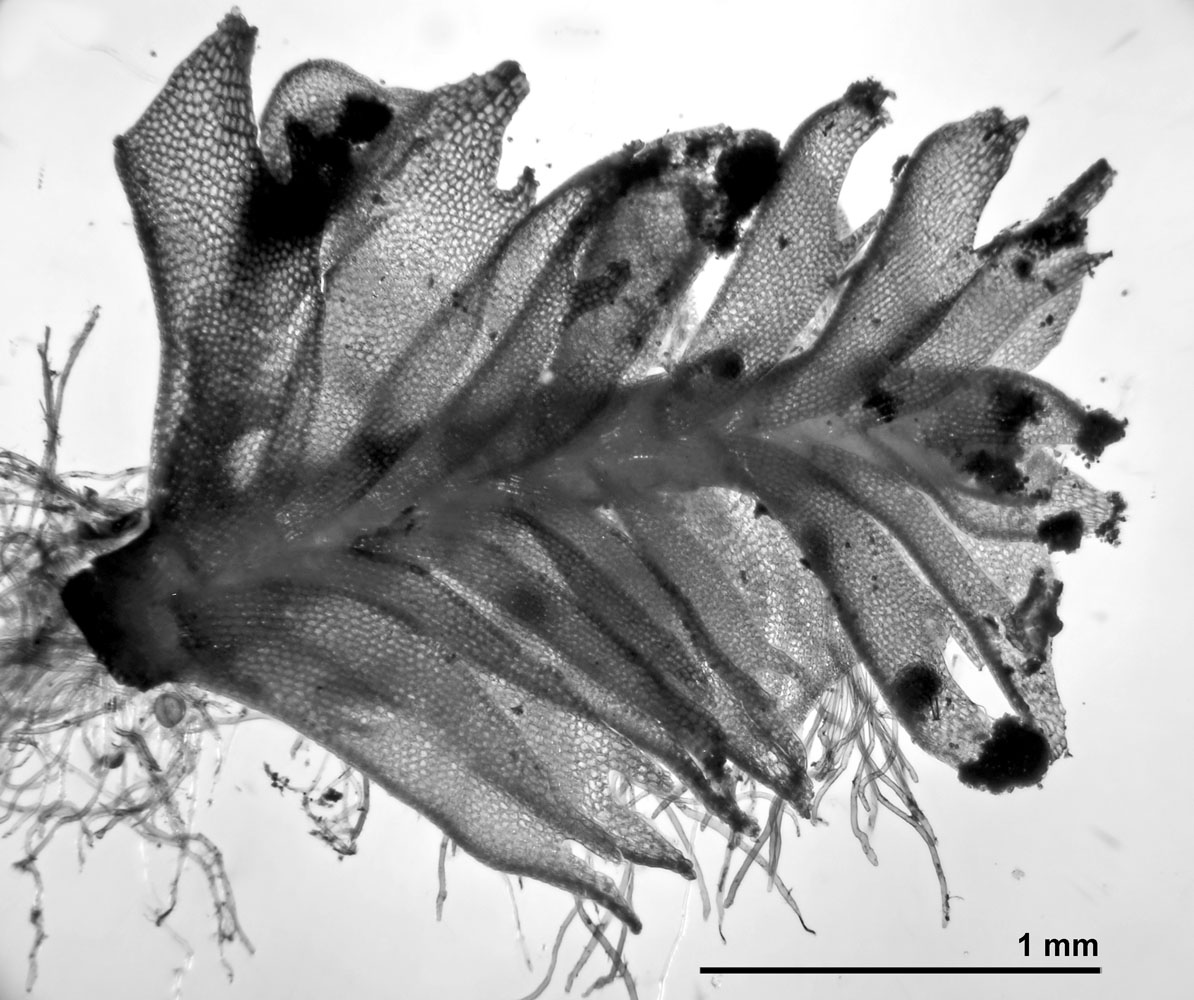 Tritomaria exsectiformis, shoot tip with gemmae. NW of Sisters, Jefferson County, Oregon. D.H. Wagner 7431.
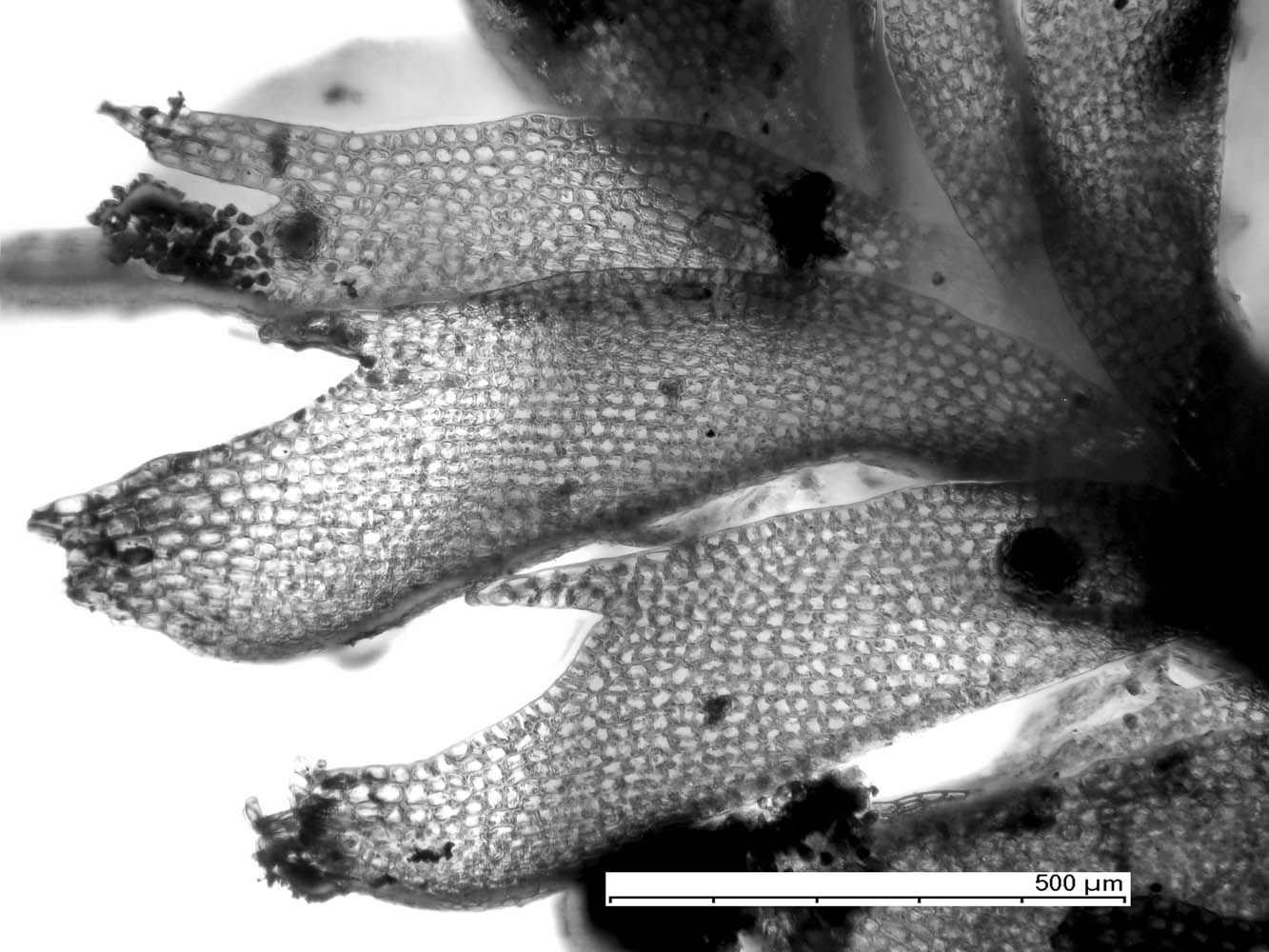 Tritomaria exsectiformis, leaves with gemmae. NW of Sisters, Jefferson County, Oregon. D.H. Wagner 7431.
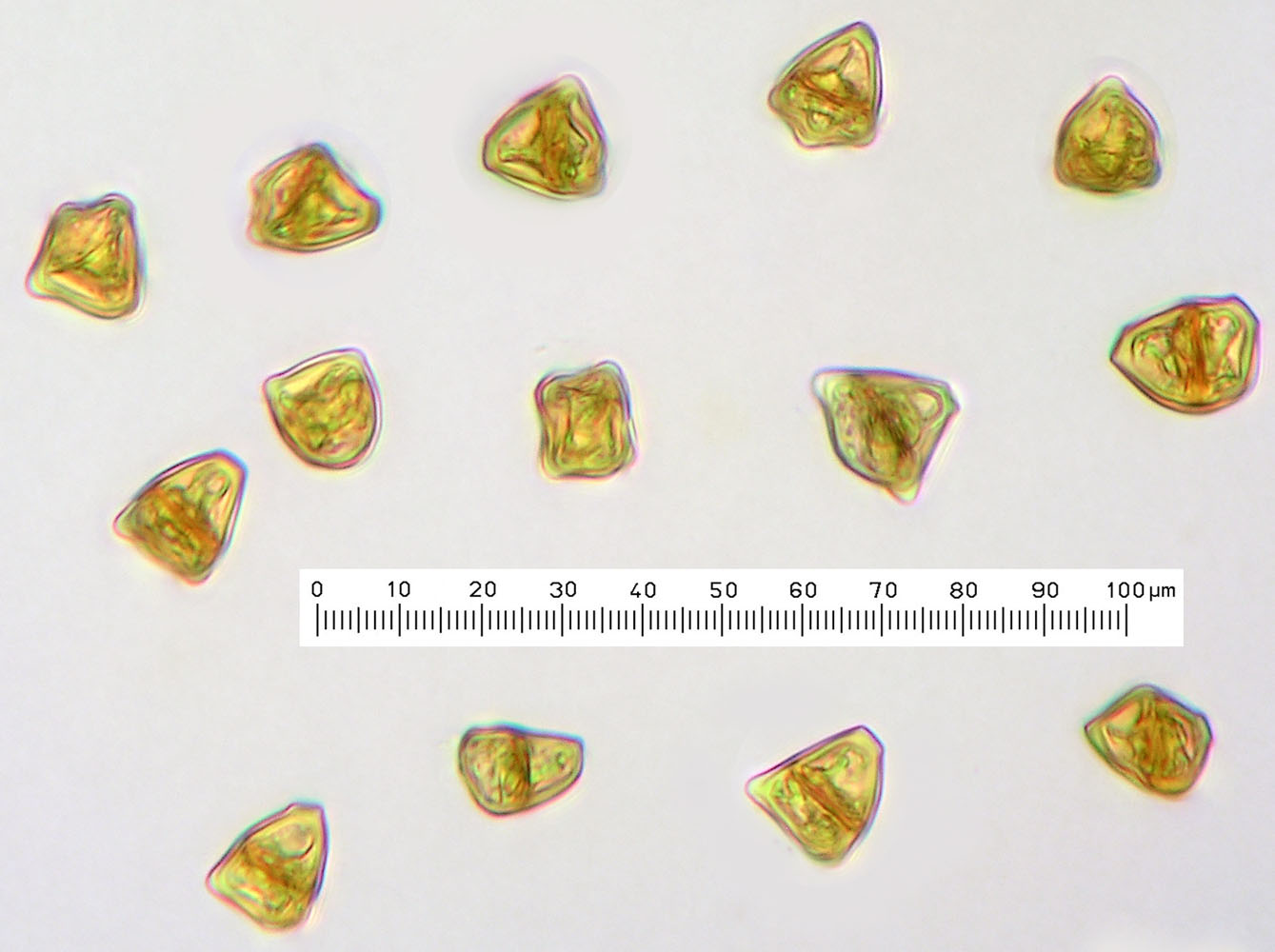 Tritomaria exsectiformis, angular gemmae. NW of Sisters, Jefferson County, Oregon. D.H. Wagner 7431.