Guide to Liverworts of Oregon: Cephalozia connivens (Dicks.) Lindb.
HOME SPECIES INDEX GENUS INDEX GLOSSARY
Cephalozia 1b sinus <0.5 of leaf > Cephalozia 7b perianth ciliate; cells less than 20 or more than 30 μm at lobe base > Cephalozia 9b cells more than 30 μm at lobe base > Cephalozia 10b 21-2 cells at lobe tips > Cephalozia connivens
Synonym: Fuscocephaloziopsis connivens (Jack. ex Spruce) Váňa & L. Sõderstr.
Special Status: None.
Recognition: This has large cells compared to C. lunulifolia. Measurements of lobe base cells given by Doyle (Doyle and Stotler 2006) are 30-56 µm wide X 41-71 µm long for C. connivens vs. 20-35 µm wide X 25-42 µm long in C. lunulifolia. Having connivent lobes is NOT an adequate distinguishing character; using this as an identifying feature has led to numerous misidentifications.
Distribution: On rotting wood; western Oregon. Circumboreal; south to California in the western states.
Comments: I have only recently found this in Oregon, having not previously seen authentic material from Oregon despite many literature references. It is important to use mature leaves for taking cell size measurements. On the third leaf illustrated below, suitable lobe base cells to measure are indicated by a red X. Sotler and Crandall-Stotler (2017) place this species in Fuscocephaloziopsis, a genus that their concept includes most of the traditional Family Cephaloziaceae.
 Cephalozia connivens California. W. Doyle. (photo 3333)
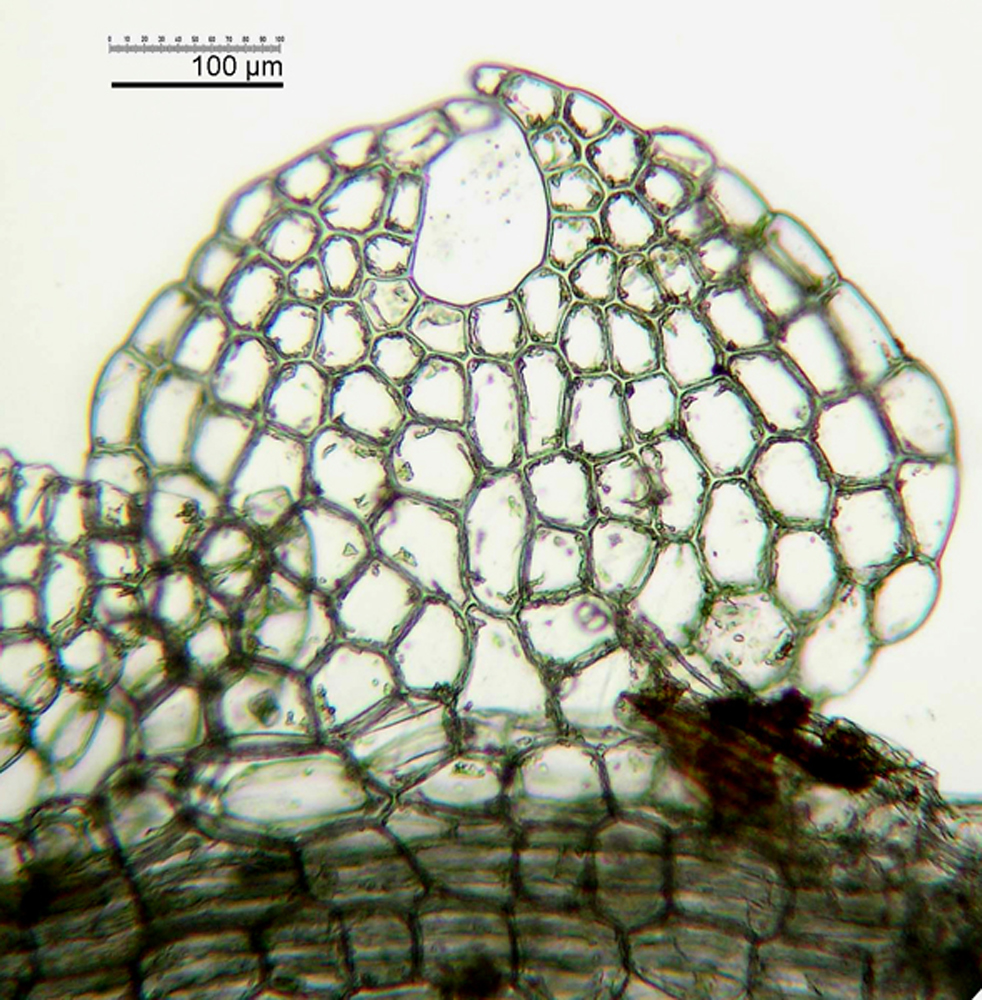 Cephalozia connivens California. W. Doyle. (photo 3270)
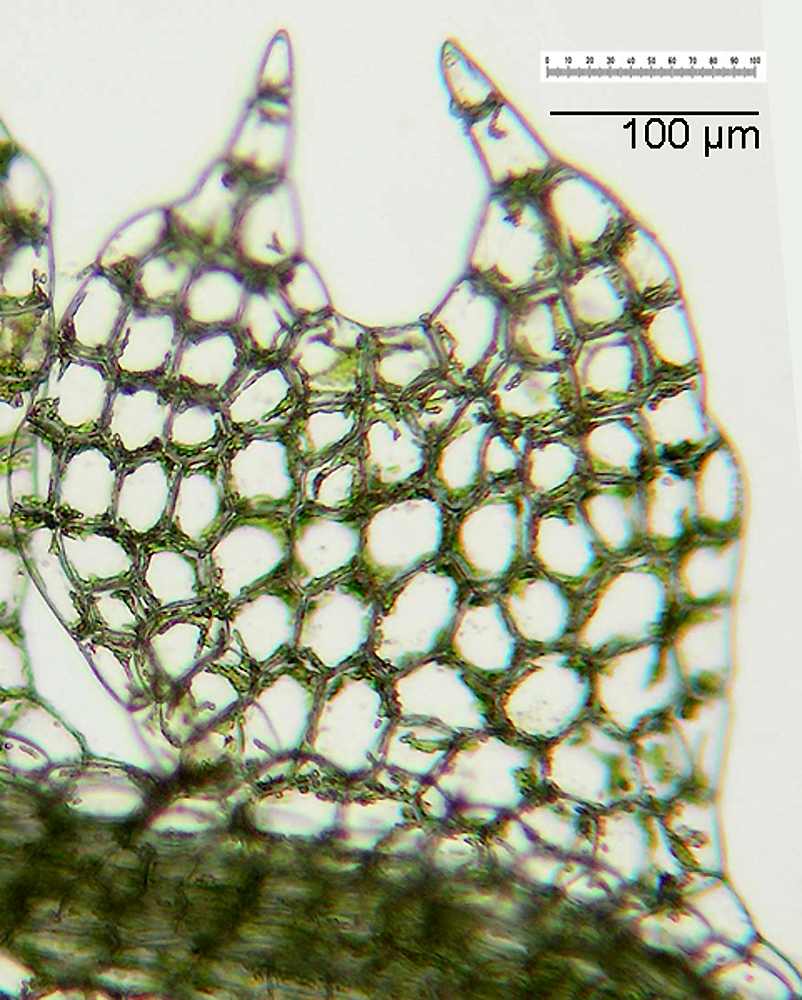 Cephalozia connivens California. W. Doyle. (photo 3345-lobe base cells to measure marked with red X)
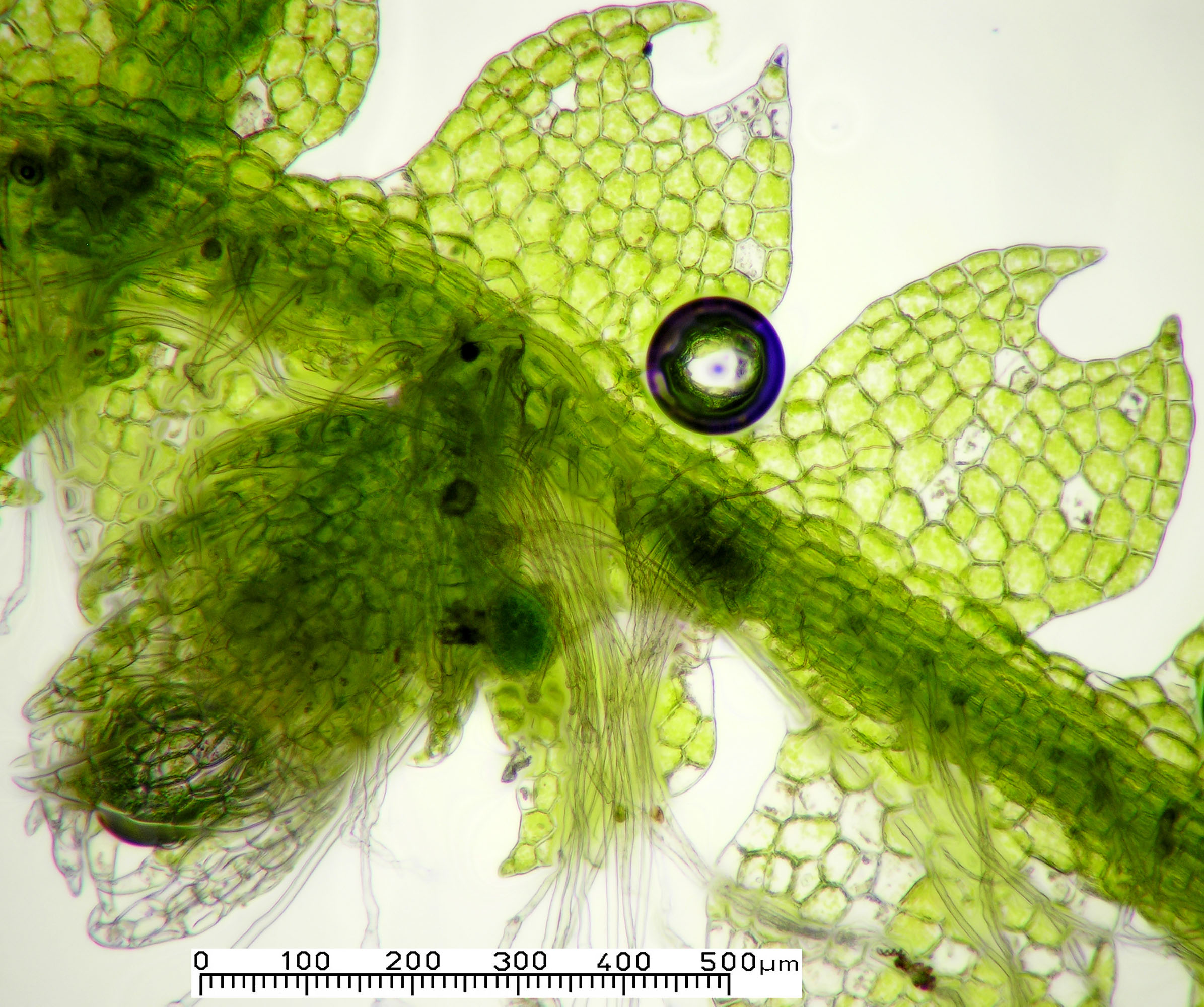 Cephalozia connivens. Note young gynoecium in lower left corner. Goodman Creek, Lane County, Oregon. DHW m3053