Guide to Liverworts of Oregon: Cephalozia lacinulata Jack ex Spruce
HOME SPECIES INDEX GENUS INDEX GLOSSARY
Cephalozia 1a sinus >0.5 of leaf > Cephalozia 2b leaf cells longer than 35 μm long > Cephalozia 5a leaves bifid .7 - .8 > C. lacinulata
Synonym: None.
Special Status: None, but could have based on rarity.
Recognition: This is an extremely small liverwort characterized by deeply bifid leaves with straight, narrow, triangular lobes. The critical diagnostic feature of sterile plants appears to be that that the sinus is only slightly deeper than 0.5 of the leaf length. Depauperate shoots of C. bicuspidata and C. otaruensis mimic this species. The comparison illustration below, from Opal Creek, was used as an example of a mixed colony of depauperate C. bicuspidata and C. lacinulata. It was posted in earlier versions of the Guide. I have reviewed this collection and concluded all are the same species: C. bicuspidata. I have included this here to alert users of past versions before February, 2023.
Distribution: Grows on rotting wood; to date known only from western Oregon.
Comments: Overlooked for years as depauperate C. bicuspidata. The number of records in Oregon is less than five, which makes this a candidate for listing in the ORNHIC RTE book. However, it is likely that this species will be found to be relatively frequent once bryologist learn to search for and recognize it.
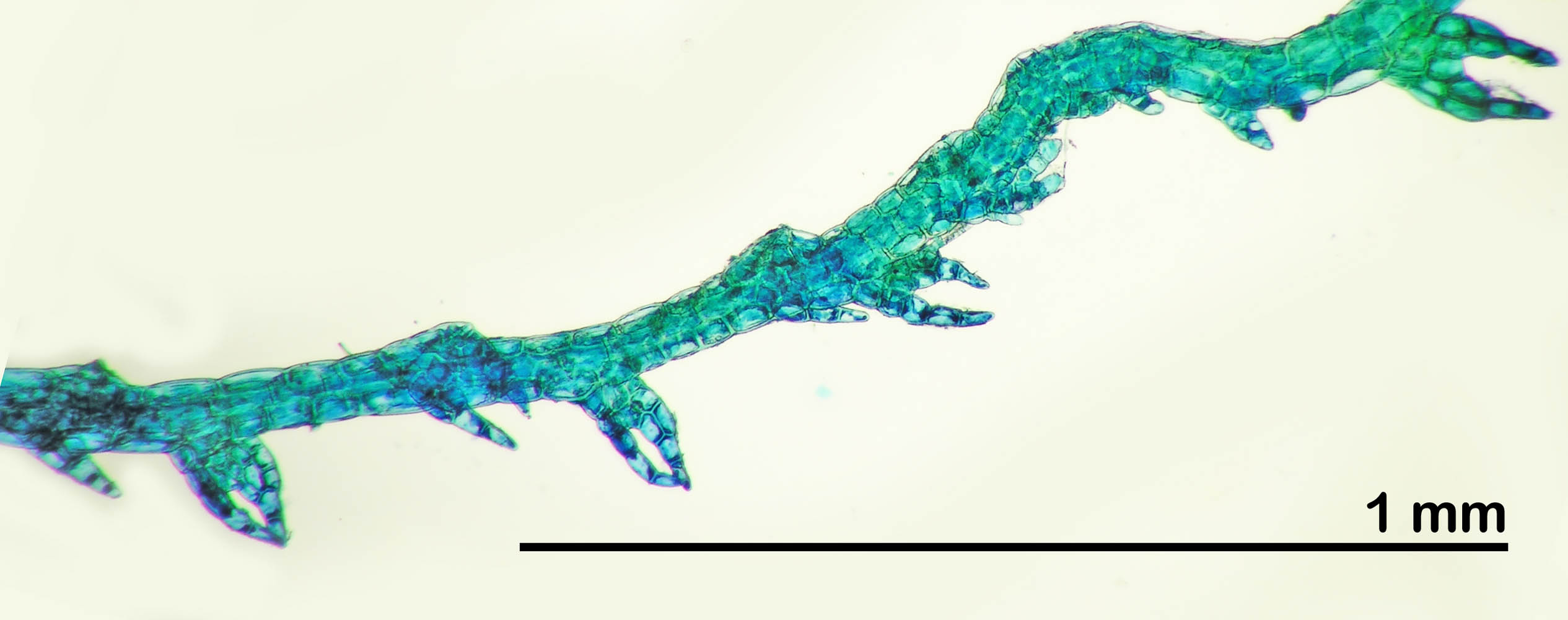 Three Sisters Wilderness, Deschutes County, Oregon. DHW
m2841
Three Sisters Wilderness, Deschutes County, Oregon. DHW
m2841
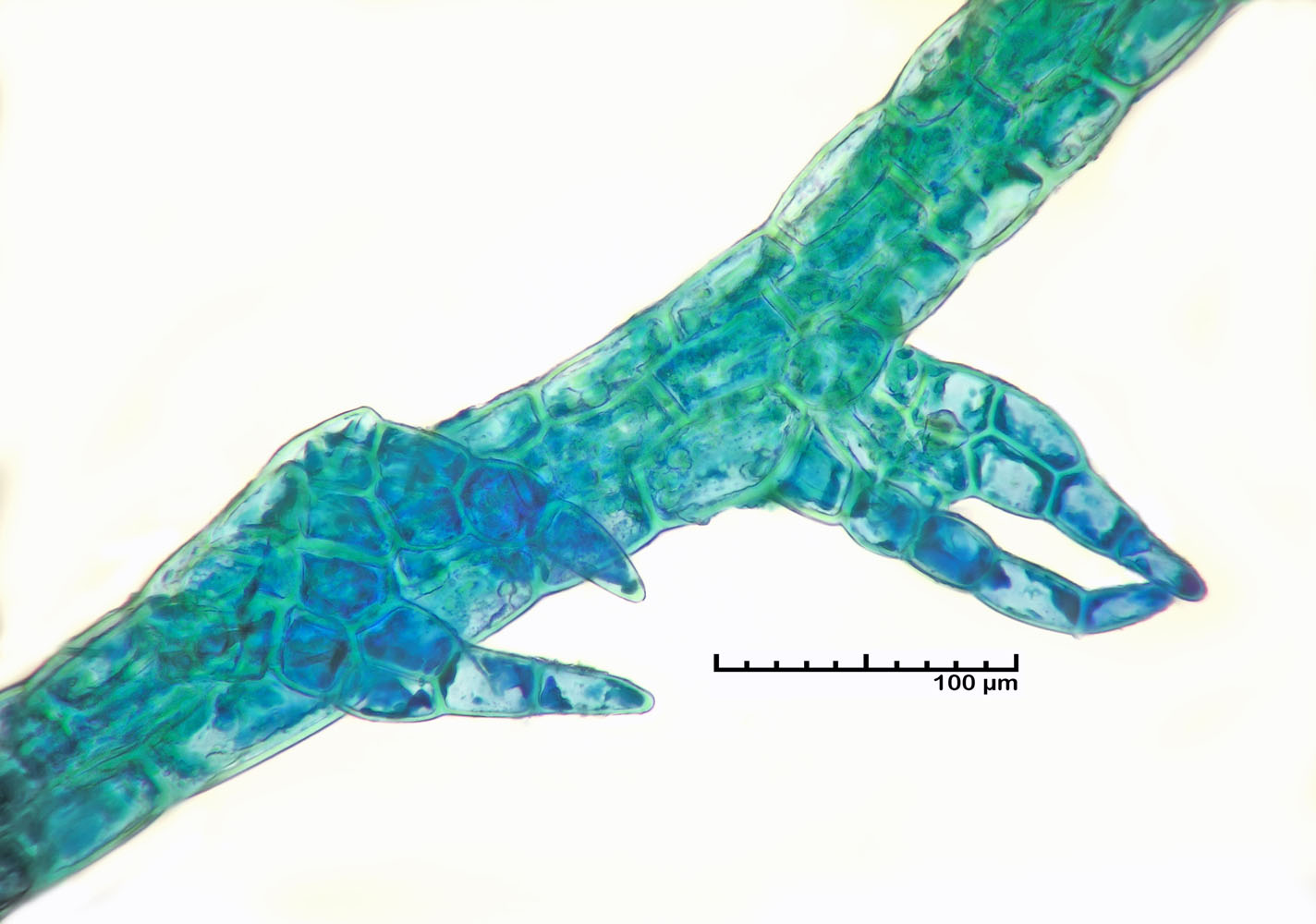 Three Sisters Wilderness, Deschutes County, Oregon. DHW
m2841
Three Sisters Wilderness, Deschutes County, Oregon. DHW
m2841
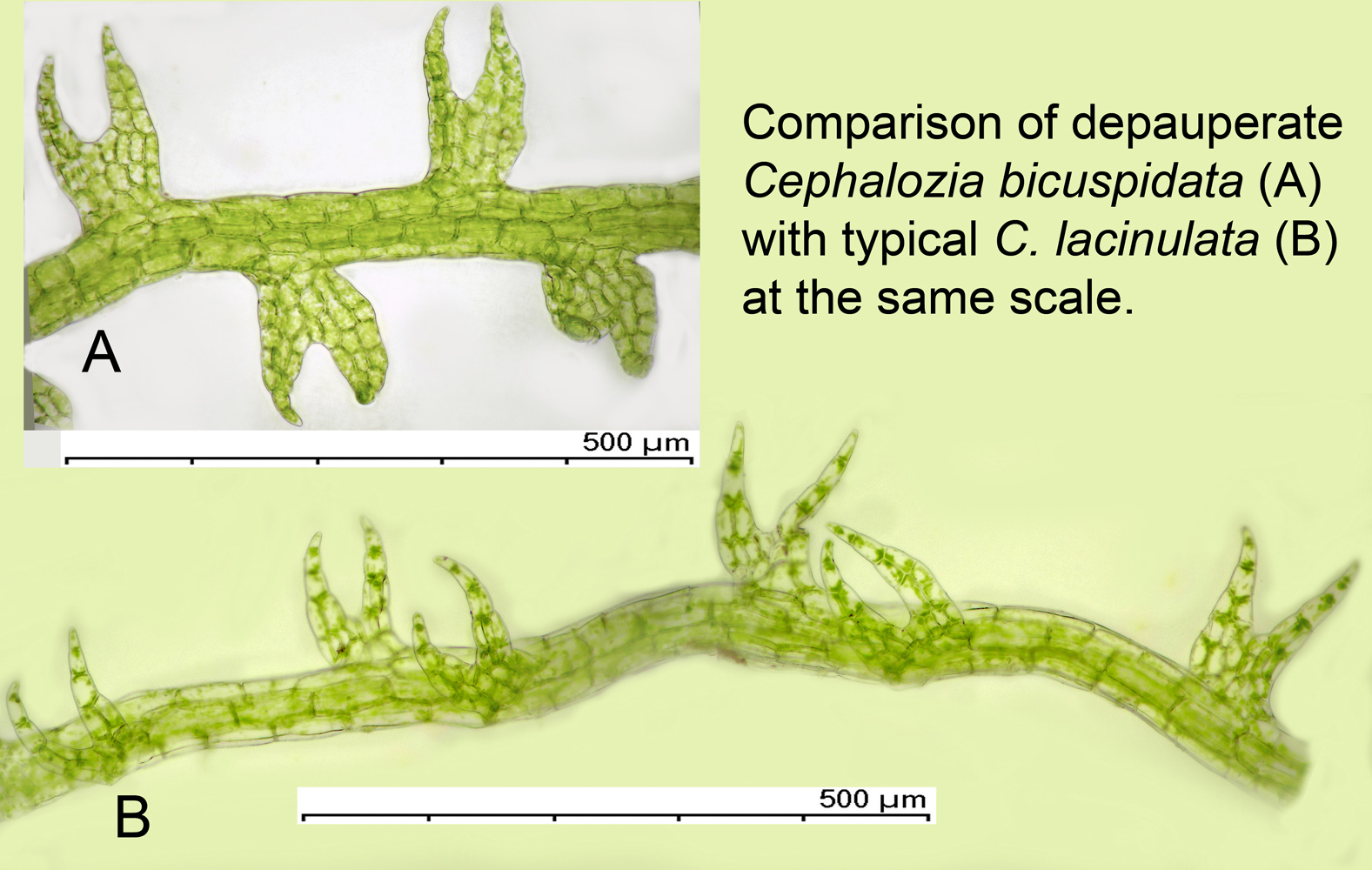 NOTE: this is a faulty comparison, included here to alert users of previous versions. Both of these shoots are depauperate C. bicuspidata. Opal Creek, Marion Co., Oregon. DHW
m2129a
NOTE: this is a faulty comparison, included here to alert users of previous versions. Both of these shoots are depauperate C. bicuspidata. Opal Creek, Marion Co., Oregon. DHW
m2129a