Guide to Liverworts of Oregon: Chiloscyphus polyanthos (L.) Corda
HOME SPECIES INDEX GENUS INDEX GLOSSARY
Chiloscyphus 1a leaves round, rarely retuse > Chiloscyphus 2a oil bodies mostly 2 per cell > Chiloscyphus polyanthos
Synonyms: None.
Recognition: This species is distinguished by round, succubous leaves on a stem with rhizoids clustered at the base of bifid underleaves. It is very similar to Chiloscyphus pallescens. That species has more than two oil bodies per cell while Chiloscyphus polyanthos has only two oil bodies per cell in over 80% of its median leaf cells.
Distribution: Almost always found as a submerged aquatic, usually in fast flowing water, attached to stones and sticks in the stream bed. Not nearly as likely as likely to be found out of water as Chiloscyphus pallescens. Best developed in the streams immediately below high volume, cold water springs.
Comments: According to Schuster, this species is an indicator of pure water. It has become quite scarce in NE United States, apparently due to acid rain.
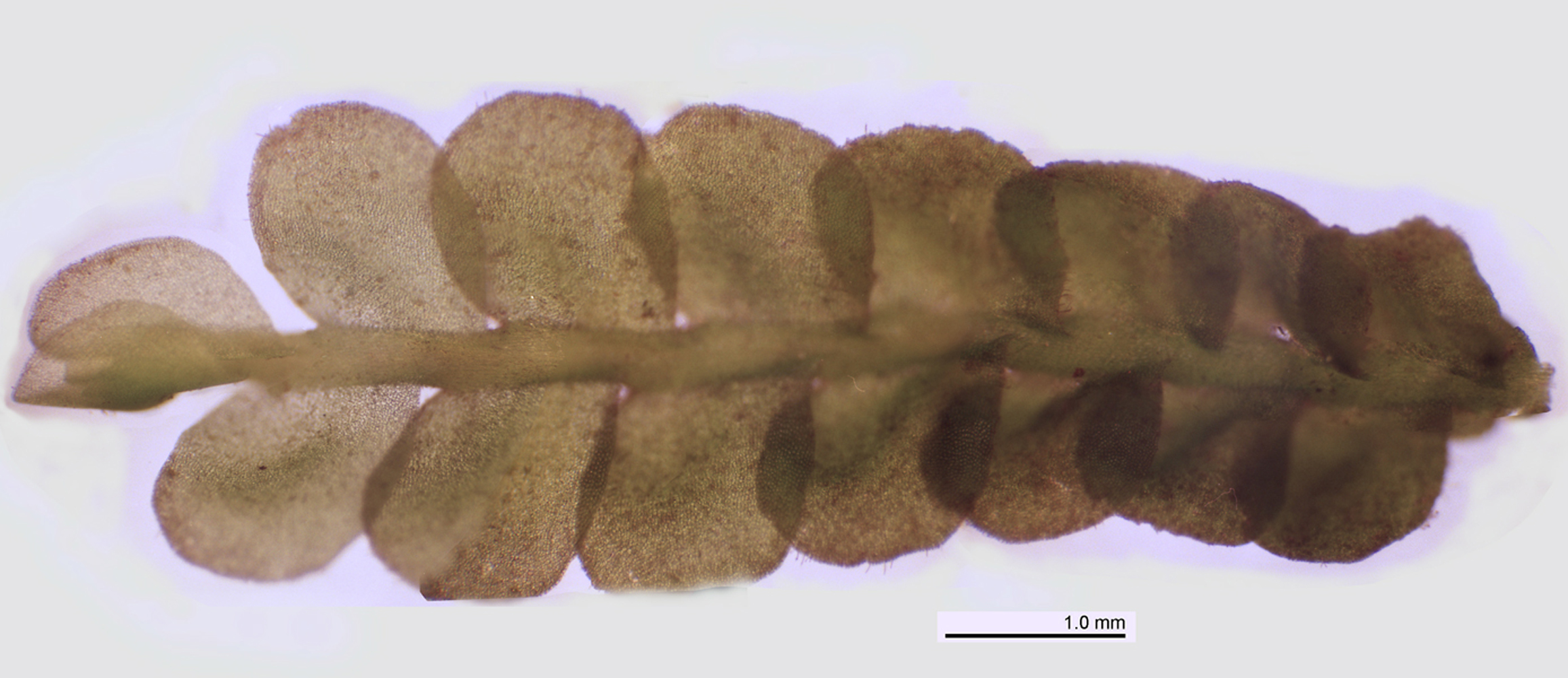
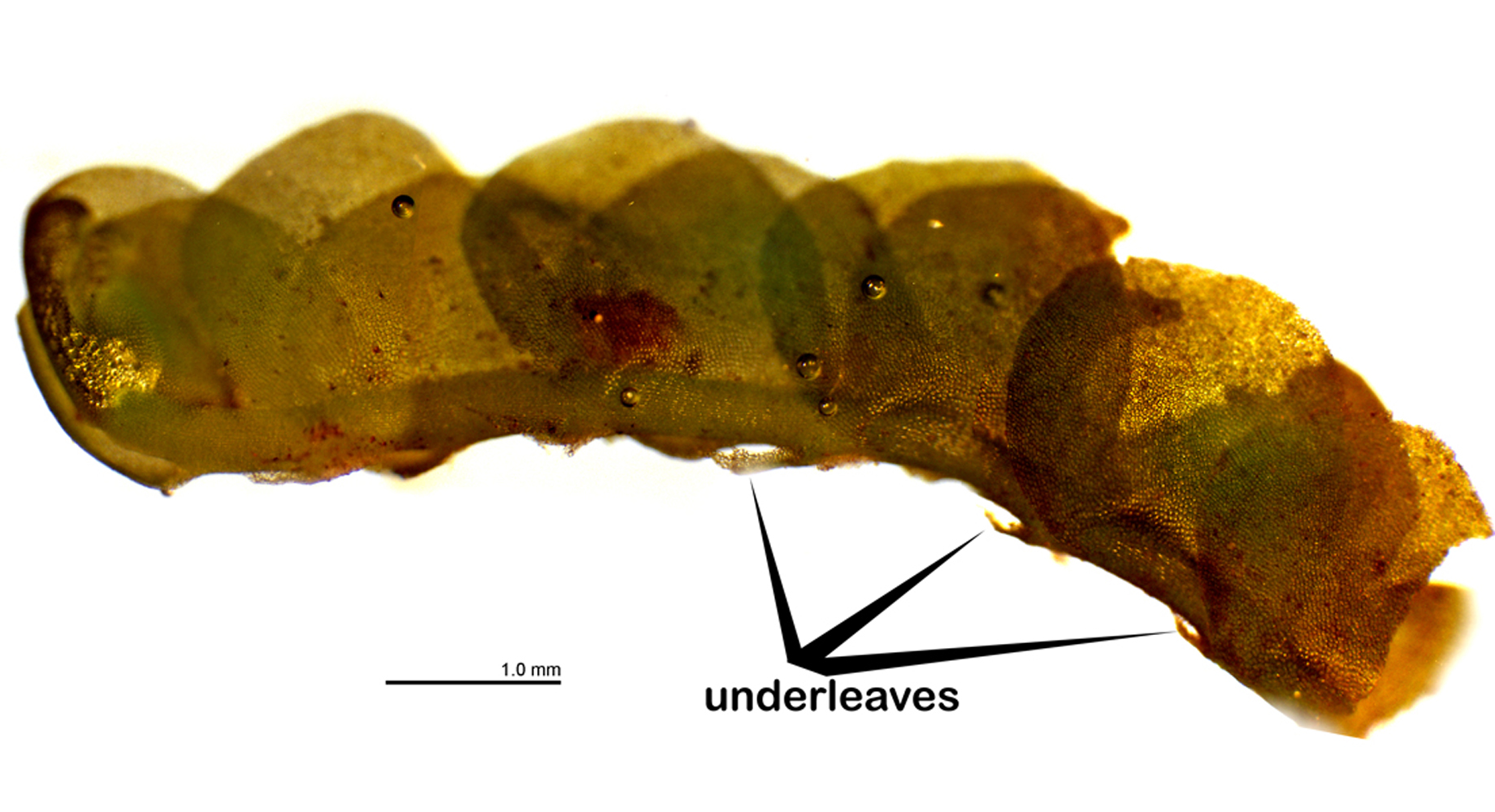 Jack Creek, Jefferson County, Oregon, DHW m1344.
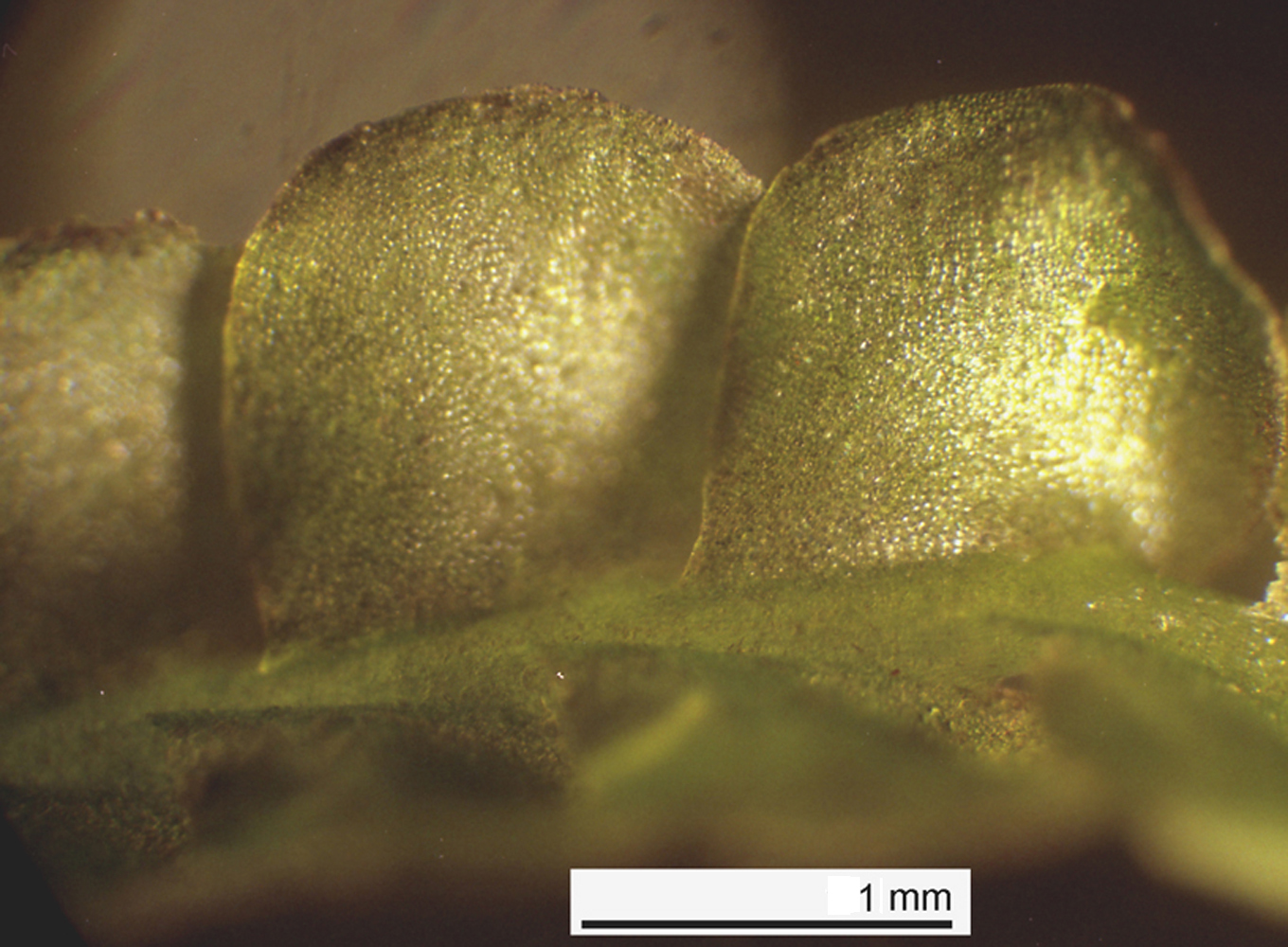
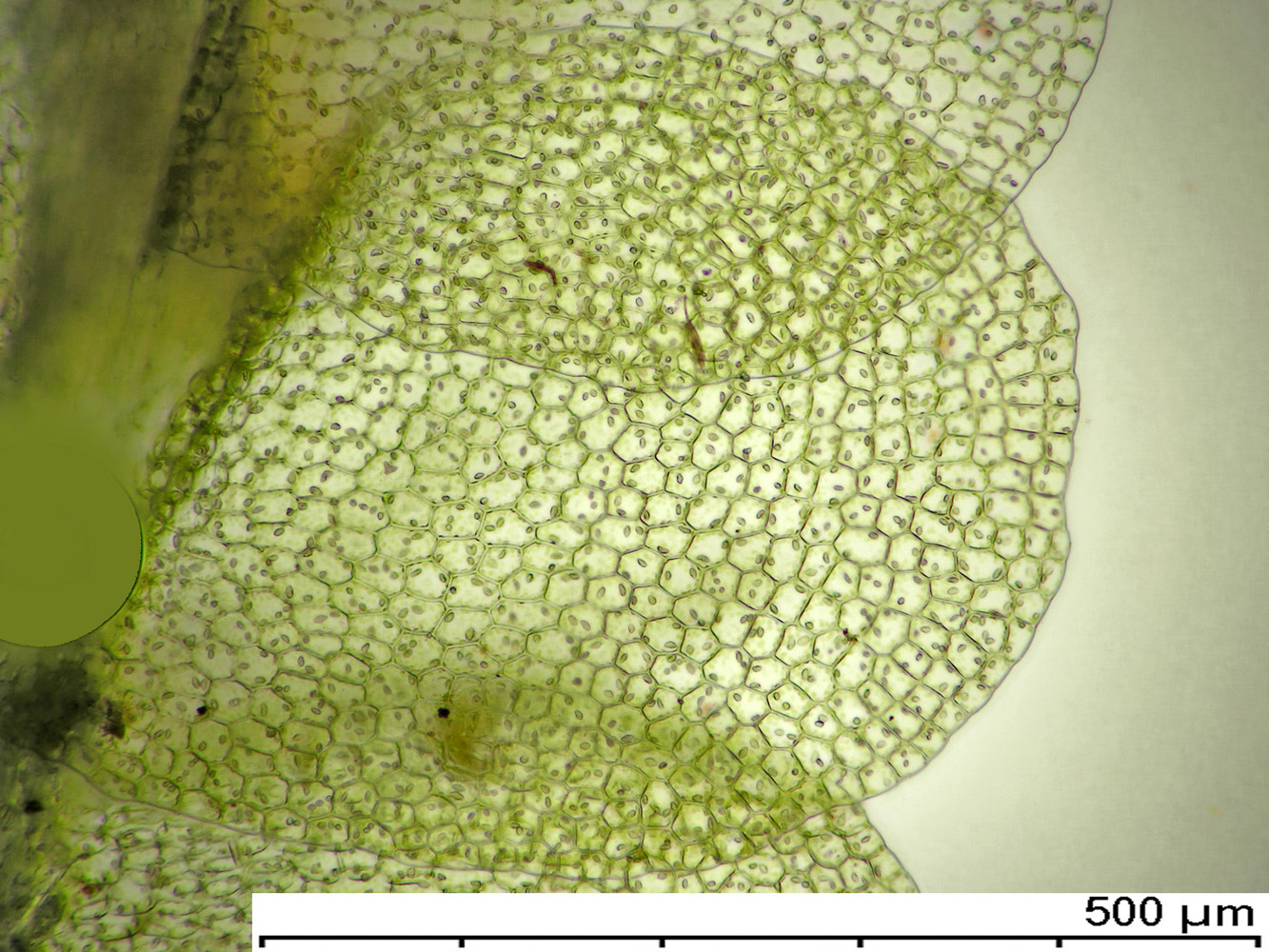 Leaves. Left: reflected light, Jack Creek, Jefferson County, Oregon, DHW m1344. Right: transmitted light, Opal Creek, Marion County, Oregon, DHW m2132.
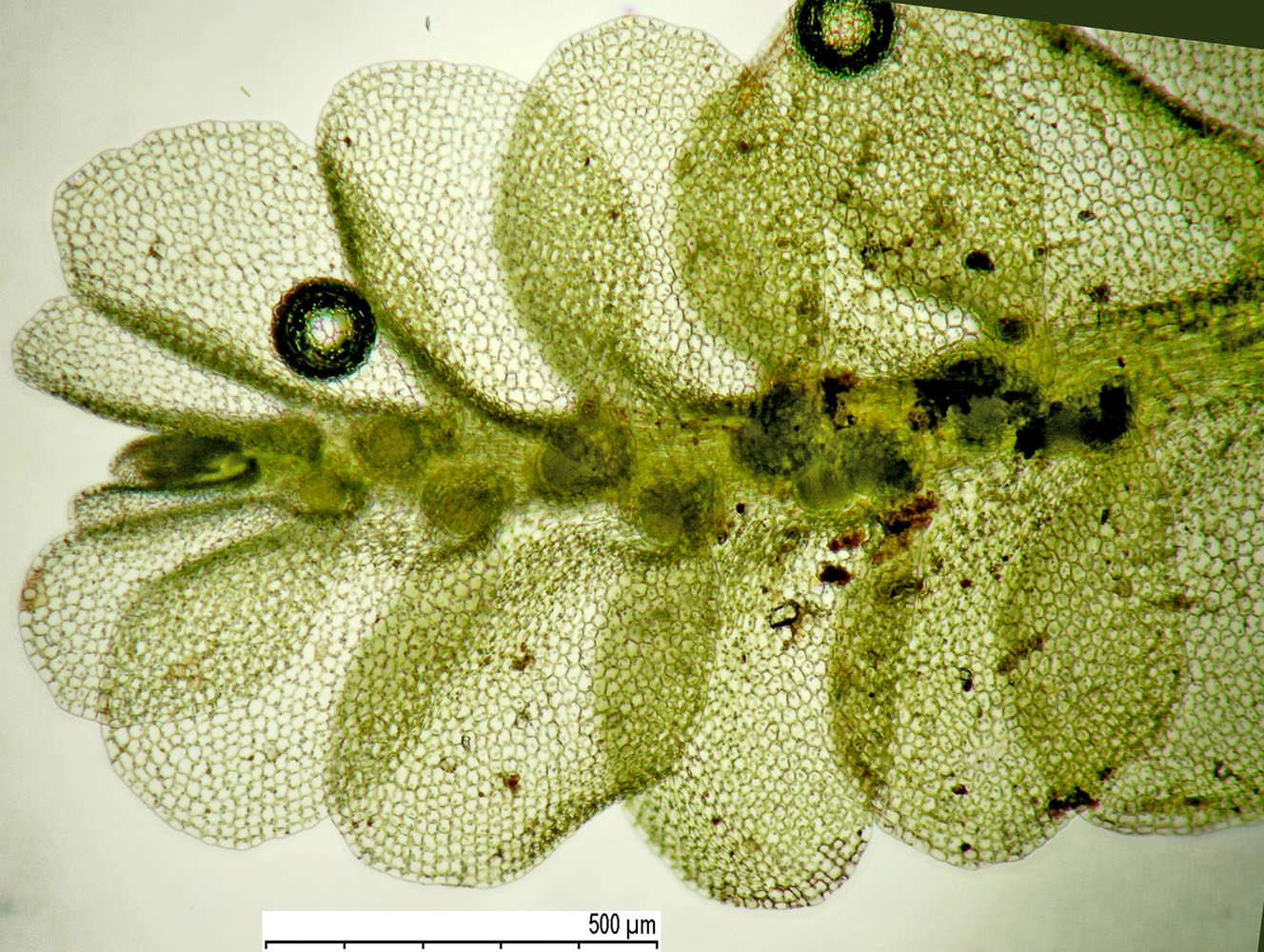 Male shoot. Opal Creek, Marion County, Oregon, DHW m2132.
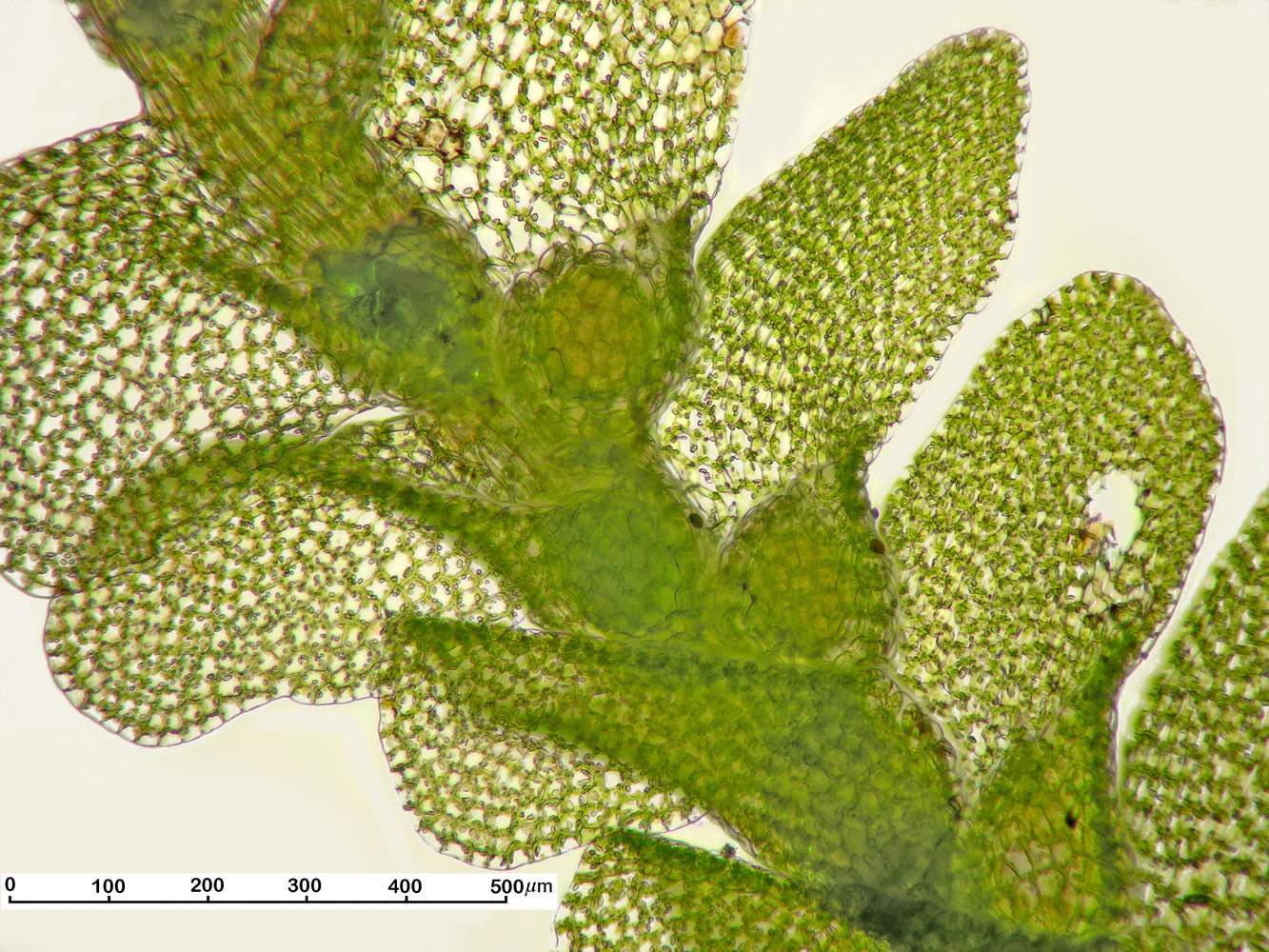 Male shoot. Santa Cruz County, California. DHW m2826a.
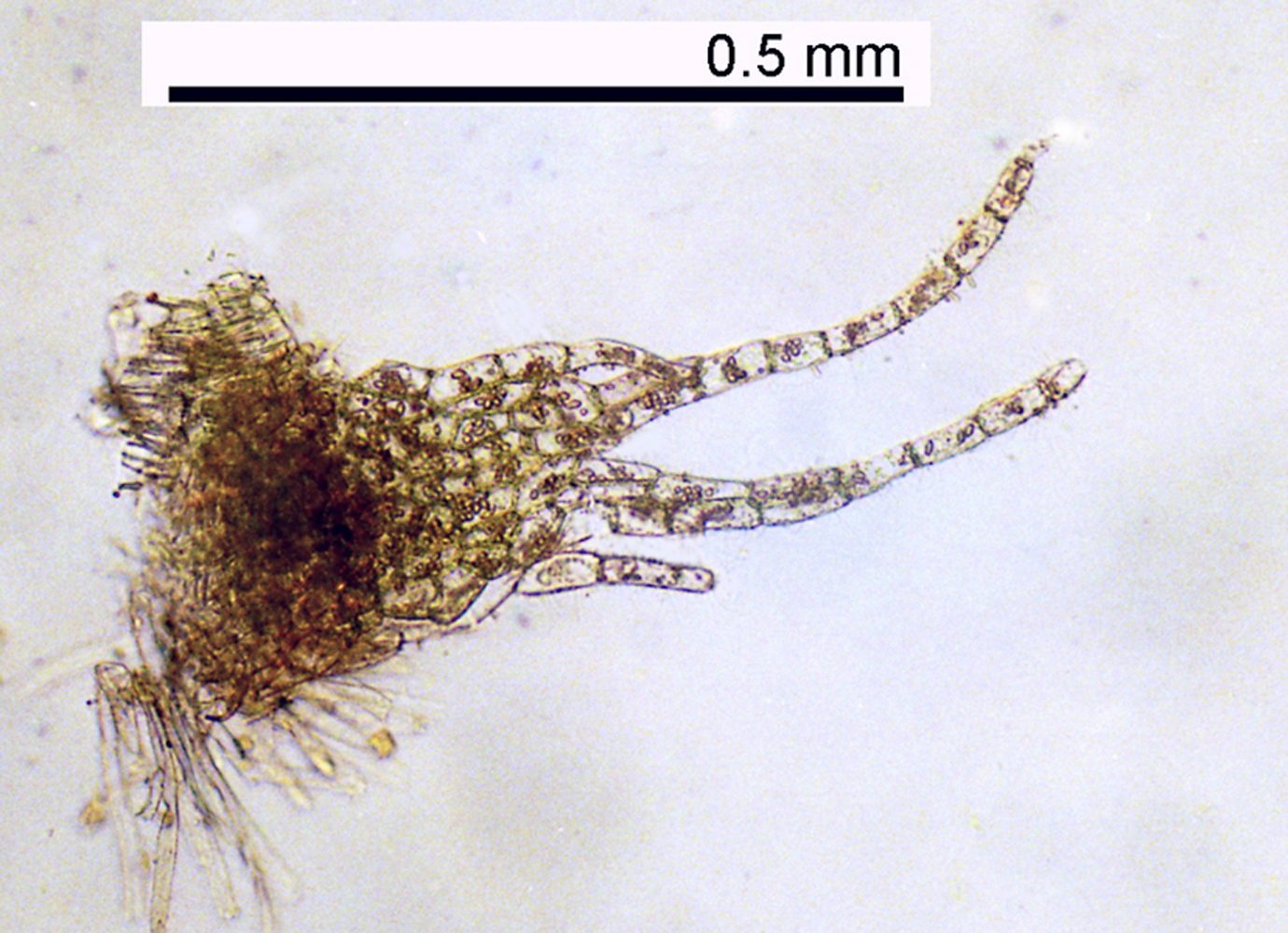
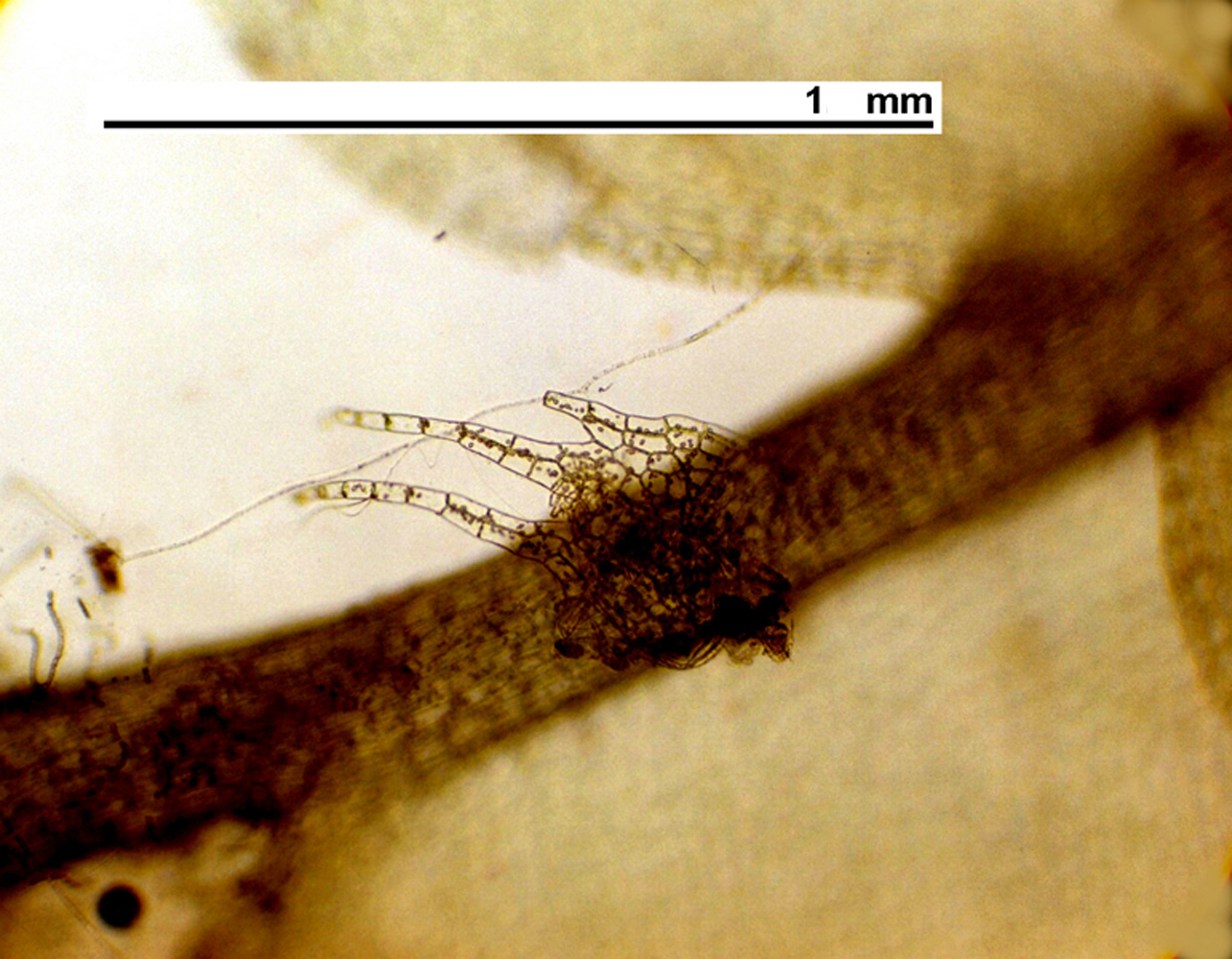 Bifid underleaves. Left: Jack Creek, Jefferson County, Oregon, DHW m1344. Right: Modoc County, California, DHW m1443b
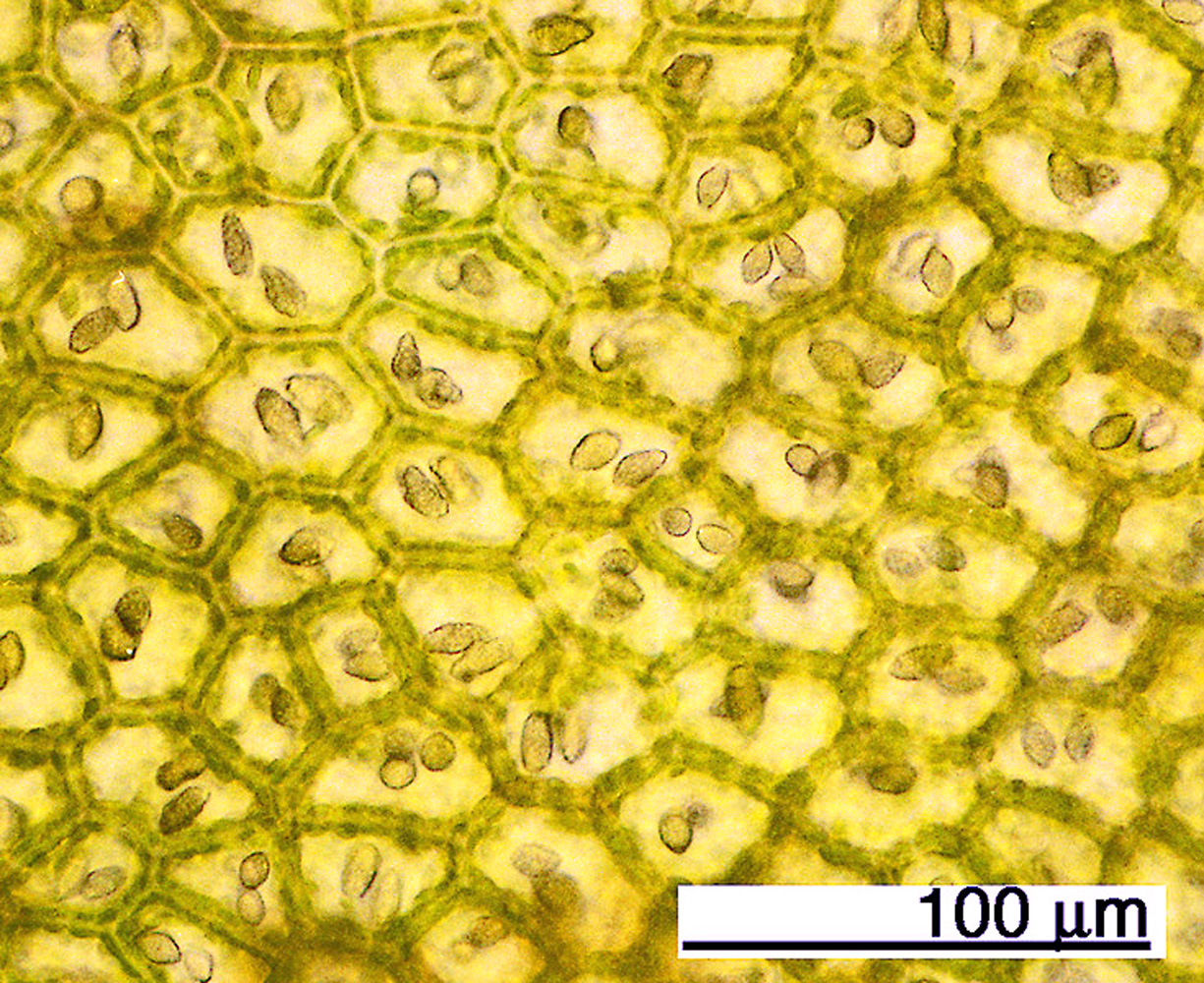
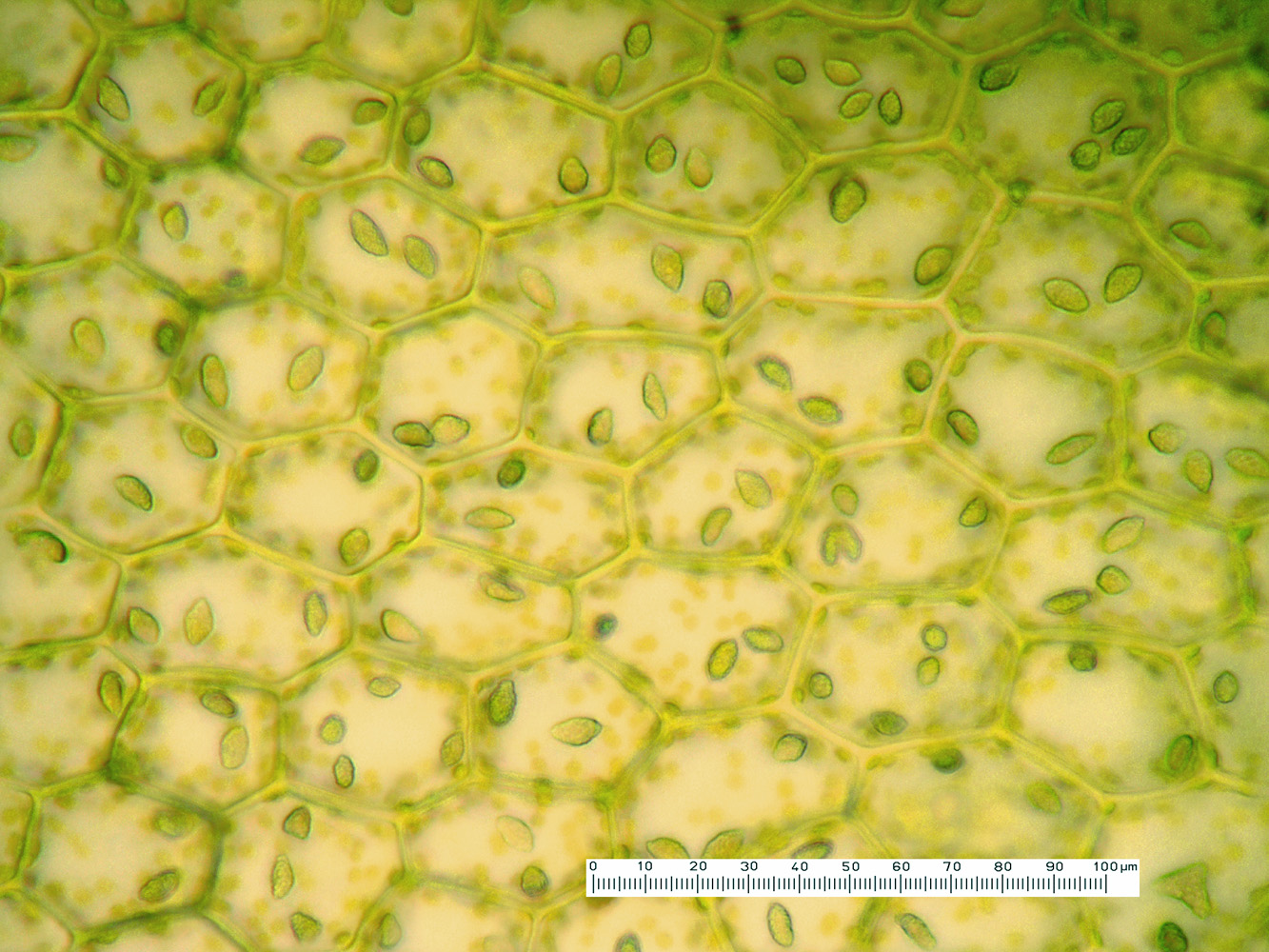 Oil bodies. Left: Jack Creek, Jefferson County, Oregon, DHW m1344. Right: Opal Creek, Marion County, Oregon, DHW m2132.
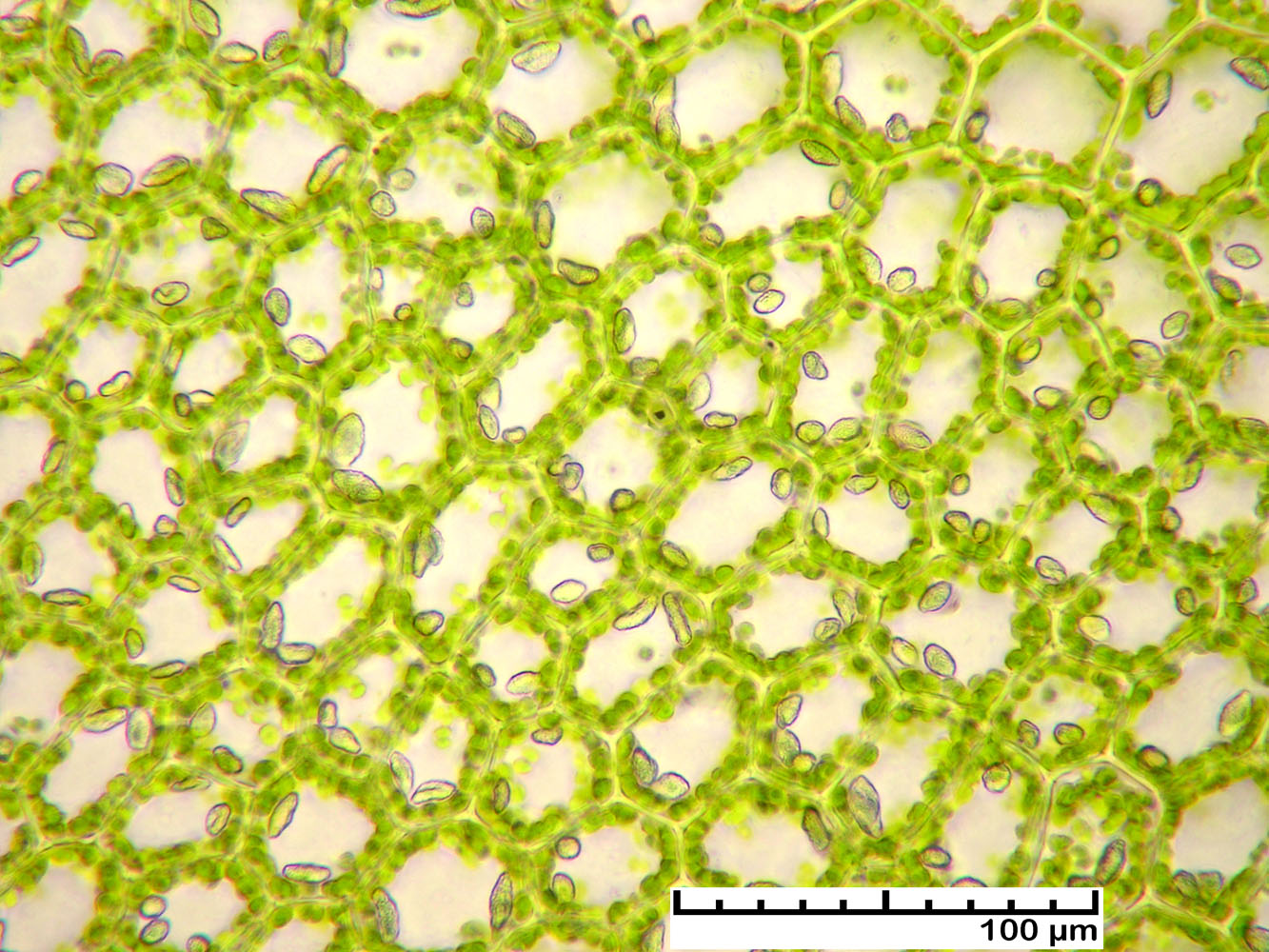 Oil bodies. Santa Cruz County, California. DHW m2826a.