Guide to Liverworts of Oregon: Diplophyllum albicans (L.) Dum.
HOME SPECIES INDEX GENUS INDEX GLOSSARY
Diplophyllum 1b leaves not decurrent > Diplophyllum 2b leaf lobes vittate > Diplophyllum albicans
Synonym: None.
Special Status: At one time this was included as a species of interest in the Northwest Forest Plan but it no longer has any special status.
Recognition: A dark green to reddish brown plant that has two rows of bilobed leaves. The leaf bases wrap around the stem; the lobes are folded over each other, oblong, parallel sided, two or three times longer than wide. The lobes on the upper side, the dorsal lobes, are shorter than the ventral lobes and are angled closer to the apex than the ventral lobes. This species is distinguished by an central stripe of elongated cells which runs down the middle of each lobe, often visible to the naked eye. This stripe is called a vitta; it appears whitish when examined with a hand lens.
Distribution: On soil, rarely organic substrates, in the Coast Range and Cascade Mountains.
Comments: The only other close species found in Oregon of with a vitta is Macrodiplophyllum rubrum. This latter has a pale greenish color and has a red, dentate decurrent wing on the ventral side that looks like a dark, wavy line under a handlens. It grows on tree trunks, mostly Sitka spruce, is commonly associated with Scapania bolanderi, and is confined to the coastal strip in Oregon.
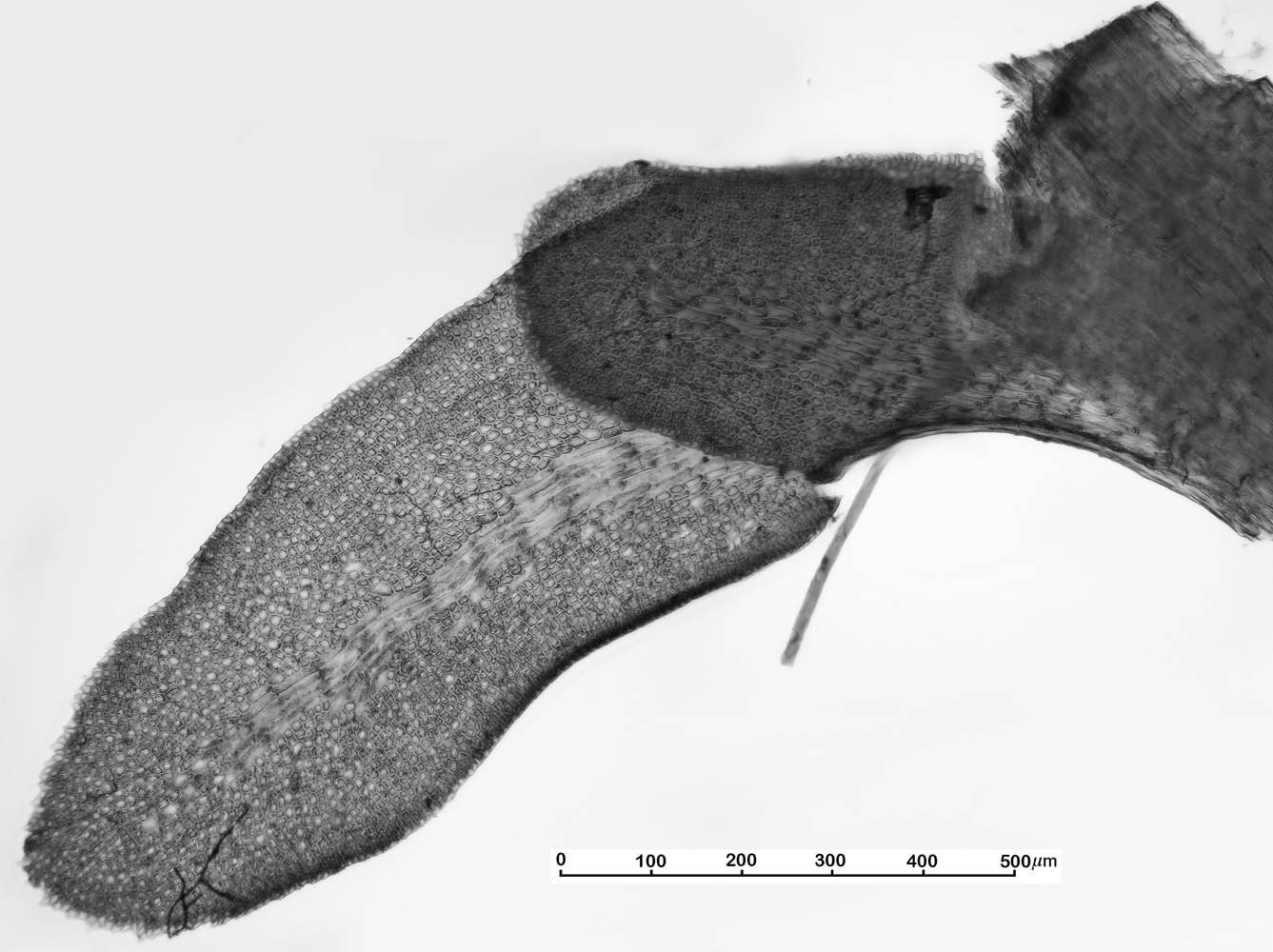 Diplophyllum albicans, Sutton Beach, Lane Co., Oregon. DHW 14 Feb 1987.
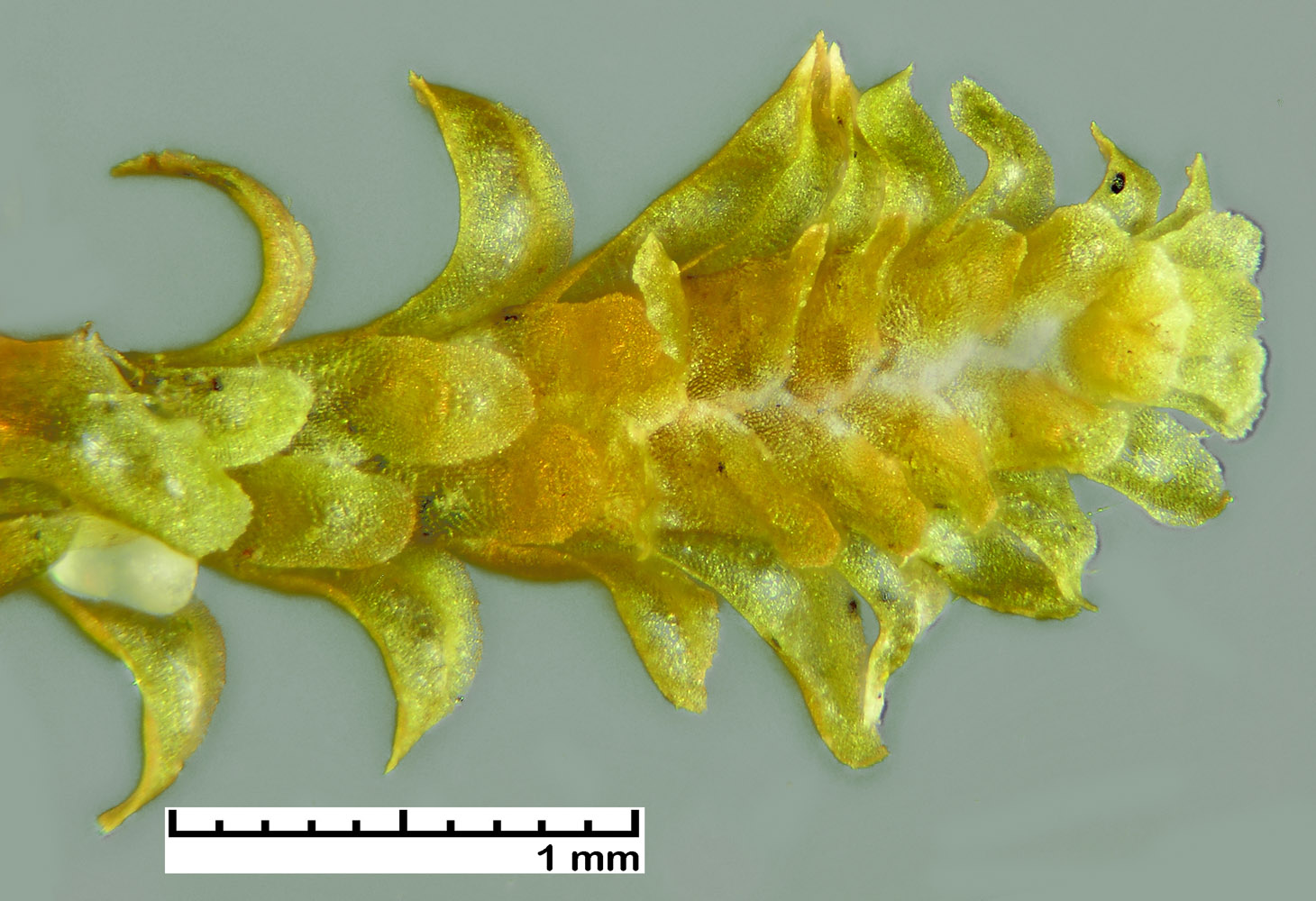 Male shoot, dry in air. Sutton Beach, Lane Co., Oregon. DHW 14 Feb 1987.
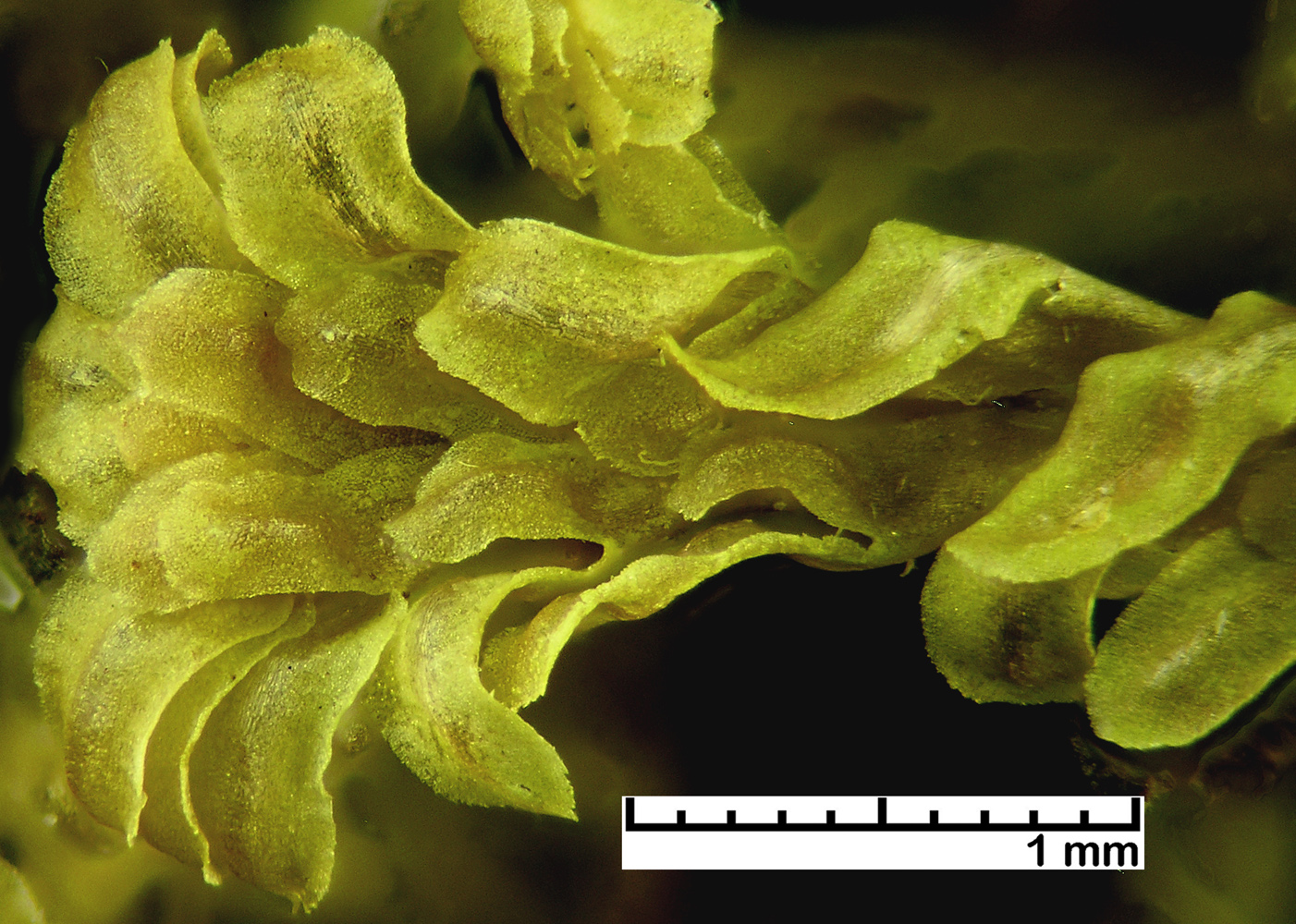 Dorsal aspect, dry in air. Haida Gwai, British Columbia, J. Harpel 48462 (UBC).
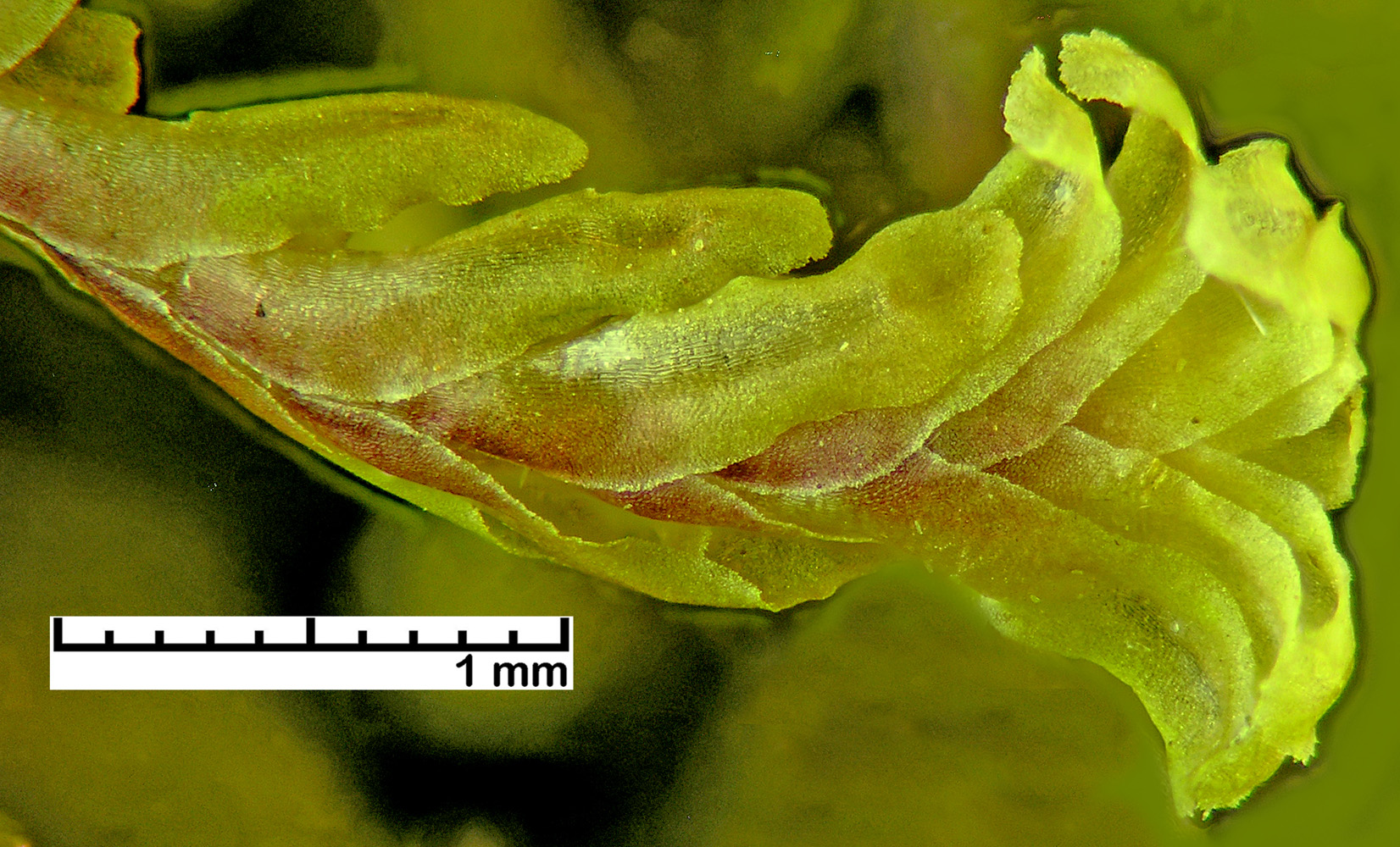 Ventral aspect, dry in air. Haida Gwai, British Columbia, J. Harpel 48462 (UBC).
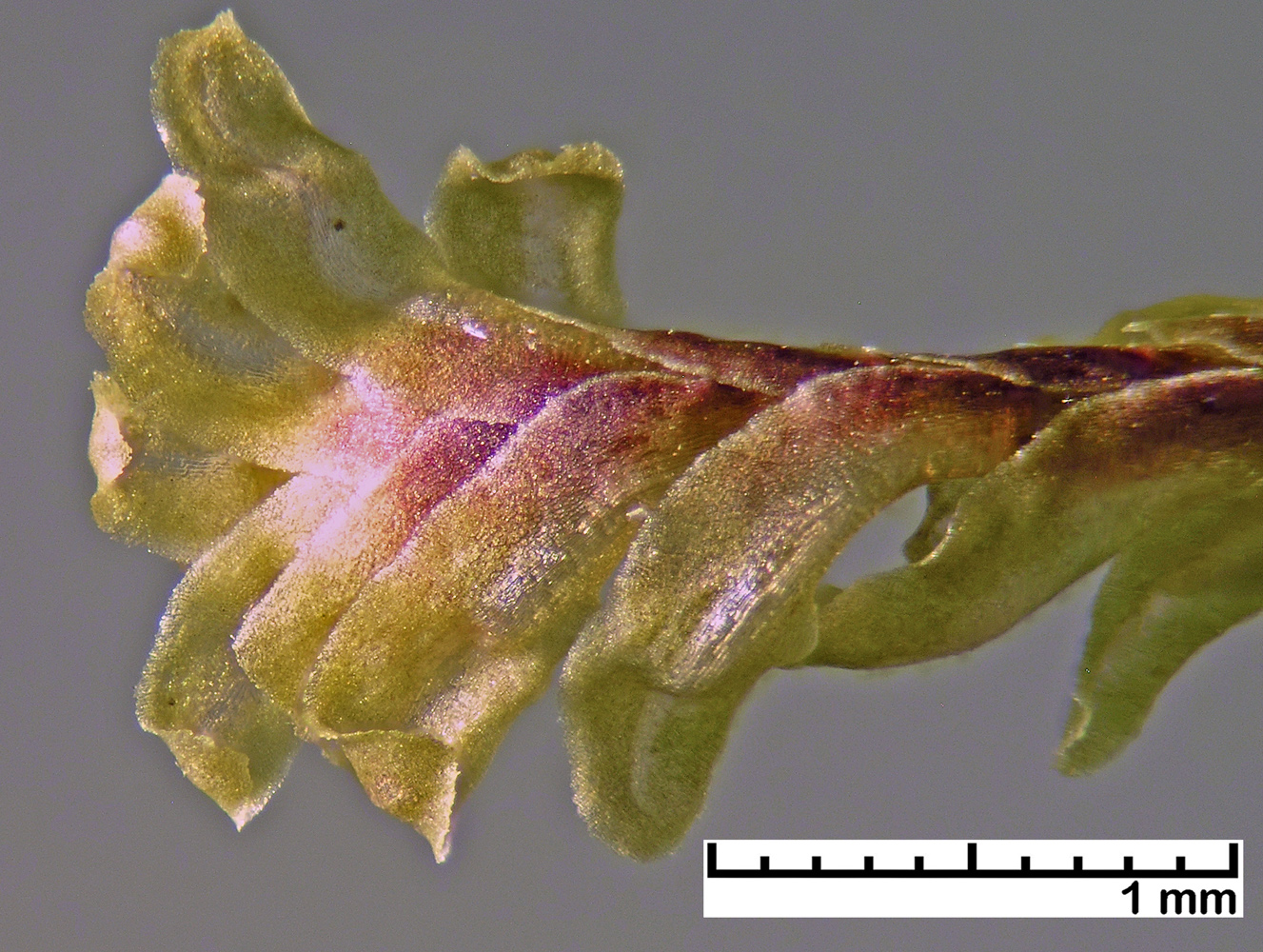 Ventral aspect, dry in air. Haida Gwai, British Columbia, J. Harpel 48462 (UBC).