Guide to Liverworts of Oregon: Radula bolanderi Gott.
HOME SPECIES INDEX GENUS INDEX GLOSSARY
Radula 1a microphyllous branchlets lacking > Radula 2a dioicous > Radula bolanderi
cezspiSynonyms: None.
Special Status: None.
Recognition: This is the only dioicous species in the genus in our area. The male plants are distinctive, with long androecia that look like very long rattlesnake tails. Female plants can be distinguished from F. complanata, its closest look-alike, by the lack of male bracts below the perianths. Sterile plants are distinguished from Radula complanata by leaf shape and relative size of the oil bodies. The leaves of R. bolanderi are slightly angled towards the stem apex while the leaves in R. complanata spread at nearly right angles. In R. bolanderi the oil bodies nearly fill the cells while in Radula complanata the oil bodies are only about half the diameter of the cell.
Distribution: On bark of shrubs and trees, sometimes on the same stems as Radula complanata. Widespread in forested regions at low to middle elevations in western Oregon.
Comments: It is interesting how abundant this can be on slender stems of shrubs like salmonberry and ninebark.
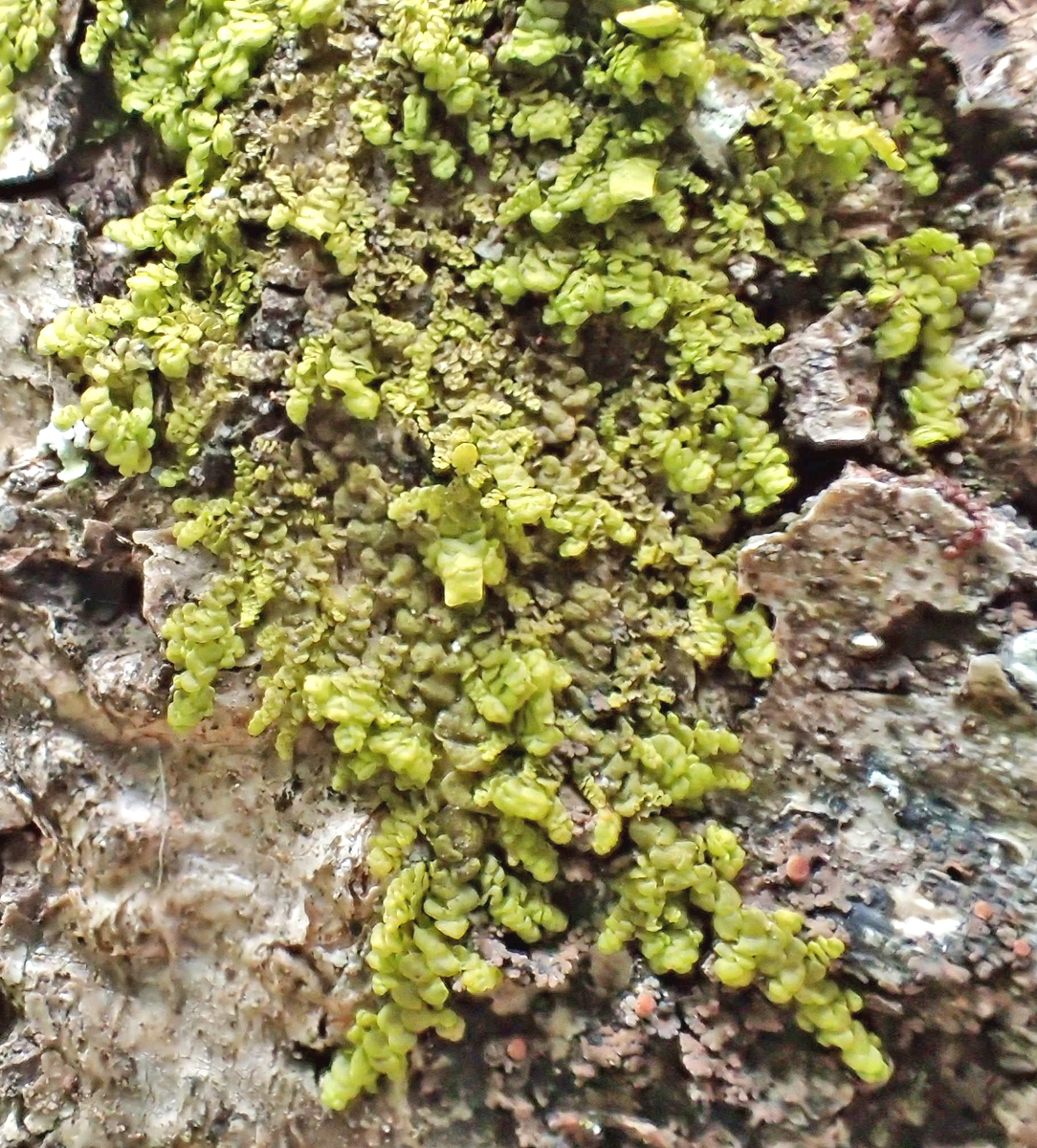 Radula bolanderi. Female colony. Bagby Springs, Clackamas County, Oregon.
 Radula bolanderi. Male colony. Bagby Springs, Clackamas County, Oregon.
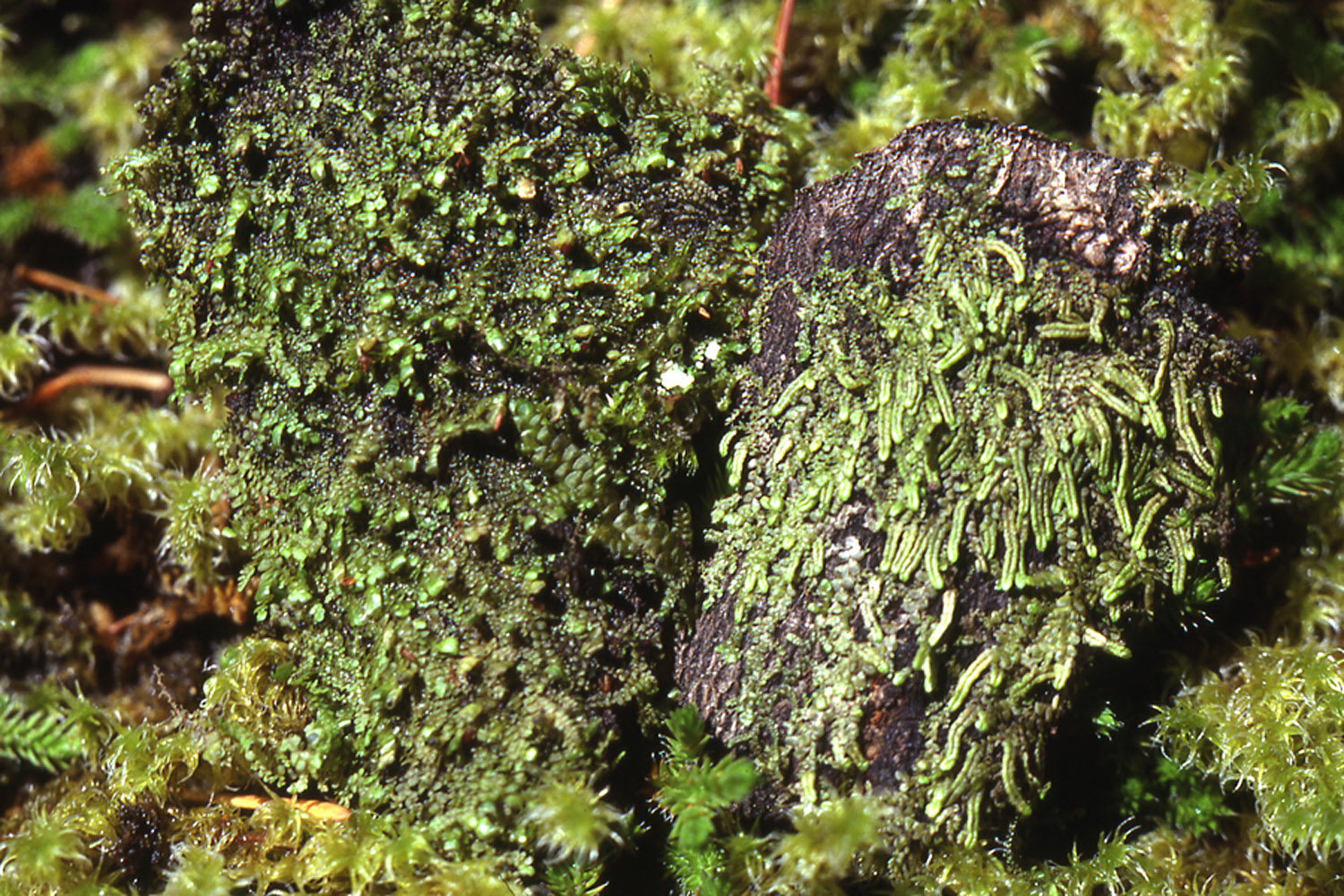 Radula bolanderi. Left= female colony; right= male colony. Silver Falls State Park, Oregon.
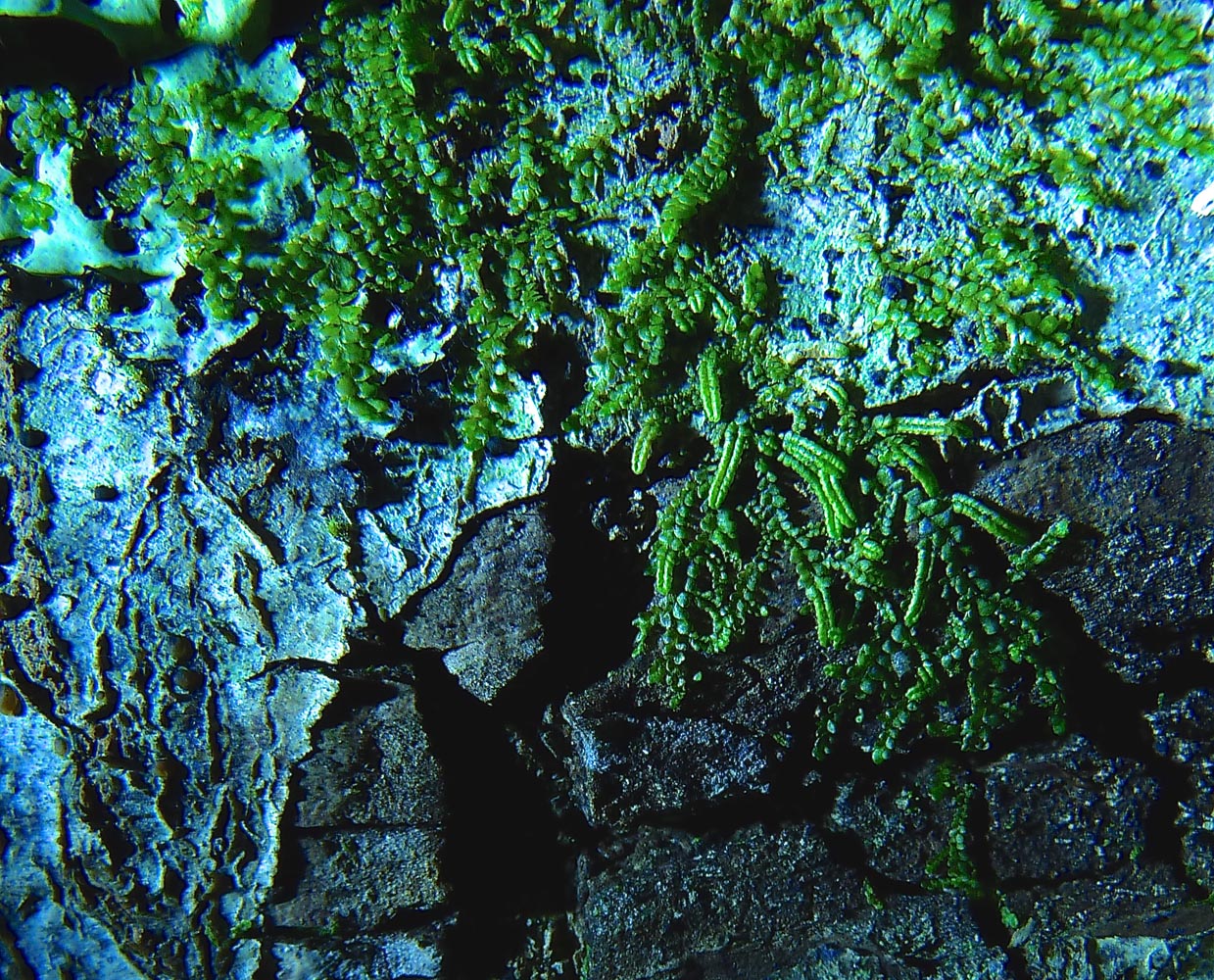 Radula bolanderi. Male colony. Point Reyes National Seashore Park, California.
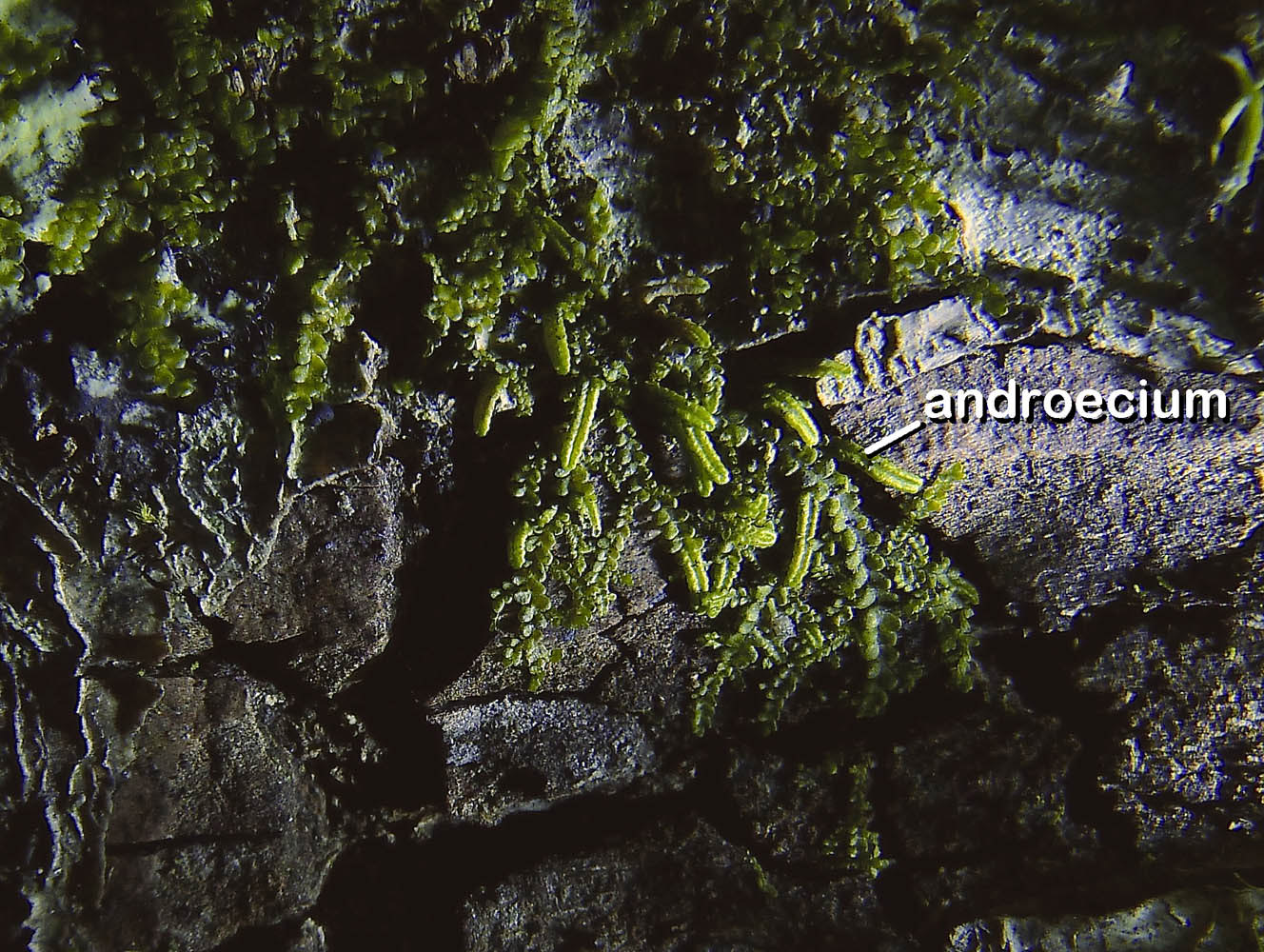 Radula bolanderi. Male colony. Point Reyes National Seashore Park, California.
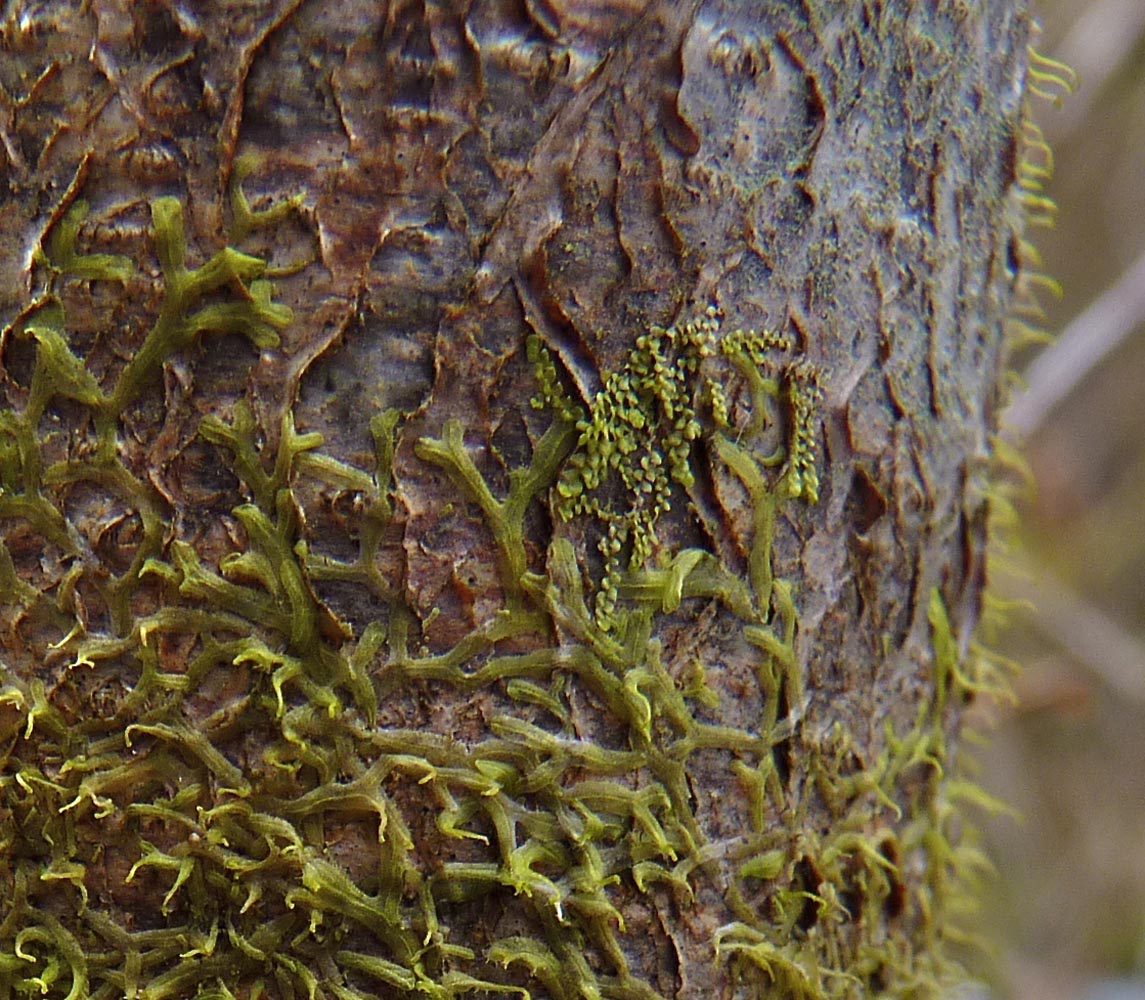 Radula bolanderi. Small patch in middle of colony of Metzgeria violacea on Corylus stems. Sweet Creek, Lane County, Oregon.
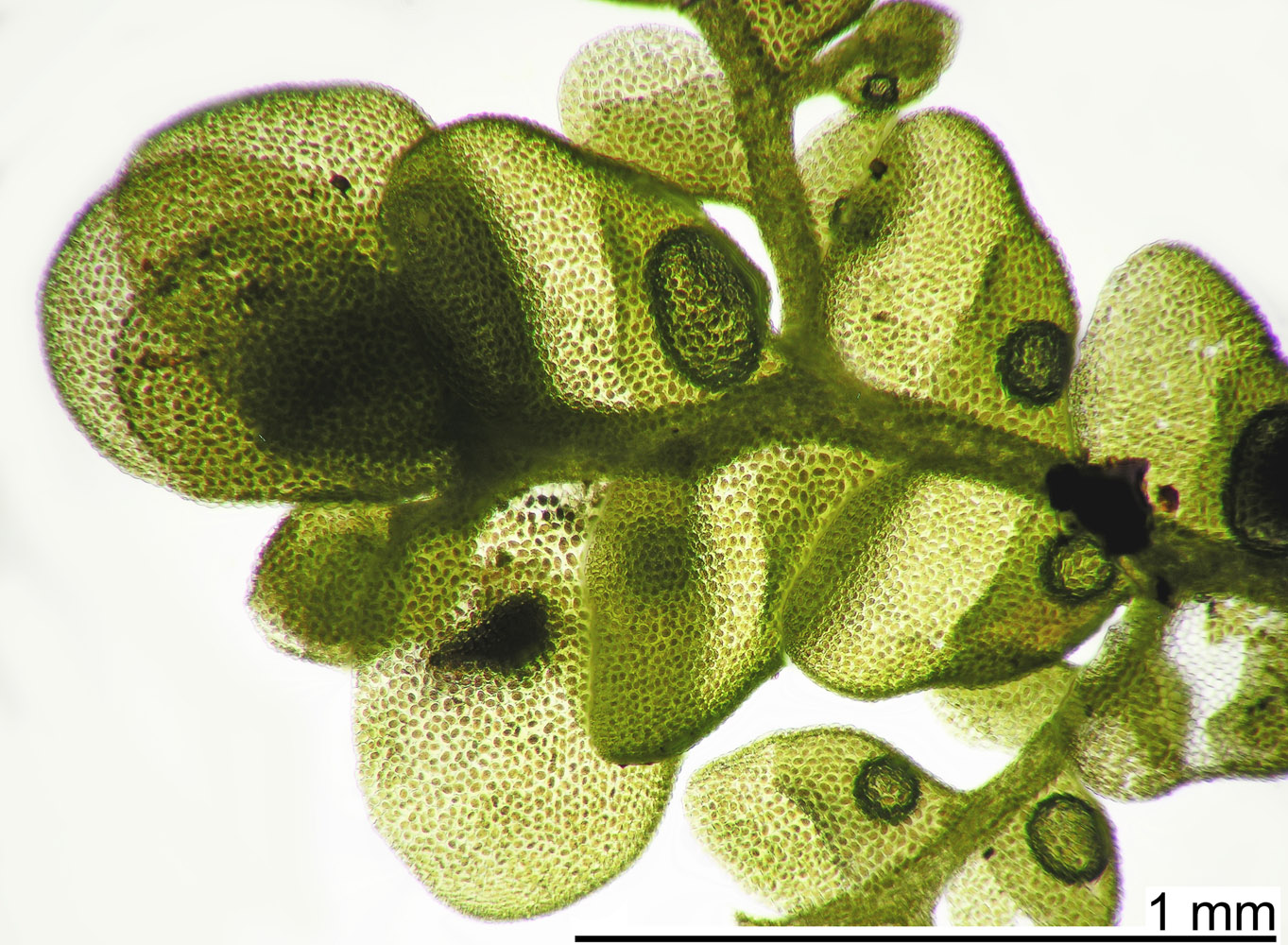 Radula bolanderi. Shoot tip. Cape Perpetua, Lincoln County, Oregon. DHW m3091.1
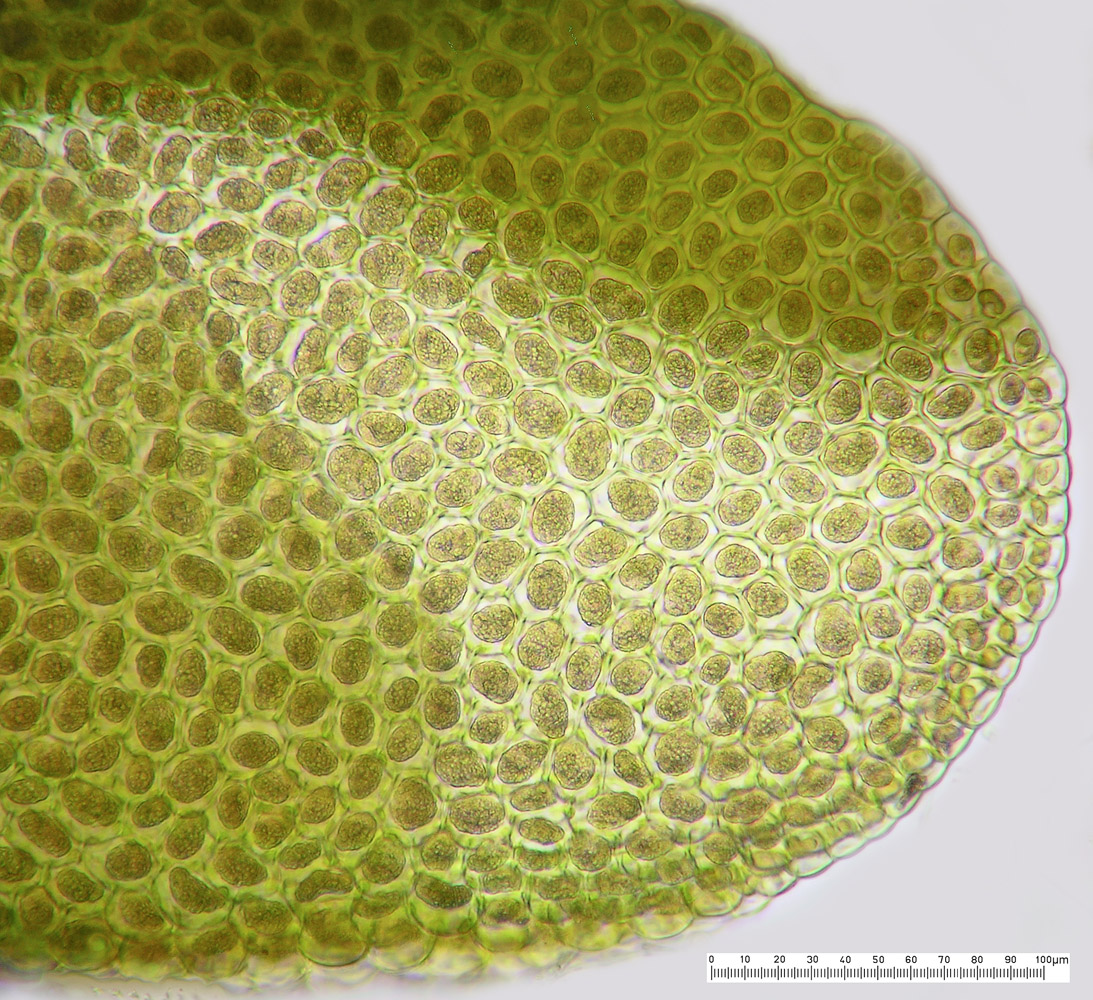 Radula bolanderi. Oil bodies. Cape Perpetua, Lincoln County, Oregon. DHW m3091.1