Guide to Liverworts of Oregon: Mesoptychia gillmannii (Aust.) L. Söderstr. & Váňa
HOME SPECIES INDEX GENUS INDEX GLOSSARY
Lophozia 1b oil bodies less than 12 per cell
> Lophozia 5b leaves bilobed > Lophozia 8a underleaves present > Lophozia 9b gemmae absent > Lophozia 10a paroicous > Lophozia
gillmanii
Synonyms: Lophozia gillmanii (Aust.) Schust., Leiocolea gillmanii (Aust.) A. Evans
Special Status: ORBIC List 2.
Recognition: This is a liverworts with bilobed leaves, consistent presence of small underleaves, absence of gemmae, paroicous fertile shoots, and perianths with a relatively long beak. Underleaves are tiny and quickly hidden among rhizoids. The strongly striate-papillose leaf cells stand out as a distinctive character of sterile plants but identifying sterile plants must be done with great caution. The densely verrucose cuticle may help place sterile material. Median leaf cells 30–35 μm wide. Other species of Leiocolea are dioicous, have gemmae, or have median leaf cells that are smaller, 25–30 μm wide in L. alpestris, or larger, 35–40 μm wide in L. bantriensis (Damsholt 2002, p. 122).
Distribution: Poorly known; in Oregon known for a long time from a single locale, Elkhorn Ridge, Baker County (Wagner 8238,8242). More recently found in Grant County: Haiku Meadow (D. Stone 6757.7); Vinegar Hill (Farriel 2011-6).
Comments: Careful measurement of leaf cells is essential for identification. Demonstrating the underleaves requires careful observation but they are always detectable in this species if searched for. Mount shoots upside down under a coverslip and scan the ventral side of stems under a compound microscope.
The treatment of this species for the upcoming liverwort volume of the Flora of North America will be is likely to be under the genus Mesoptychia. I have not yet determined what distinguishes it from other species I (and the provisional treatment for the FNA) call Leiocolea.
This species was reported from Oregon by Hong (1978), who cited Frye and Clark (1945) as his source for this record. However, Frye and Clark did not include Oregon in their discussion of distribution but did mention examining a specimen from Hoodsport (1945, p. 390). I believe that Hong thought this referred to someplace near Hood River, Oregon but Hoodsport is a town along Hood Canal in Washington.
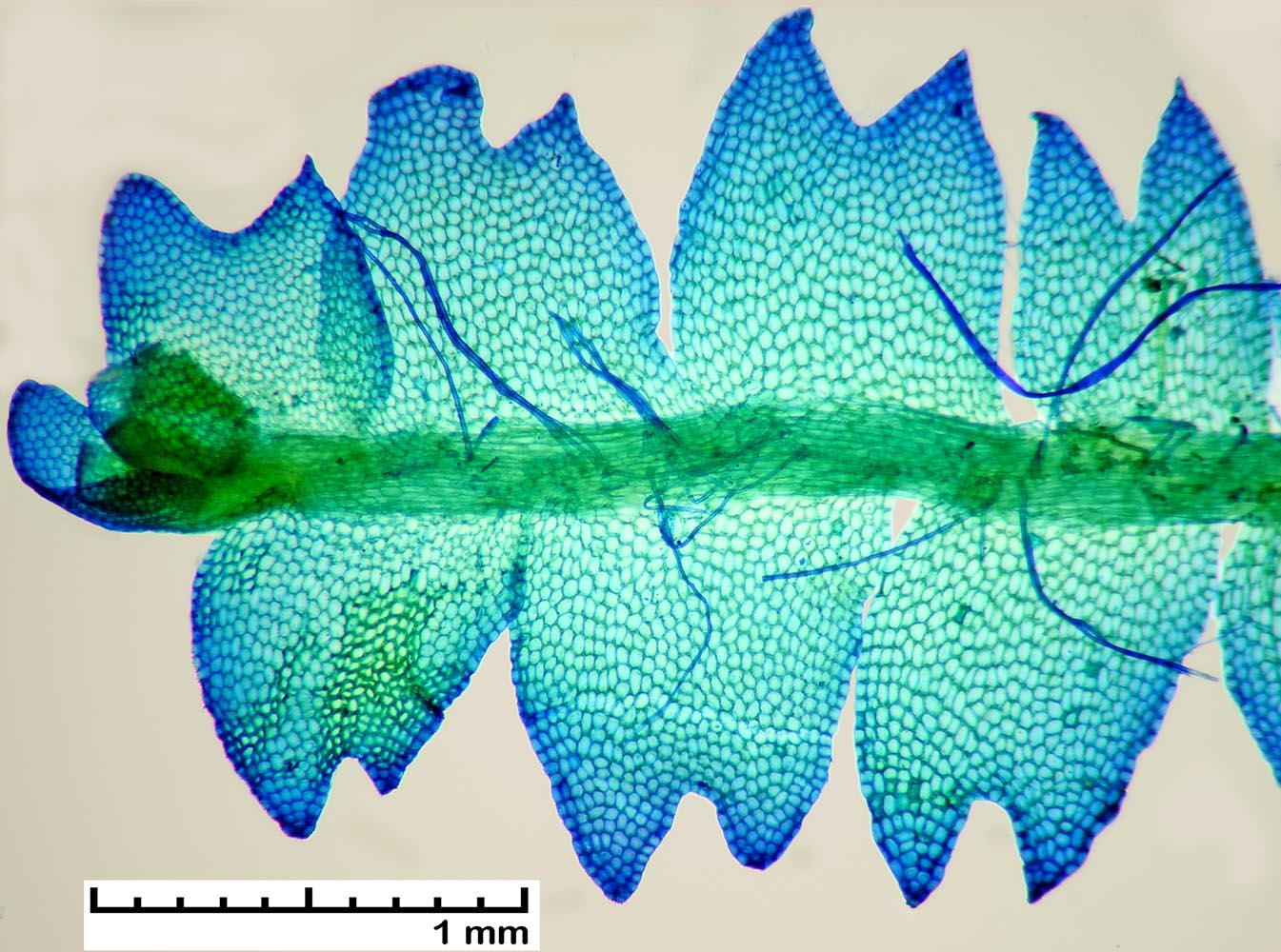 Leiocolea gillmanii, stained shoot. Vinegar Hill, Grant County. Farriel 2011-6.
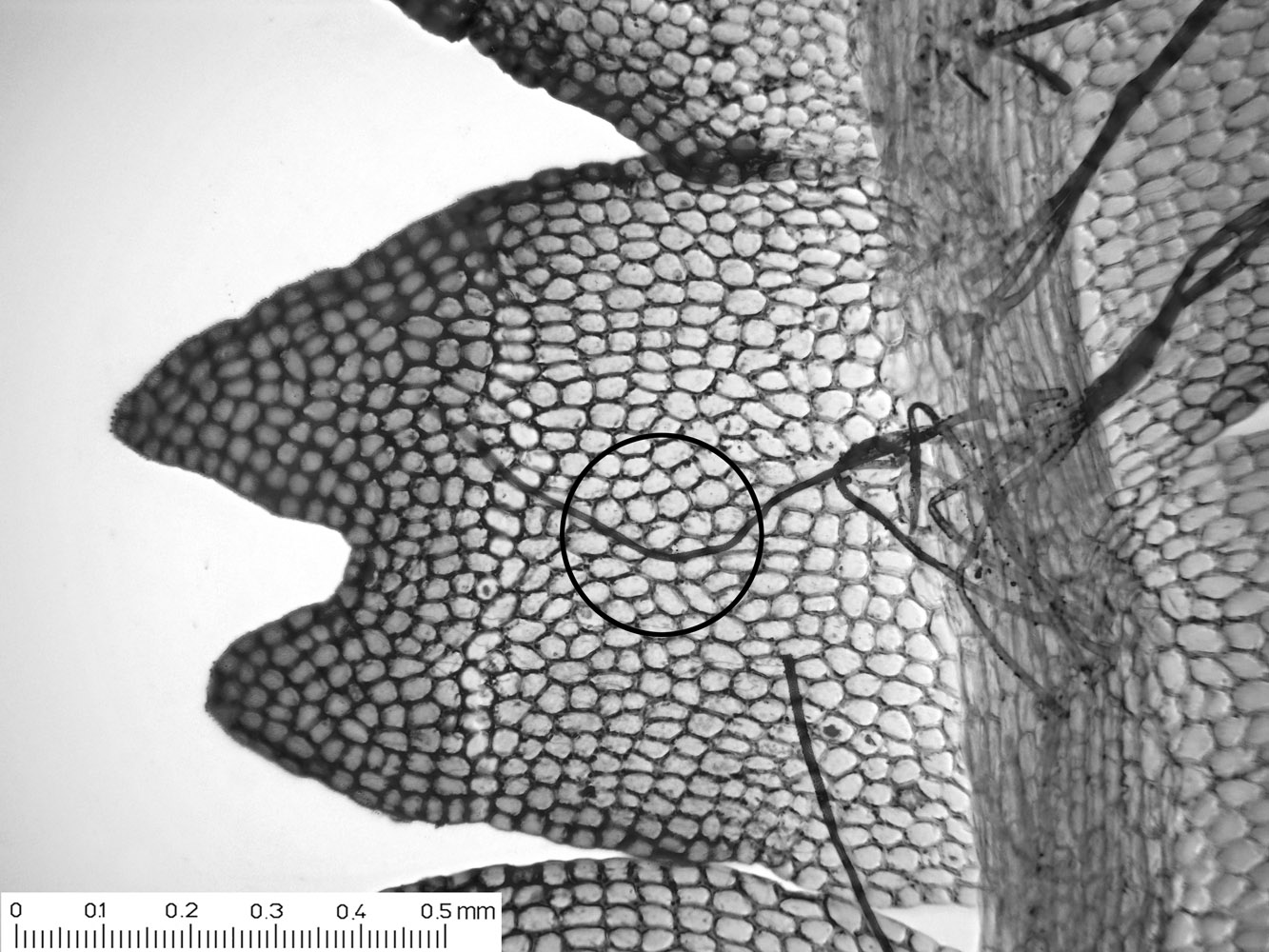 Leiocolea gillmanii, leaf from above shoot. Vinegar Hill, Grant County. Farriel 2011-6. Midleaf cells measured in area of circle; n=33; average 40.4 μm long,
33.3 μm wide.
Leiocolea gillmanii, leaf from above shoot. Vinegar Hill, Grant County. Farriel 2011-6. Midleaf cells measured in area of circle; n=33; average 40.4 μm long,
33.3 μm wide.
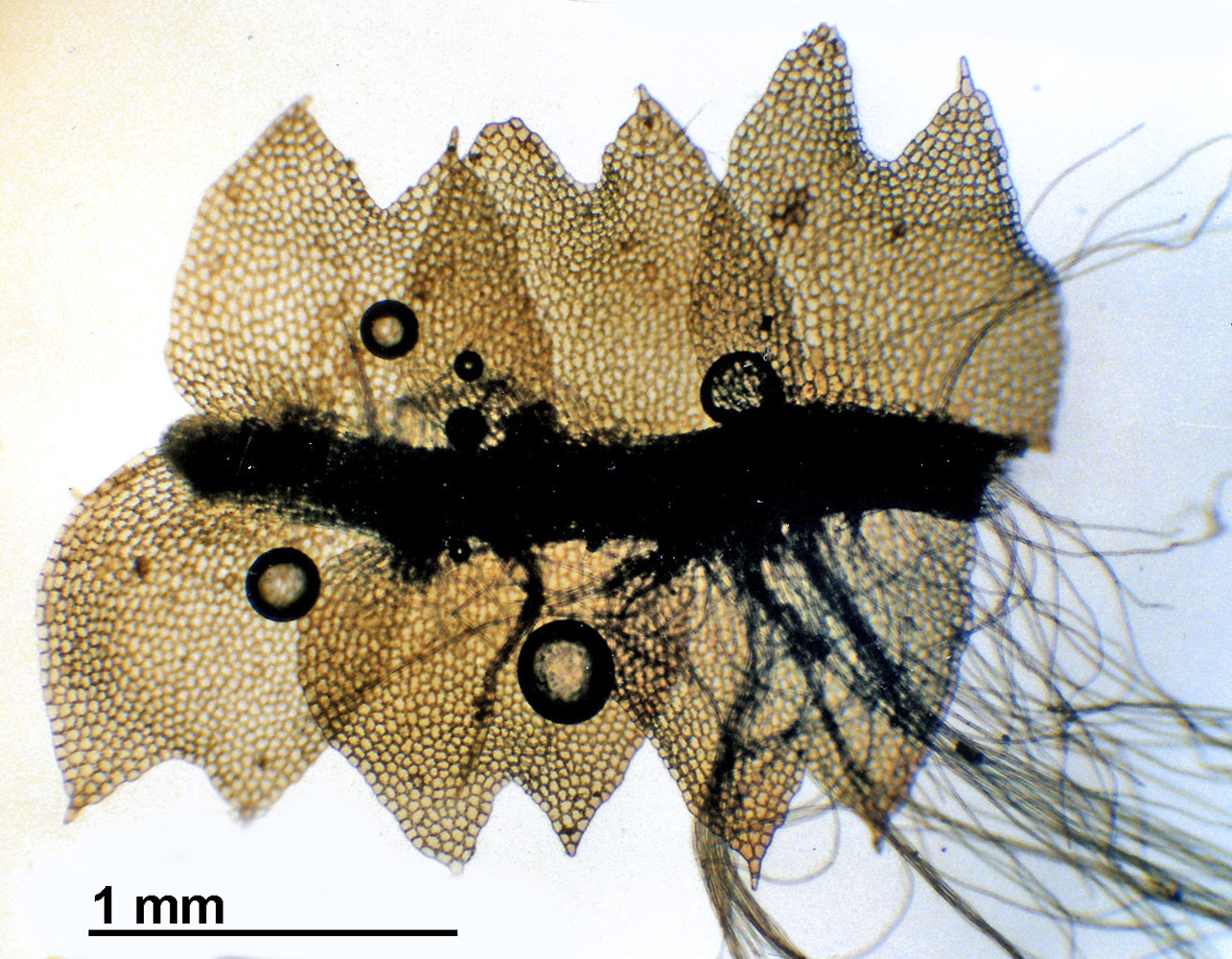 Leiocolea gillmanii, shoot. Elkhorn Ridge, Baker County. DHW 8242.
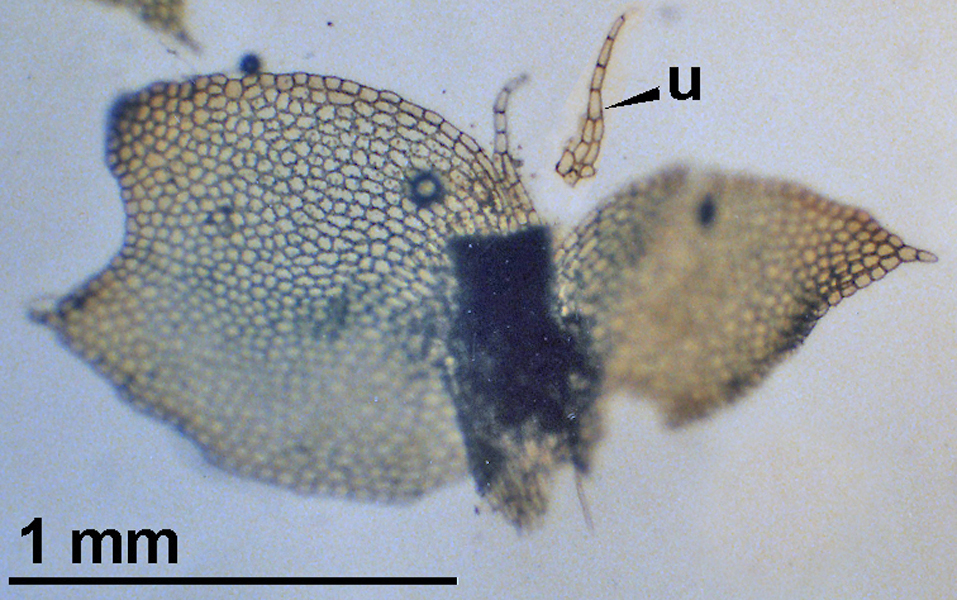 Leiocolea gillmanii, leaf and underleaf. Elkhorn Ridge, Baker County. DHW
8242.
Leiocolea gillmanii, leaf and underleaf. Elkhorn Ridge, Baker County. DHW
8242.
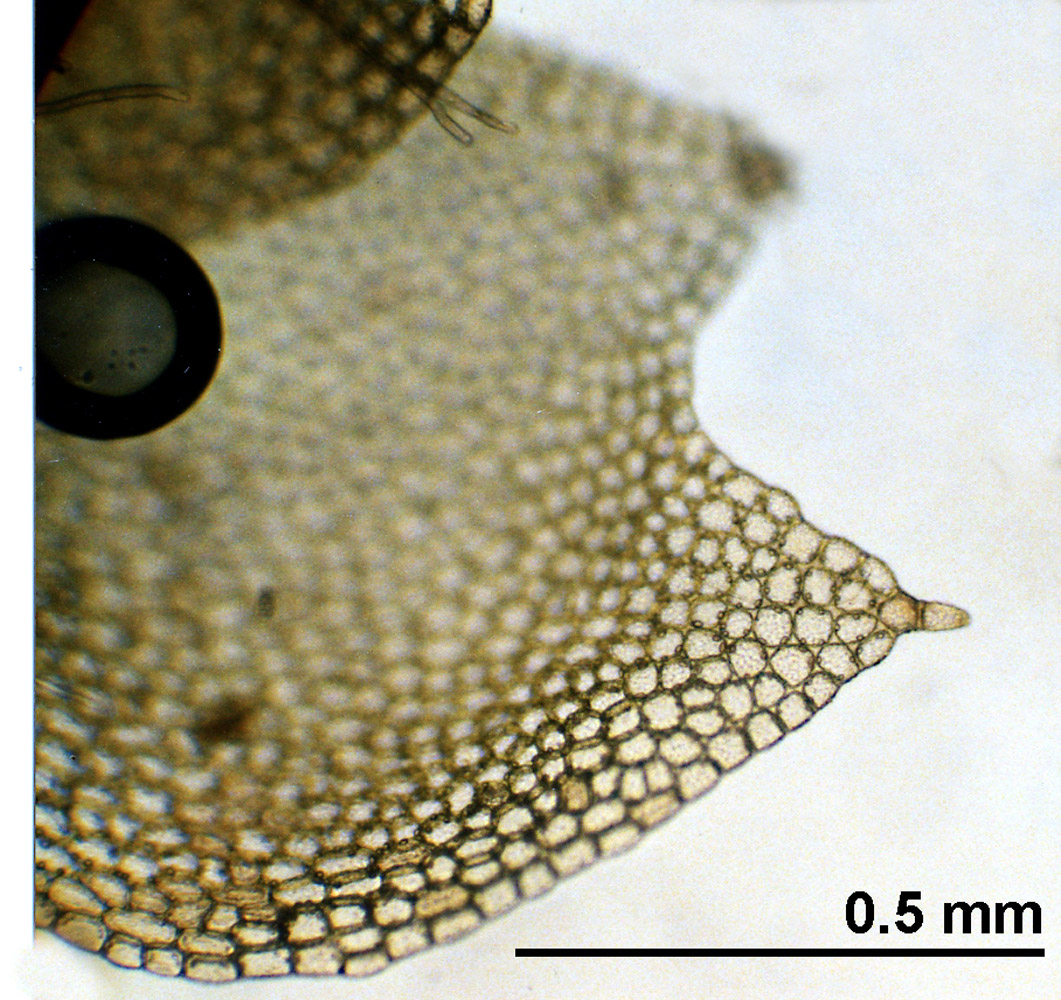 Leiocolea gilmanii, leaf. Elkhorn Ridge, Baker County. DHW 8242.
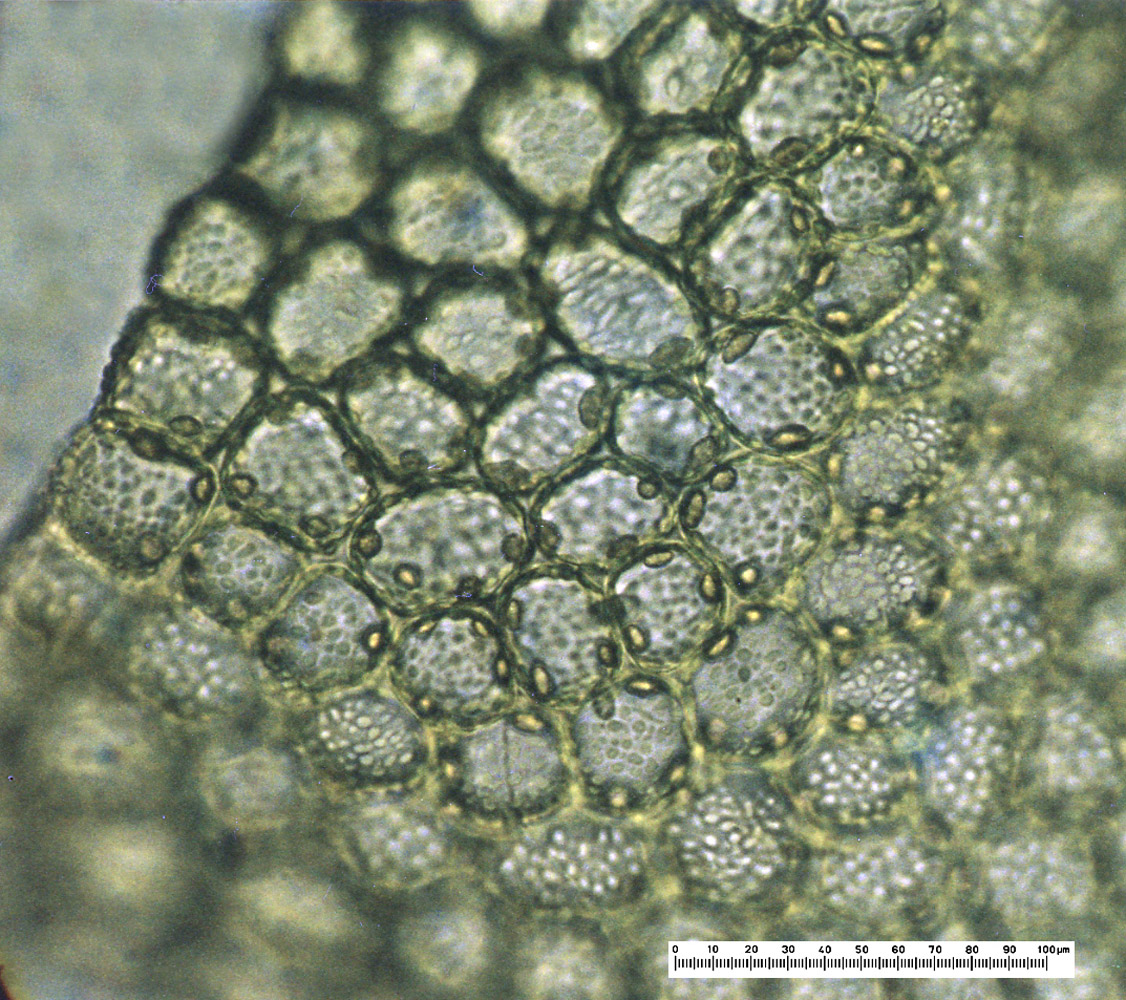 Leiocolea gillmanii, cells with verrucae. Elkhorn Ridge, Baker County. DHW
8242.
Leiocolea gillmanii, cells with verrucae. Elkhorn Ridge, Baker County. DHW
8242.
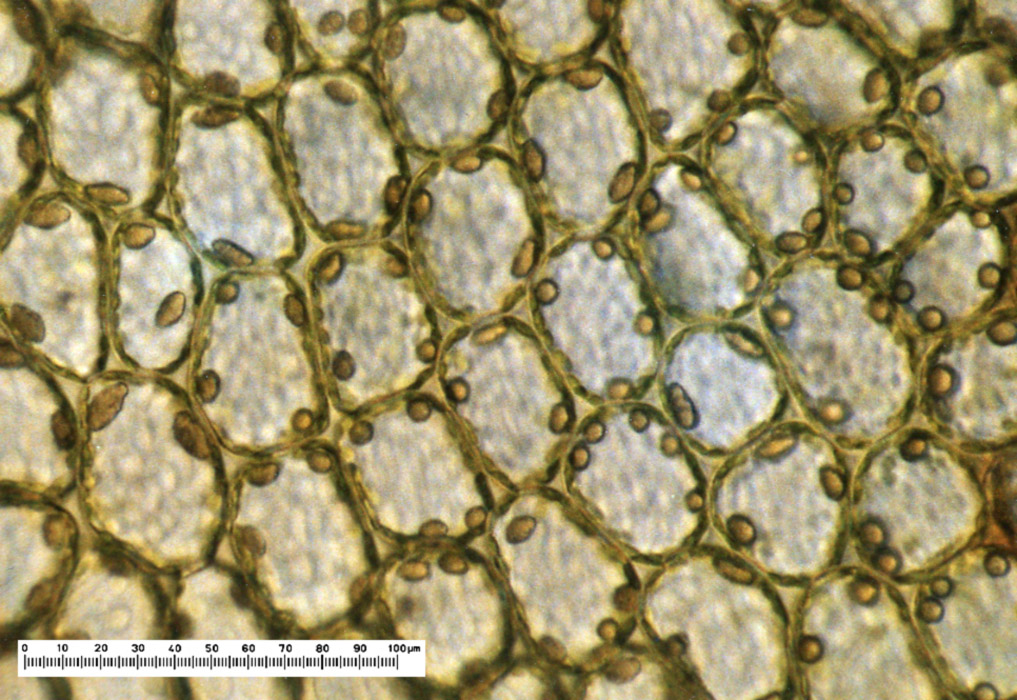 Leiocolea gillmanii, oil bodies. Elkhorn Ridge, Baker County. DHW 8242.
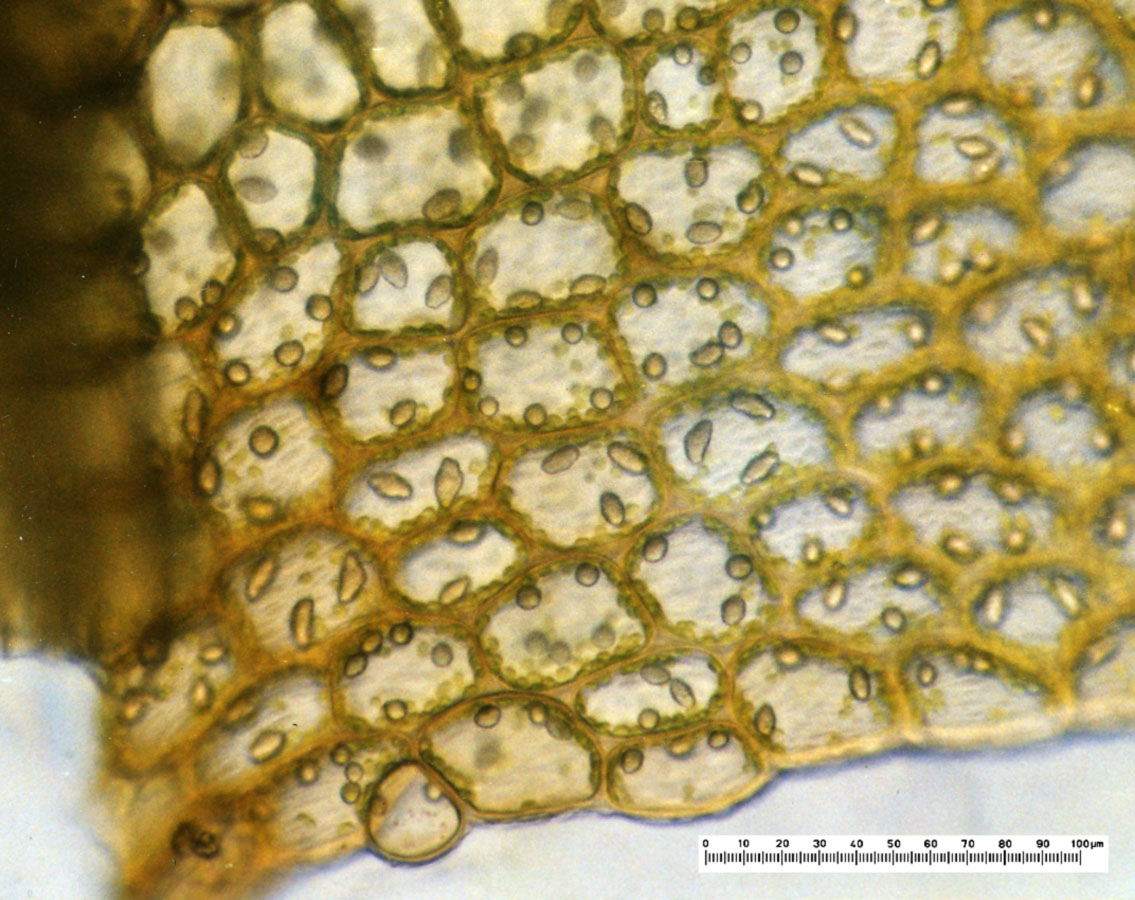 Leiocolea gillmanii, basal cells with oil bodies. Elkhorn Ridge, Baker
County. DHW 8242.
Leiocolea gillmanii, basal cells with oil bodies. Elkhorn Ridge, Baker
County. DHW 8242.
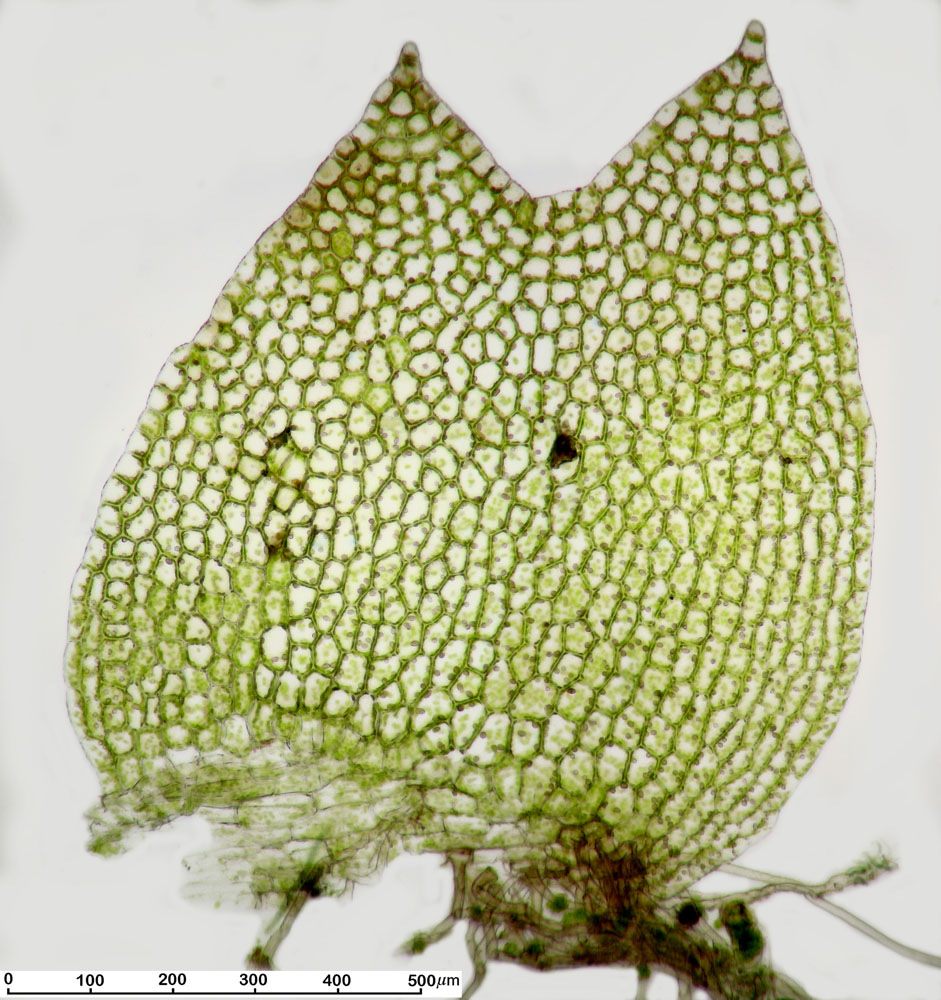 Leiocolea gillmanii - Leaf. Olive Lake, Grant
County. DHW m2752c.
Leiocolea gillmanii - Leaf. Olive Lake, Grant
County. DHW m2752c.
 Leiocolea gillmanii - Oil bodies. Olive Lake, Grant
County. DHW m2752c.
Leiocolea gillmanii - Oil bodies. Olive Lake, Grant
County. DHW m2752c.