Guide to Liverworts of Oregon: Barbilophozia hatcheri (Evans) Loeske
HOME SPECIES INDEX GENUS INDEX GLOSSARY
Lophozia 1b oil bodies less than 12 per cell > Lophozia 5a leaves 3-4 lobed > Lophozia 6b underleaves prominent > Barbilophozia 7a shoots less than 3 mm wide > B. hatcheri
Synonym: Lophozia hatcheri (Evans) Steph.
Special Status: None.
Recognition: Three lobed leaves with abundant production of reddish brown gemmae and ciliate base of leaf on ventral side are characteristic of B. hatcheri. Robust plants might be confused with B. lycopodioides; it is twice the size and has much more ruffly leaves with longer cells in the cilia at leaf bases. Poorly developed plants might be confused with B. barbata; that plant has obtuse to acute, blunt lobe tips and lacks cilia at the ventral leaf base.
Distribution: On various substrates: logs, peaty soil, or rock; widespread from middle to high elevations; typically on cliffs, boulder talus, lava fields, or rocky ridge tops.
Comments: This is the second most common species of the lophoziae in Oregon, behind Lophozia ventricosa. It tends to occur at higher elevations, tends to be more often on rock. Both B. hatcheri and L. ventricosa are likely to occur in similar places on cliffs and talus slopes in the subalpine zone.
Plants identified in the field as B. hatcheri should be carefully examined under the microscope to see if the less common Barbilophozia floerkii might be present. The cilia of both ventral leaf bases and underleaves are composed of nearly quadrate cells.
According to the UBC herbarium database, Schofield reports finding B. quadriloba at Olive Lake in the Blue Mountains. I have not yet included this species, either, in these keys. Please refer to Paton (1999) or Damsholt (2002) if you suspect you have found this species.
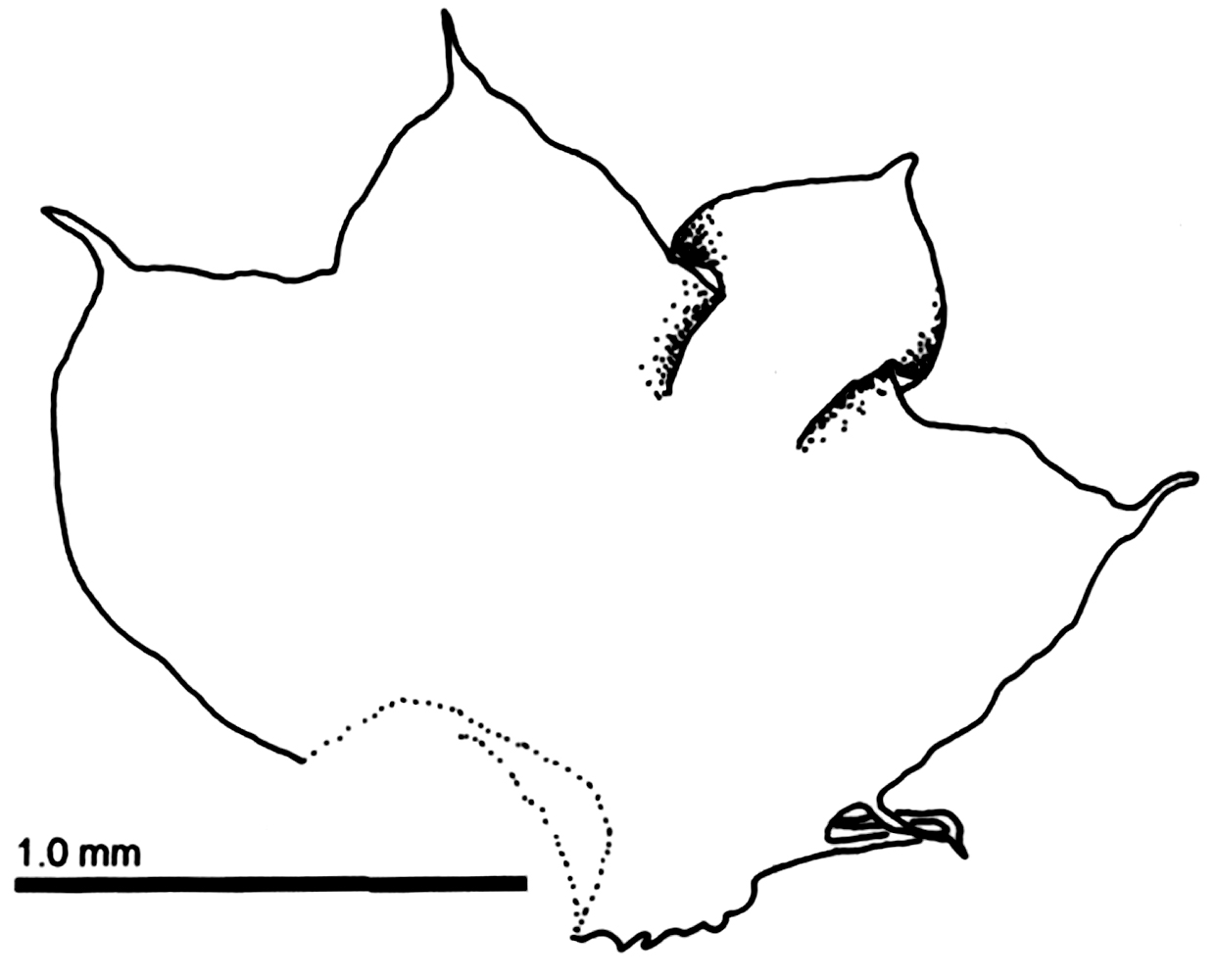
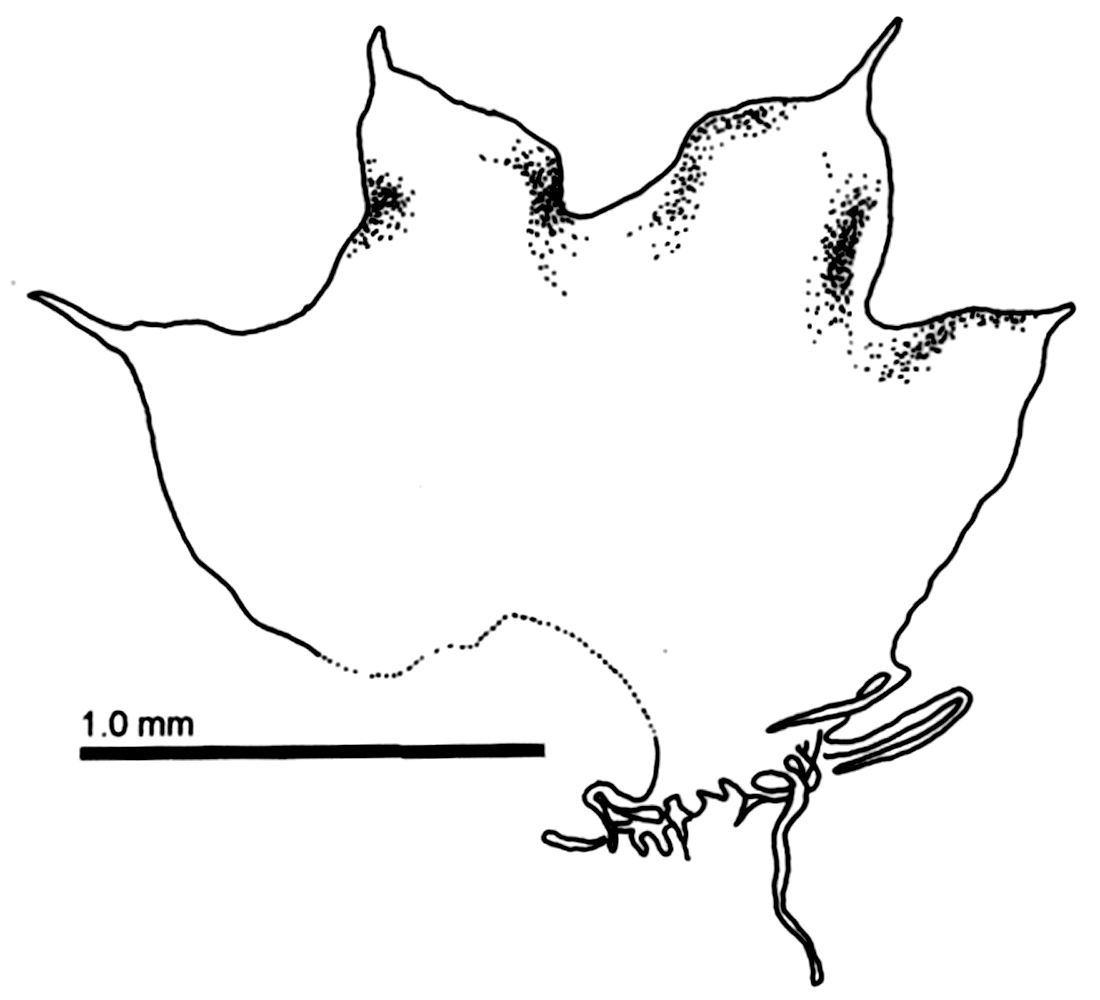 Prairie Peak, Benton Co., Oregon. DHW
2294
Prairie Peak, Benton Co., Oregon. DHW
2294
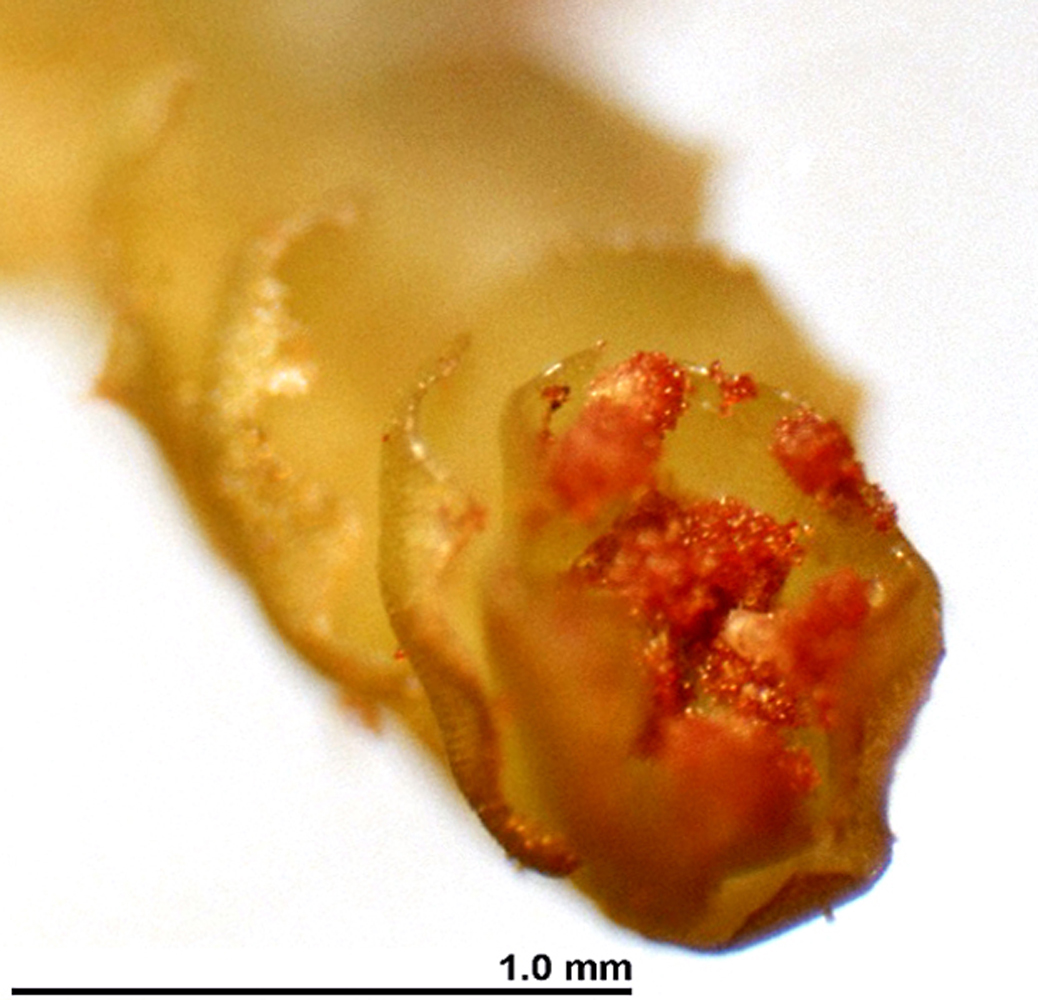
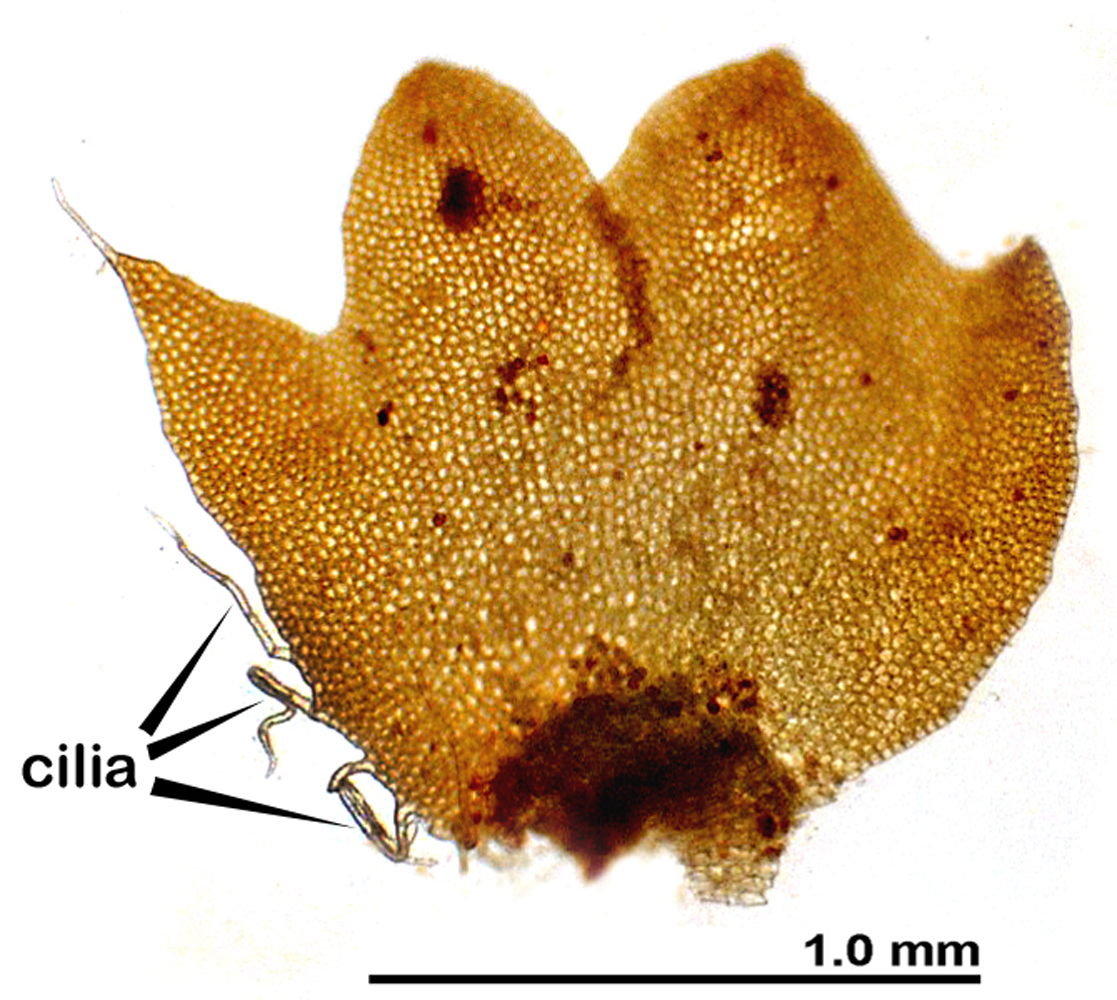
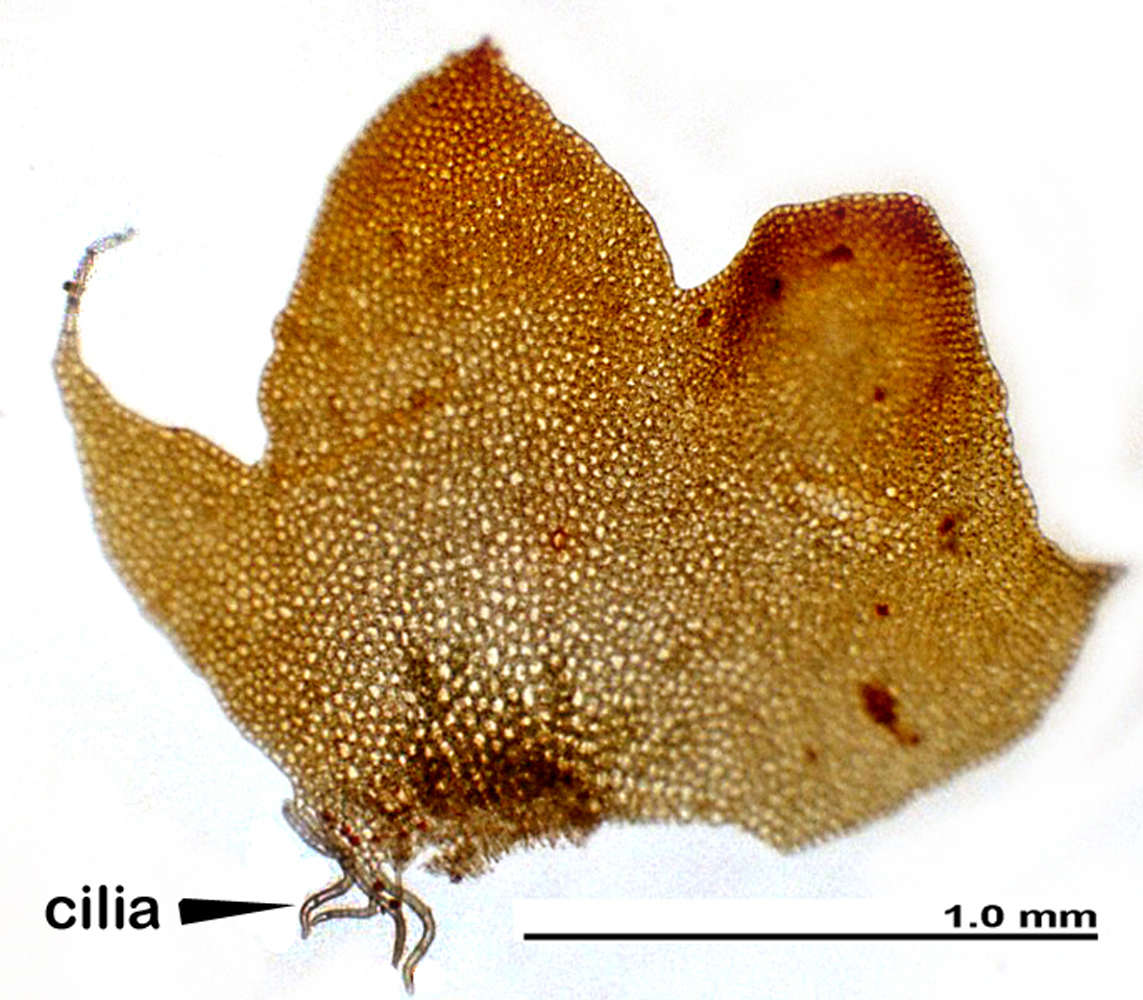 Fish Hook Peak, Curry Co., Oregon. DHW
m1673
Fish Hook Peak, Curry Co., Oregon. DHW
m1673
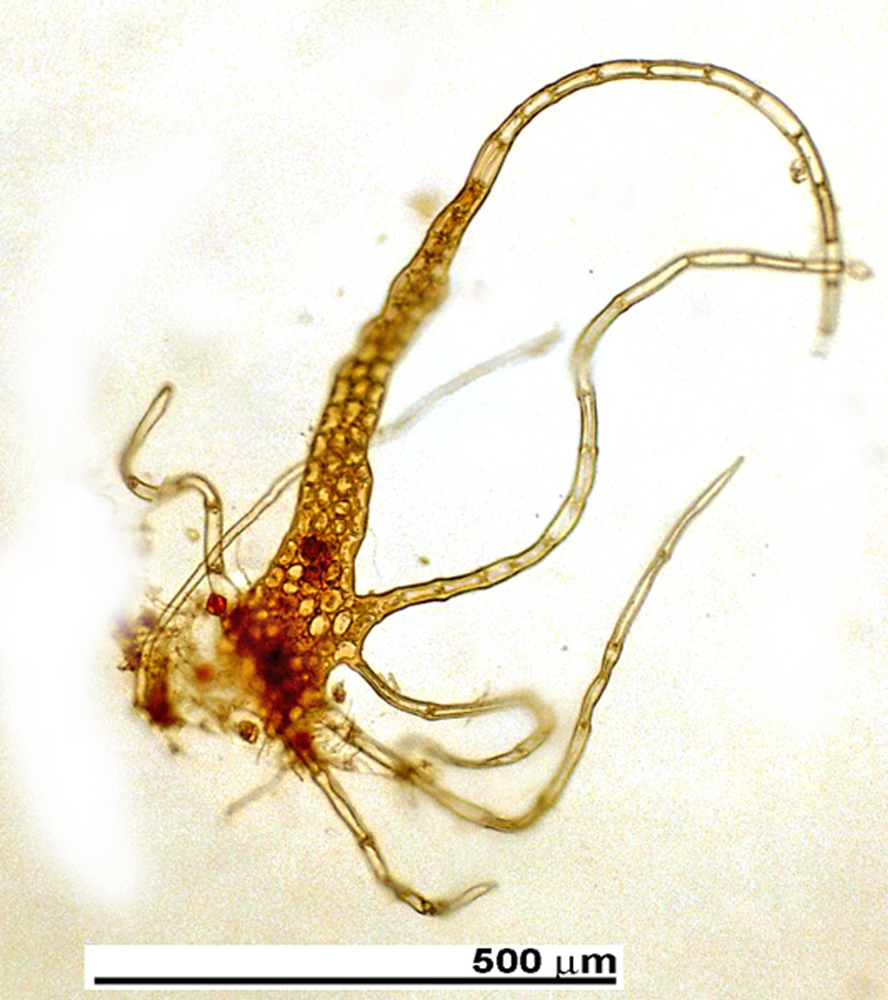
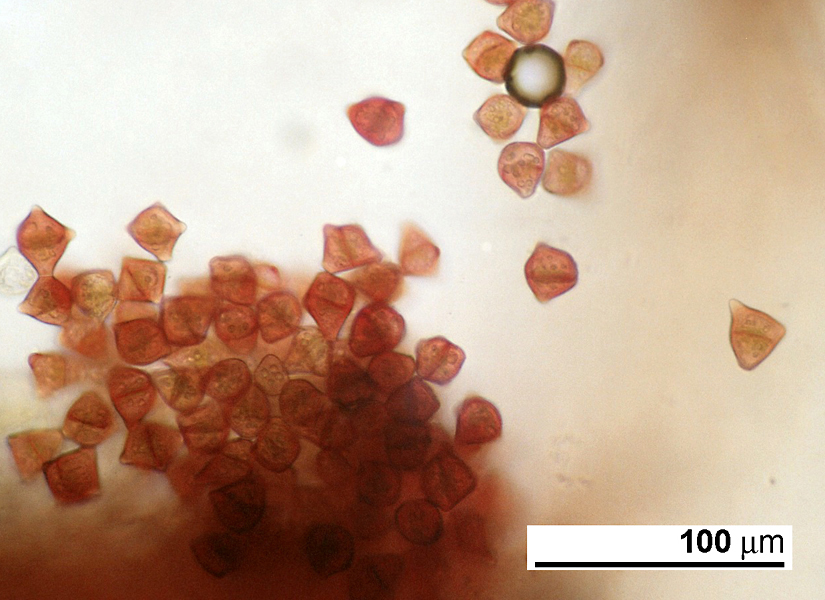
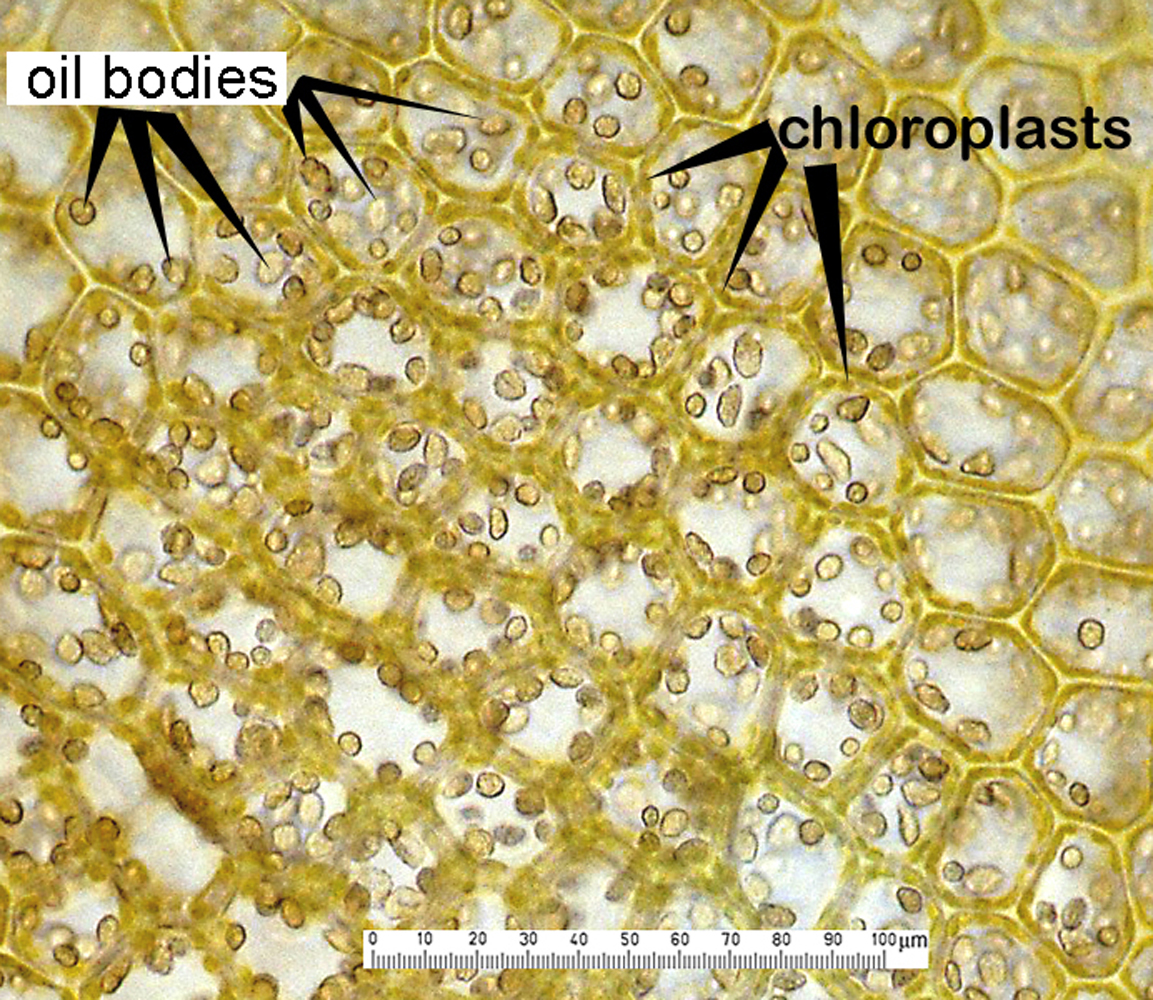 Left: underleaf; middle: gemmae; right: median leaf cells with oilbodies. Fish Hook Peak, Curry Co., Oregon. DHW
m1673
Left: underleaf; middle: gemmae; right: median leaf cells with oilbodies. Fish Hook Peak, Curry Co., Oregon. DHW
m1673