Guide to Liverworts of Oregon: Pleurocladula albescens (Hook.) Grolle
HOME SPECIES INDEX GENUS INDEX GLOSSARY
1b plants leafy > 3b leaves not divided, not ciliate > 6b oil bodies solitary/absent > 13b oil bodies absent > 16b underleaves large > 18a underleaves entire, lanceolate >Pleurocladula
1b plants leafy > 3b leaves not divided, not ciliate > 6a oil bodies 2+ or unknown > 7b no small dorsal lobe > 10a succubous > 11a anisophyllous > 12b leaves lobed > 37b if rhizoids red, stems red > 38b shoots mostly <0.5 mm wide > 47a underleaves conspicuous > 48a underleaves as large as leaves >Pleurocladula
Synonym: Pleuroclada albescens (Hook.) Spruce [invalid name]; Fuscocephaloziopsis albescens (Hook.) Vaňa & L. Sõderstr.
Special Status: None; special status warranted if occurrence in Oregon can be adequately documented.
Recognition: Small, pale plants with bilobed leaves and unlobed underleaves as long as leaves. Oil bodies absent. Except that the underleaves are unlobed, this could be considered an isophyllous liverwort.
Distribution: Grows over Sphagnum in bogs. Liklihood in Oregon not entirely certain since based on an unconfirmed (and unreliable) literature report by Clark and Frye (1943) of a collection from California and a report by Sutcliffe (1941) on California collections; both records were rejected by Doyle and Stotler (2006). Hong's unspecified inclusion of California in the distribution of this species (1988b) appears likely to have been based on one of the above reports.
Comments: This species is easily recognized once seen and learned but identifying it from ordinary text keys is not easy. Even though the underleaves are relatively large they are easily overlooked. Most of the photomicrographs that follow show the ventral side of a shoot with underleaves labeled or emphasized in some way.
Sotler and Crandall-Stotler (2017) place this species in Fuscocephaloziopsis based on a concept proposed by Vaňa et al. (2016) that includes most of the traditional Cephaloziaceae. This concept is based on using DNA sequences to generate phylogenetic trees and ignores the distinctive morphological characters that justify retaining this as a monotypic genus. In this case, the presence of underleaves clearly distinguishes this from other members of Fuscocephaloziopsis that form the core of the Cephalozia bicuspidata group of Cephalozia as recognized here.
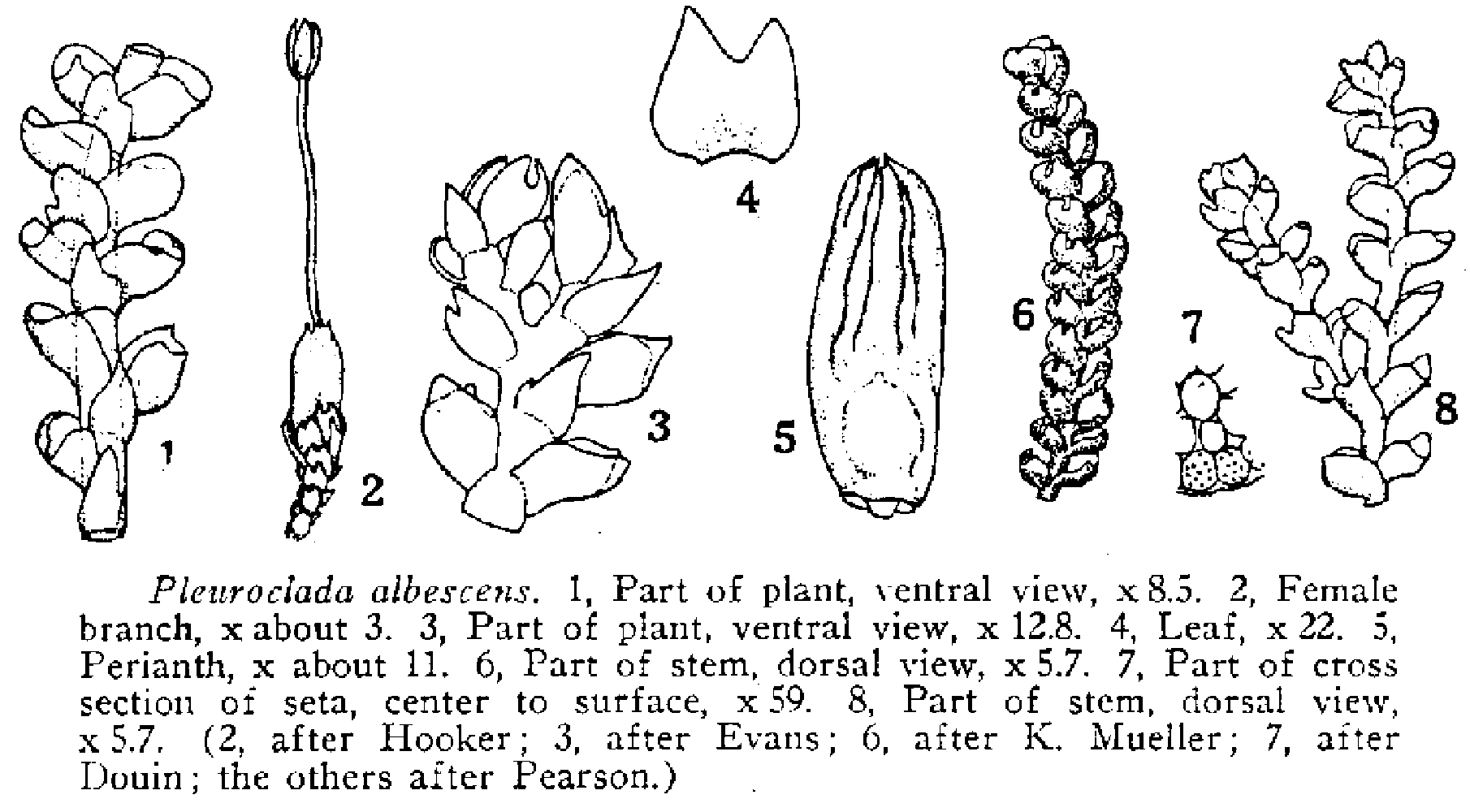 from Frye & Clark 1943, p. 188.
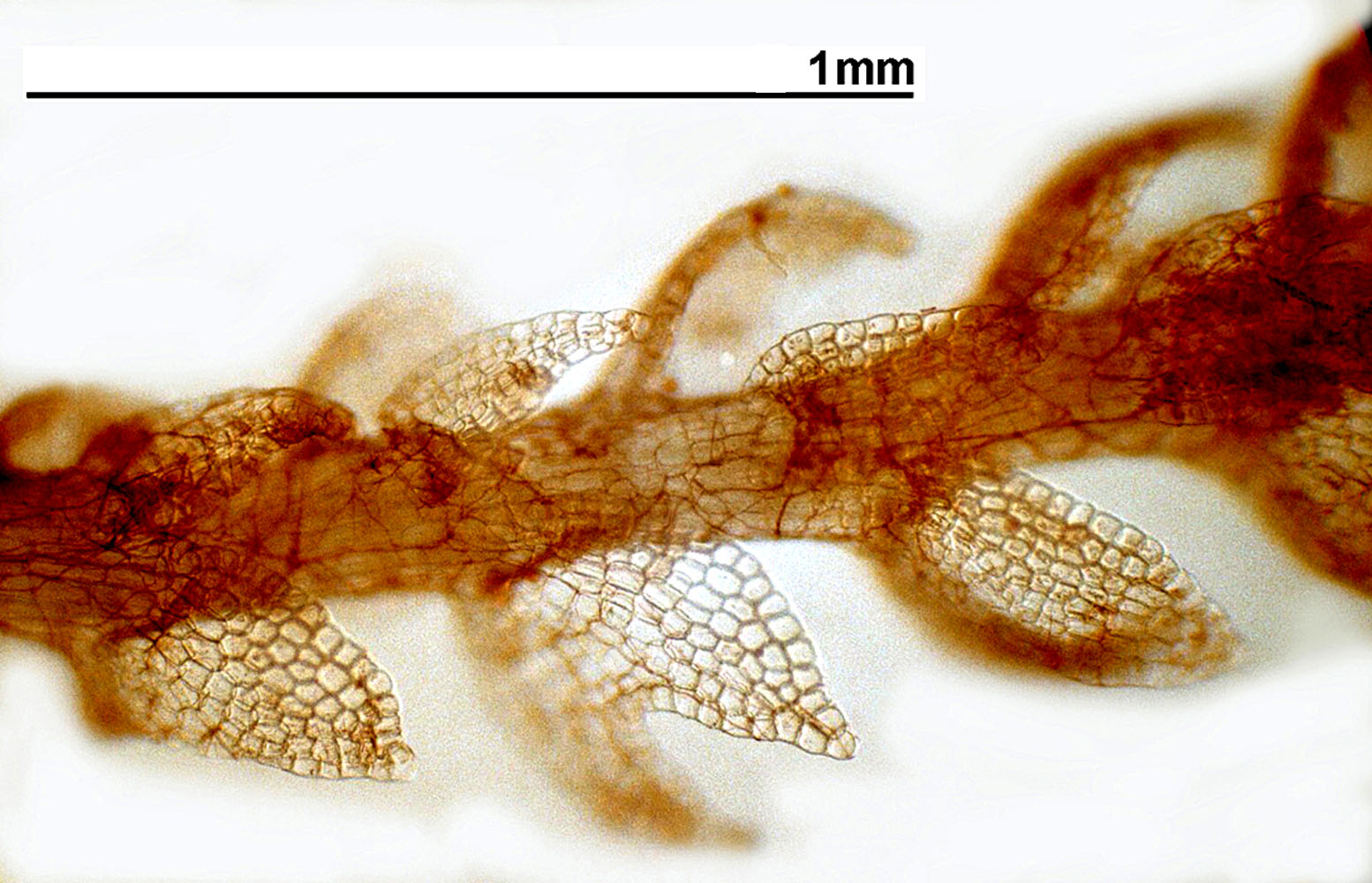
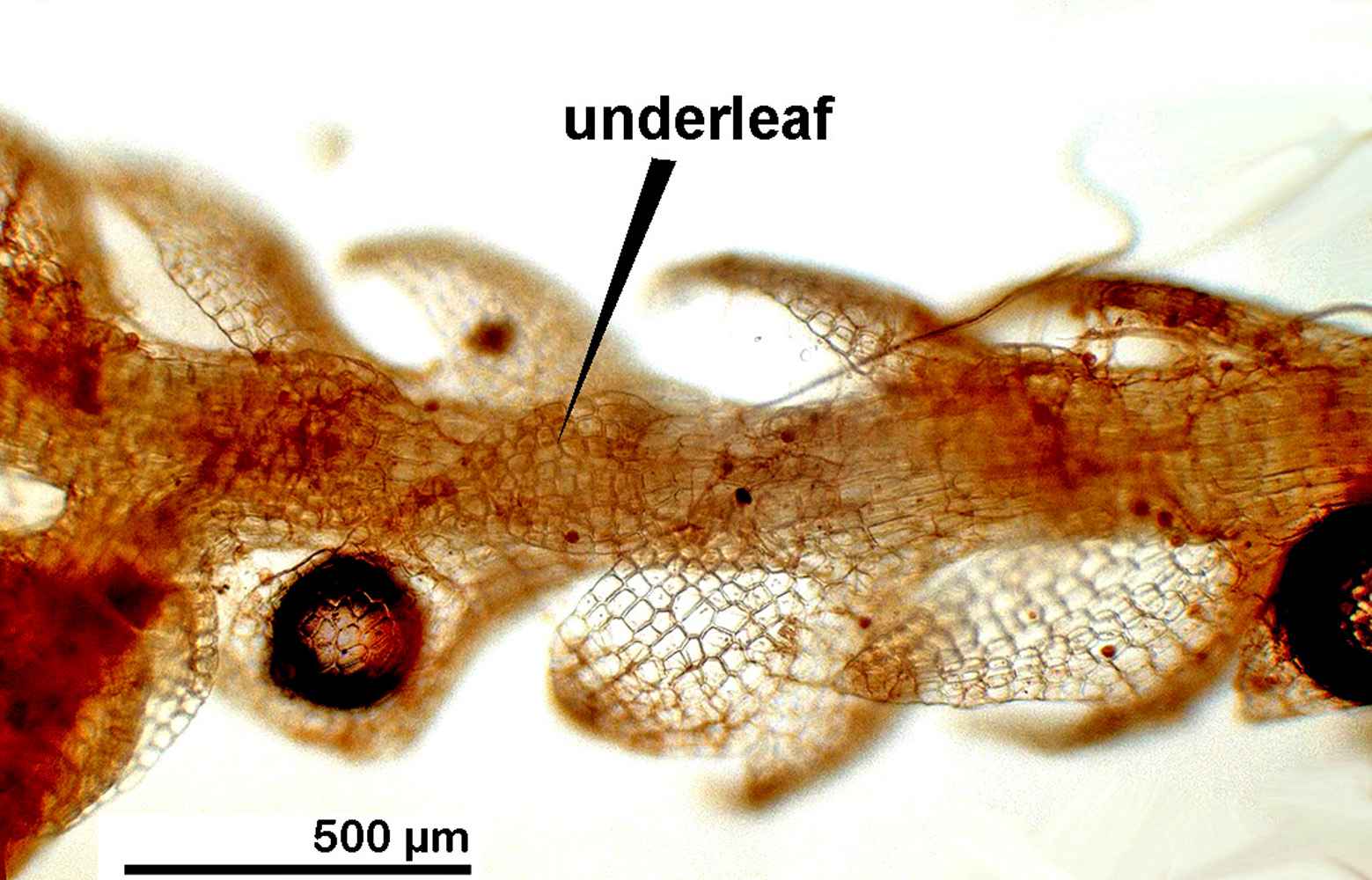
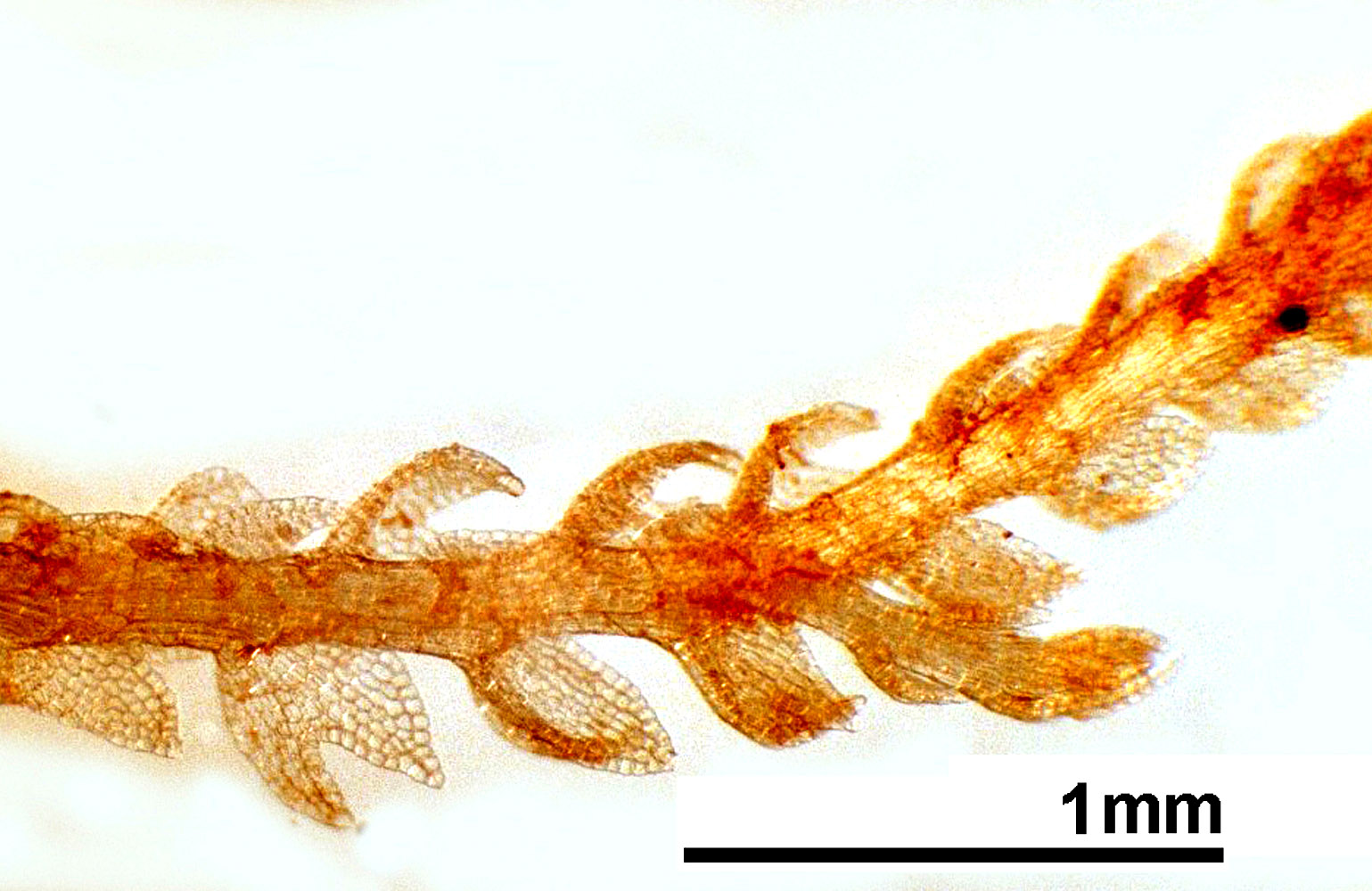 Kenai NWR, Alaska. Berg B034.
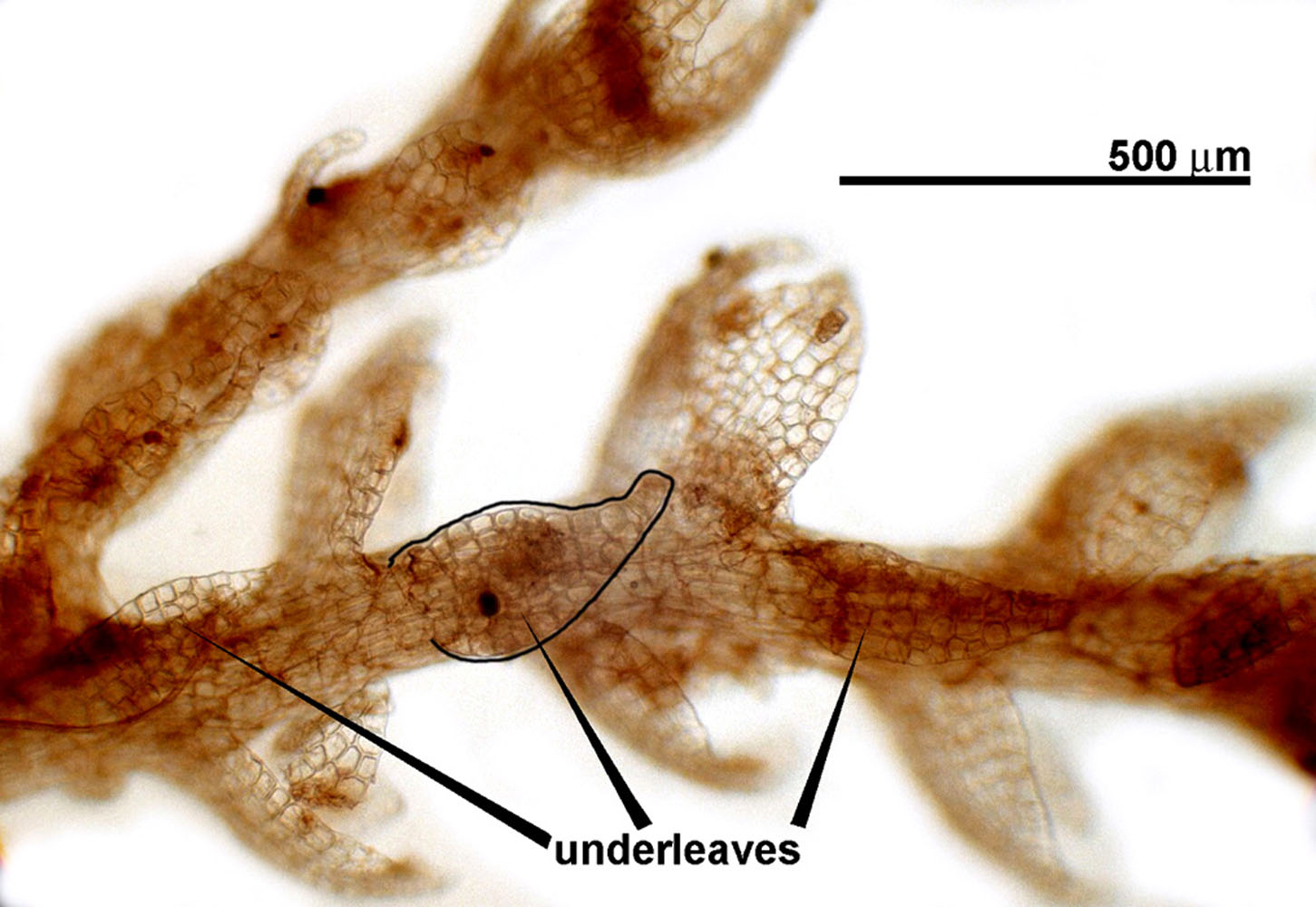
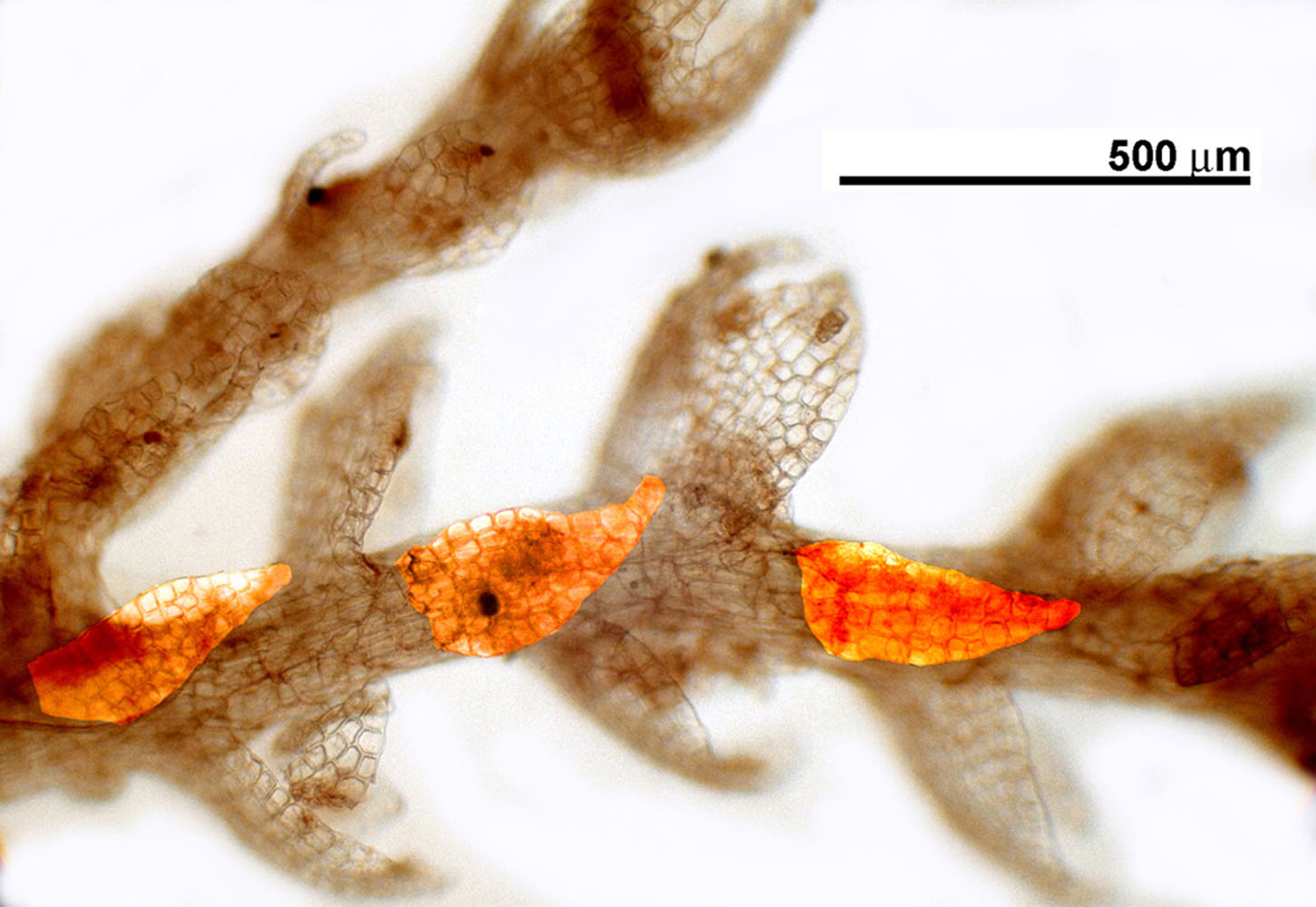 Kenai NWR, Alaska. Berg B034. These images are identical; the underleaves have been emphasized in different ways.